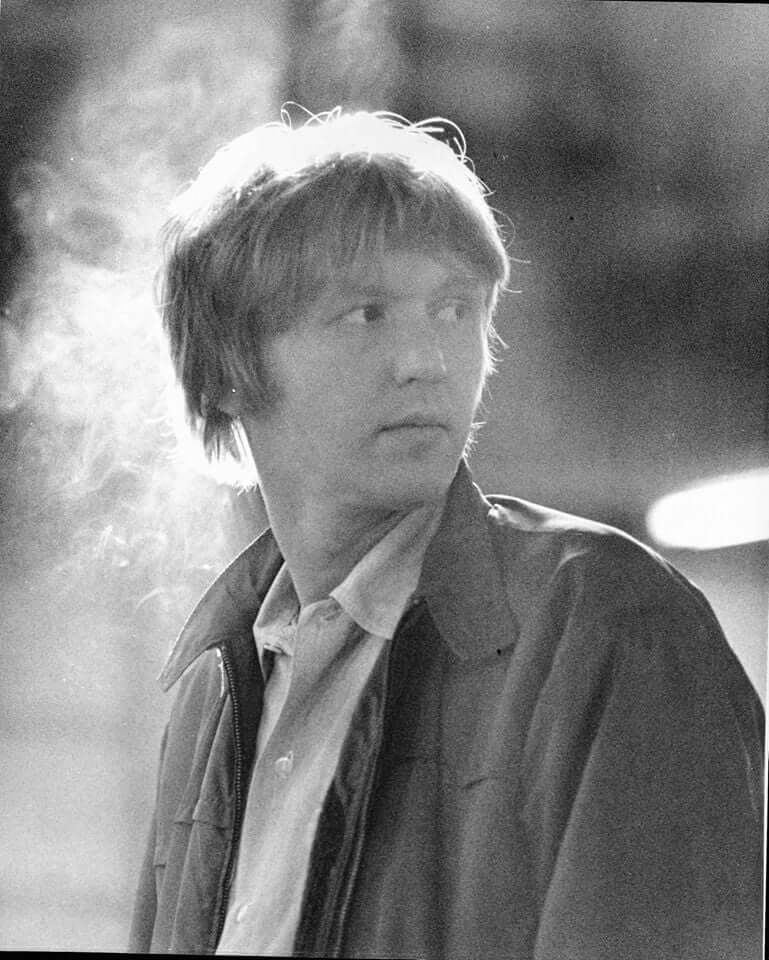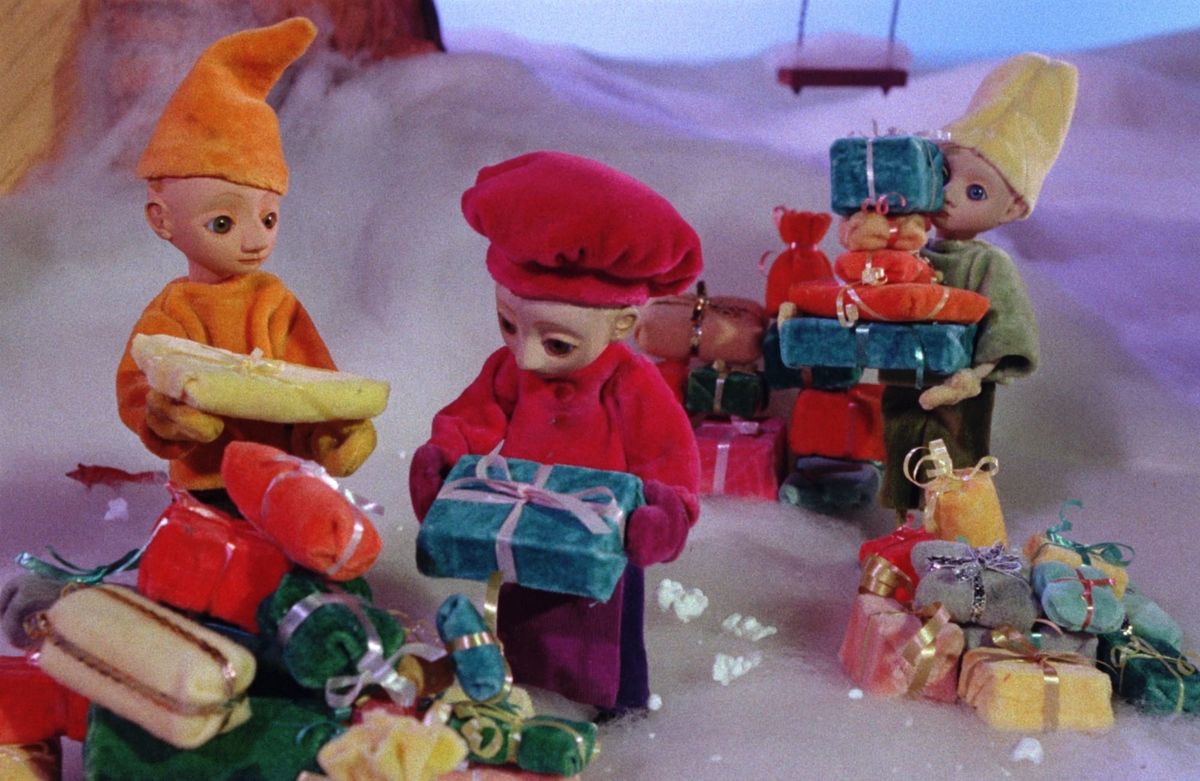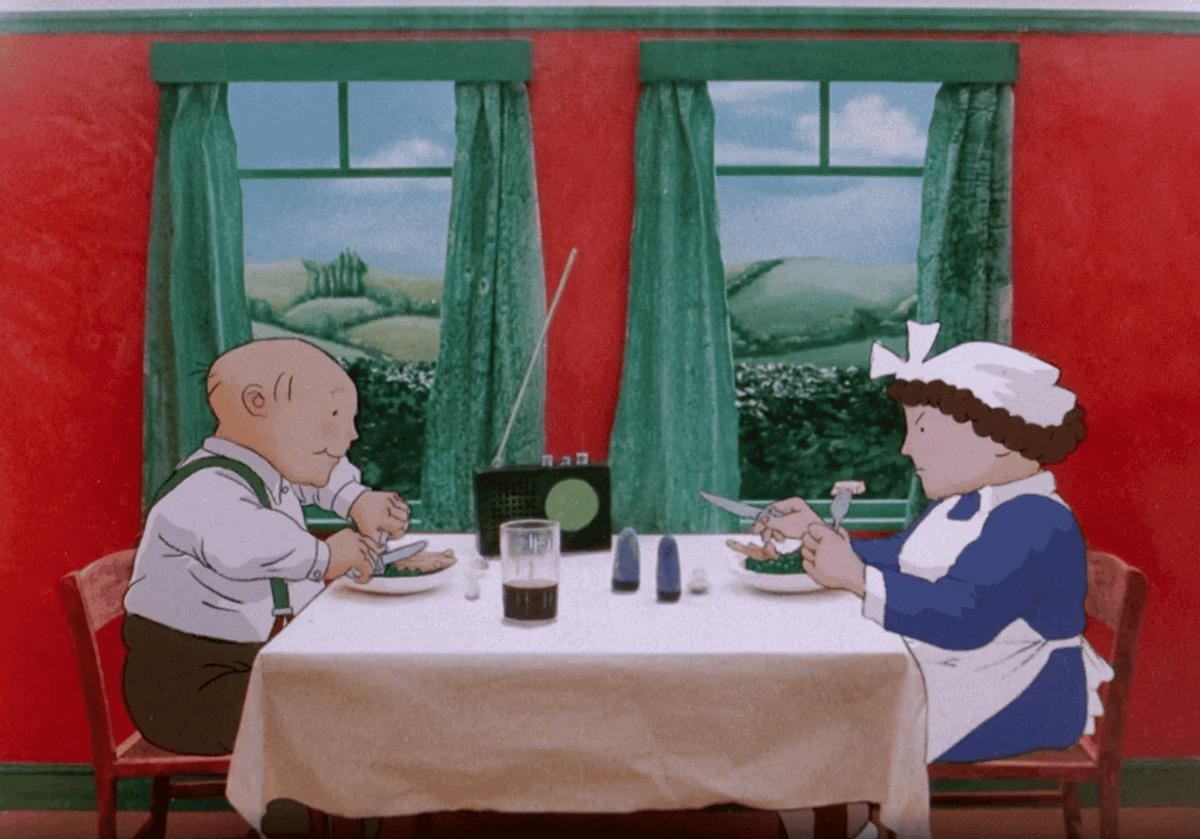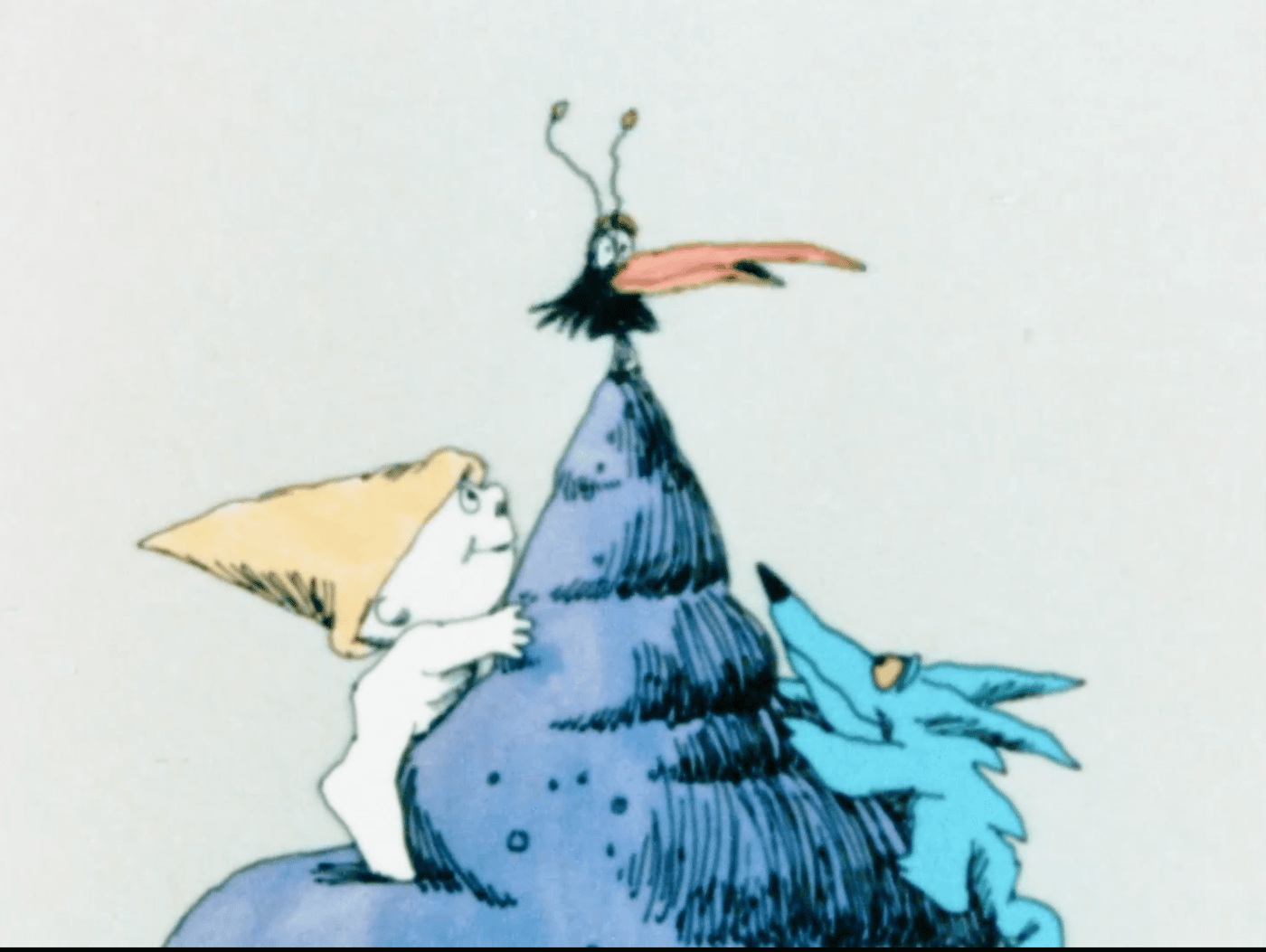
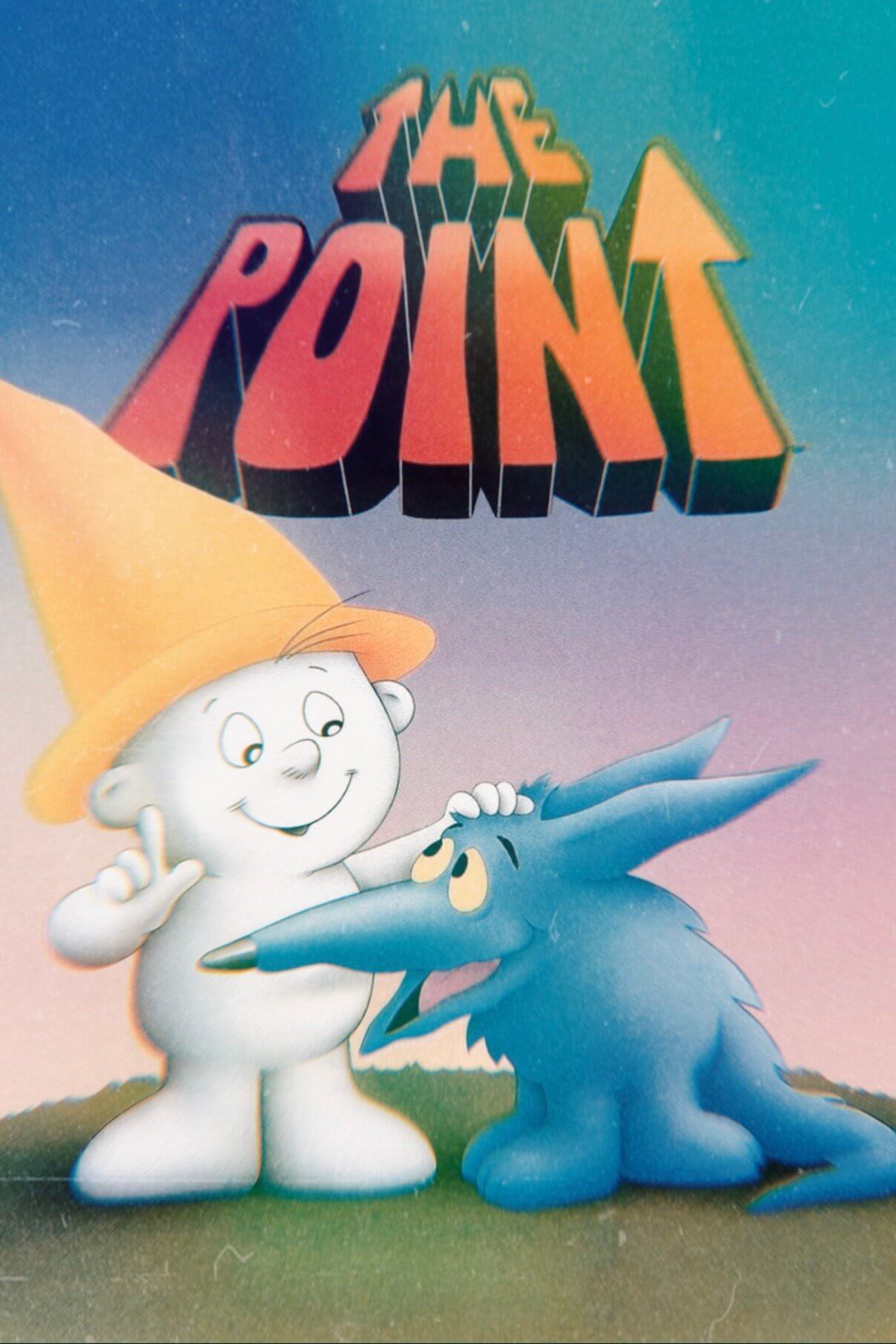
The Point is a psychedelic fable written and composed by Harry Nilsson. The story follows the journey of a round-headed boy, Oblio and his faithful dog, Arrow who live in the Land of Point. Oblio is born with somewhat of a deformity: he doesn't have a 'point' like the rest of the townspeople. Because of this, he and Arrow are exiled to The Pointless Forest. The story is laden with a stoned mysticism interspersed with sunny, playful music, all written by Harry Nilsson. A hallmark of 1970's music and media culture, it was conceived as a threefold multimedia project: a concept album, an illustrated storybook, and an animated TV special. Nilsson himself pitched The Point directly to ABC’s top executives, ensuring network support for “the first film of its kind” on television. And it was!

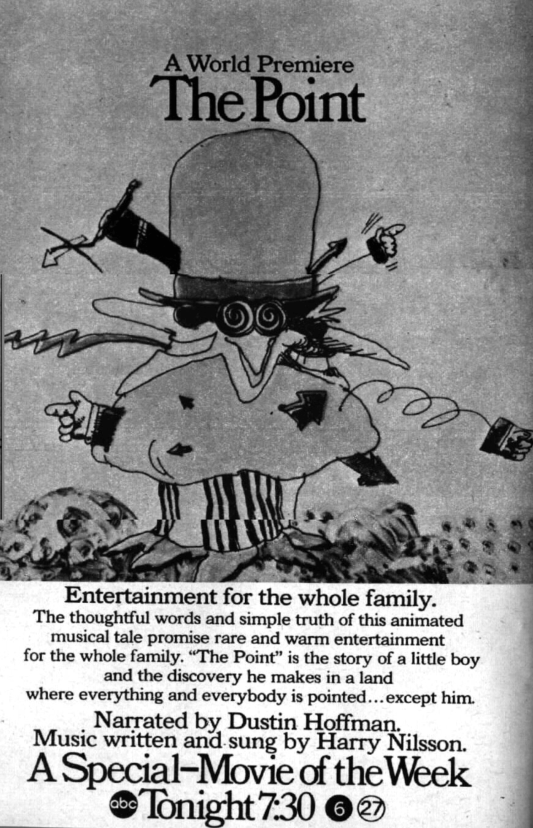
The animated special appears with a few different narrators, the first being Dustin Hoffman, as featured in the ABC flyer. Hoffman only agreed to his narration being used for the first release, so later, when The Point was re-released for home video Nilsson invited Ringo Starr to step in. Hoffman and Ringo are the two more prominent versions, but later telecasts also feature the voices of Alan Barzman and Alan Thicke. Of the two chief narrators, Ringo and Hoffman, they each bring out a different side of what The Point is all about: a psychedelic, brilliantly composed song cycle that presents itself as a children's story. Hoffman's narration feels more smooth, theatrical, and nostalgic, while even the idea of Ringo Starr's voice is funny, automatically likeable and more evocative of the music scene which Nilsson was so heavily ingrained. Below is the trailer of the Ringo cut, which is available to watch on Eternal.

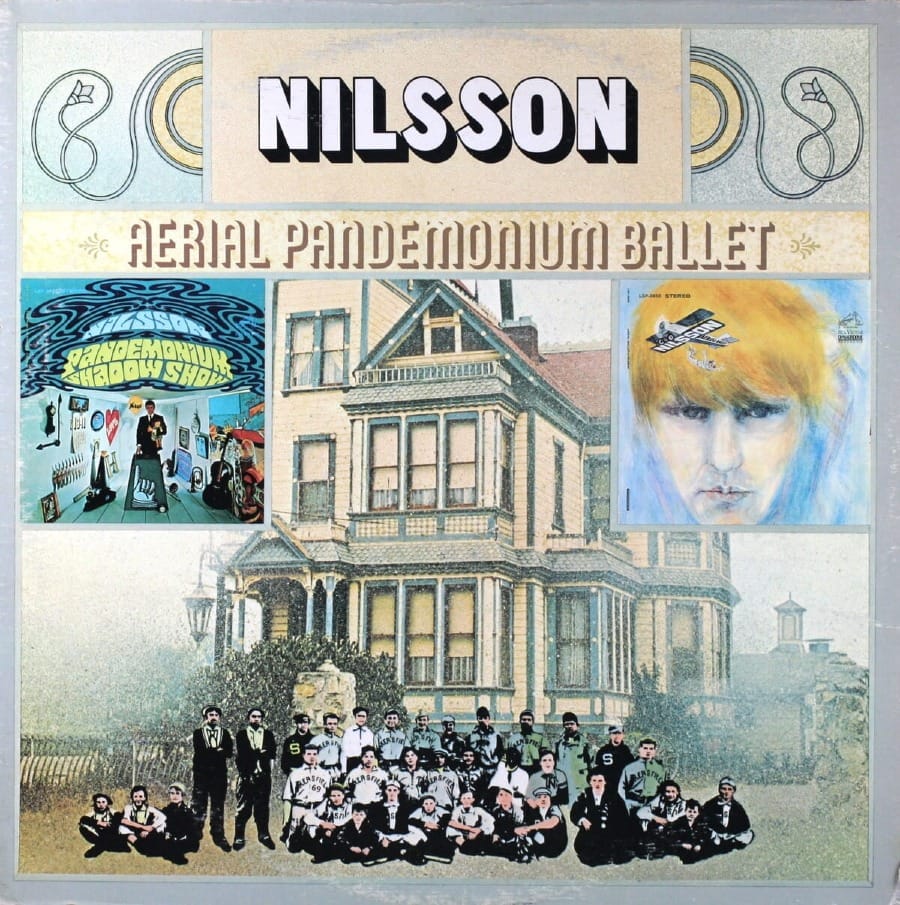
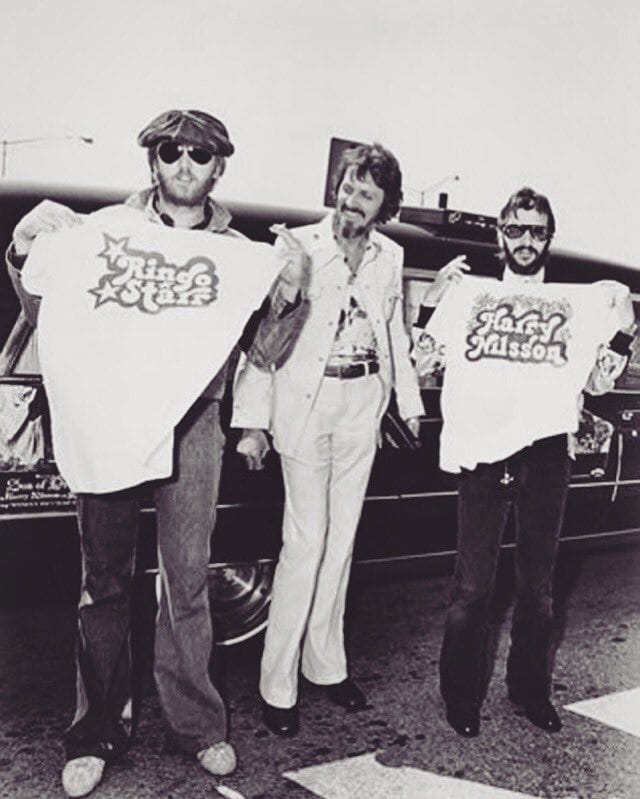
Nilsson was a longtime friend of the Beatles, their paths crossing when he was a young musician, newly signed to RCA while the Beatles were at their peak. When they met, the connection was instant, and The Point! marks only the beginning of a decades-long friendship with the group, particularly John and Ringo. Nilsson's career around this time was both prolific and pioneering: he even created the first remix album [Aerial Pandemonium Ballet, 1971] released the same year as The Point, and was the first major artist to have a Top 10 hit without touring.

In a famous anecdote Nilsson describes his moment of inspiration: “I was on acid and I looked at the trees and I realized that they all came to points, and the branches came to points, and the houses came to points. I thought, ‘Oh! Everything has a point, and if it doesn’t, then there’s a point to it.'” The heart of the story is a simple one, and a good one: everything's got a point to it, whether you see it or not. The acid epiphany gave him the central metaphor, but the soul of the film is really delivered in the music.
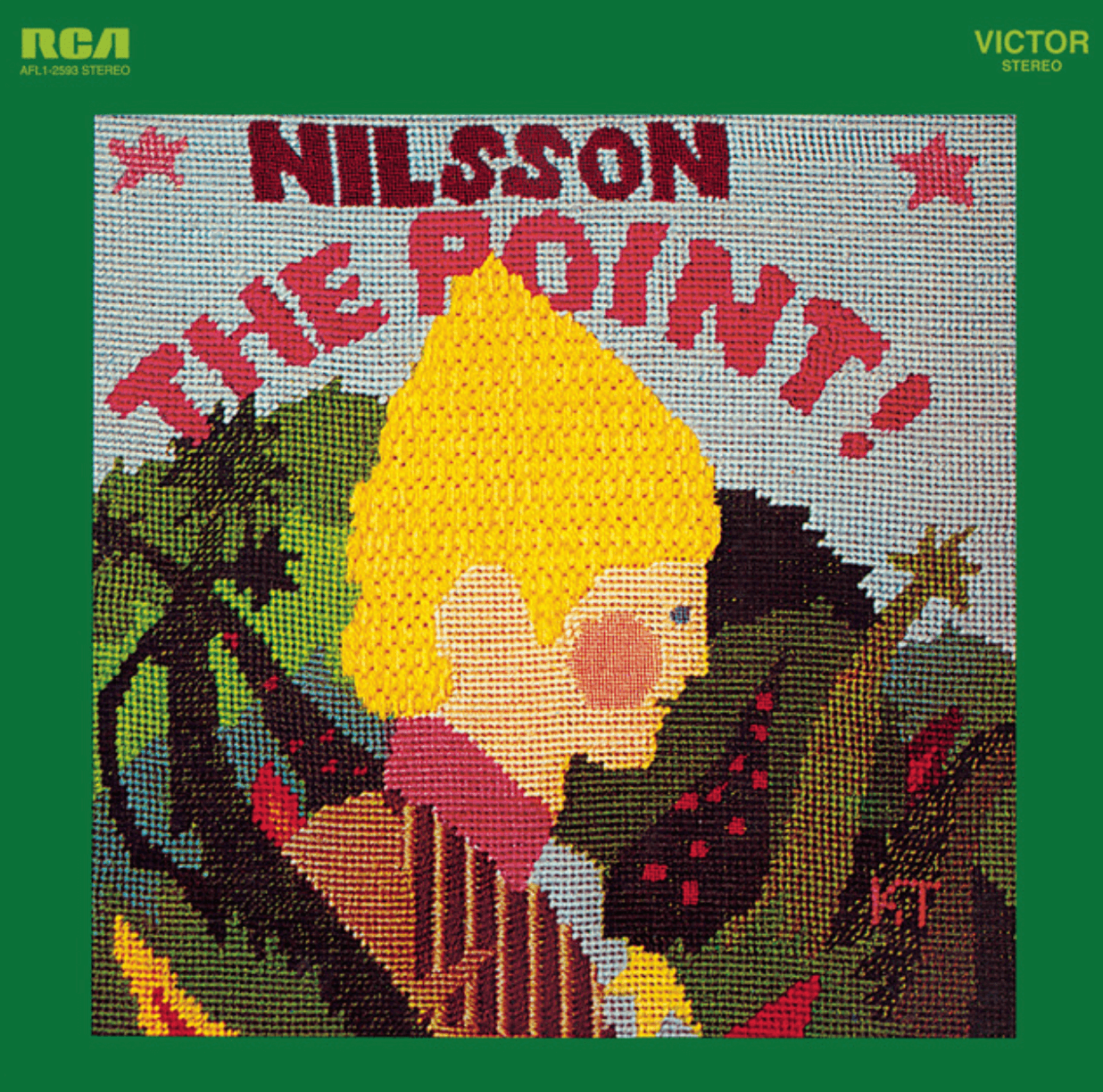
Nilsson’s composition on The Point! blends late-60s pop styles with baroque orchestration and childlike charm. AllMusic categorizes the album under pop/rock and even children’s music, highlighting its Contemporary Pop/Rock, AM Pop, Baroque Pop, and Singer/Songwriter qualities. The record taps into the “sunshine pop” of the era, with tight harmonies, layered vocals, and major-key brightness, while incorporating sophisticated orchestral touches. His sound in this era has shades of both The Beach Boys and The Beatles but is still uniquely his own.

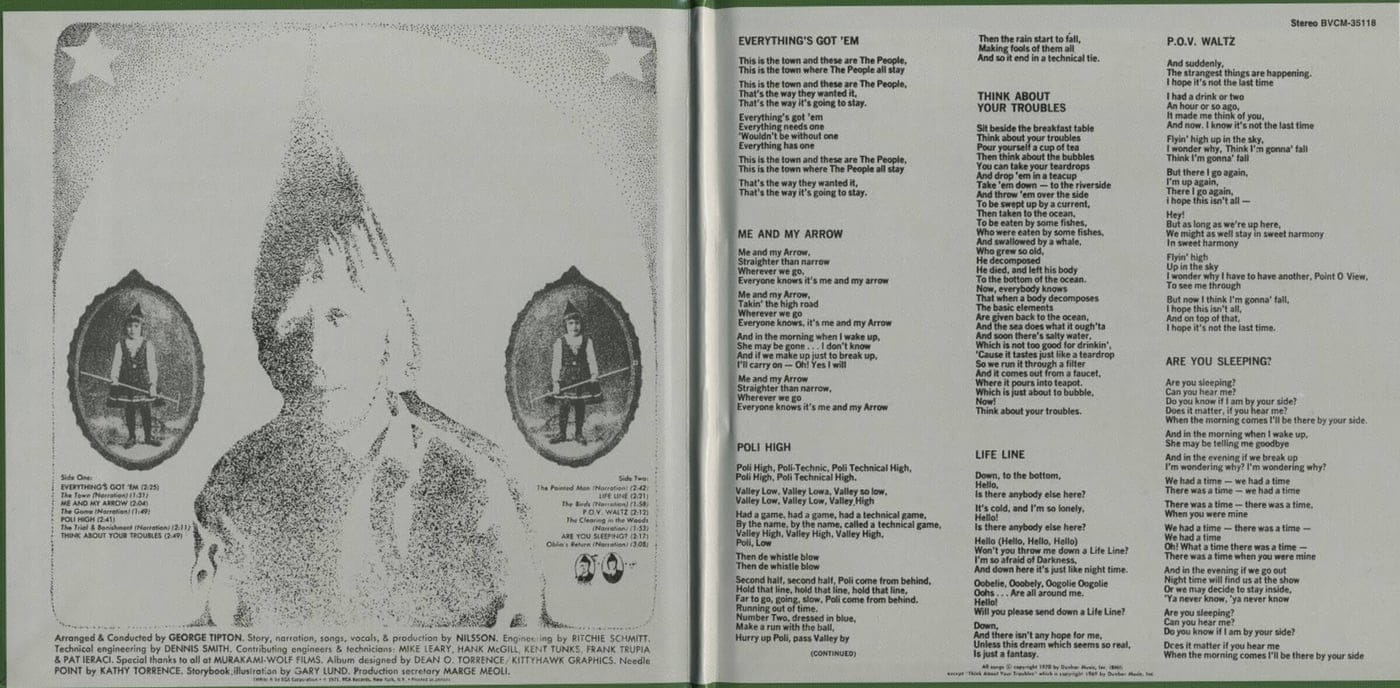
Nilsson wrote all the song lyrics, melodies, and story treatments himself. When working on the music, he arranged the album’s continuity—on the LP release Nilsson sings narrative bridges himself and does the different character voices, giving the album a seamless story-book feel and a listening experience unique from the film.

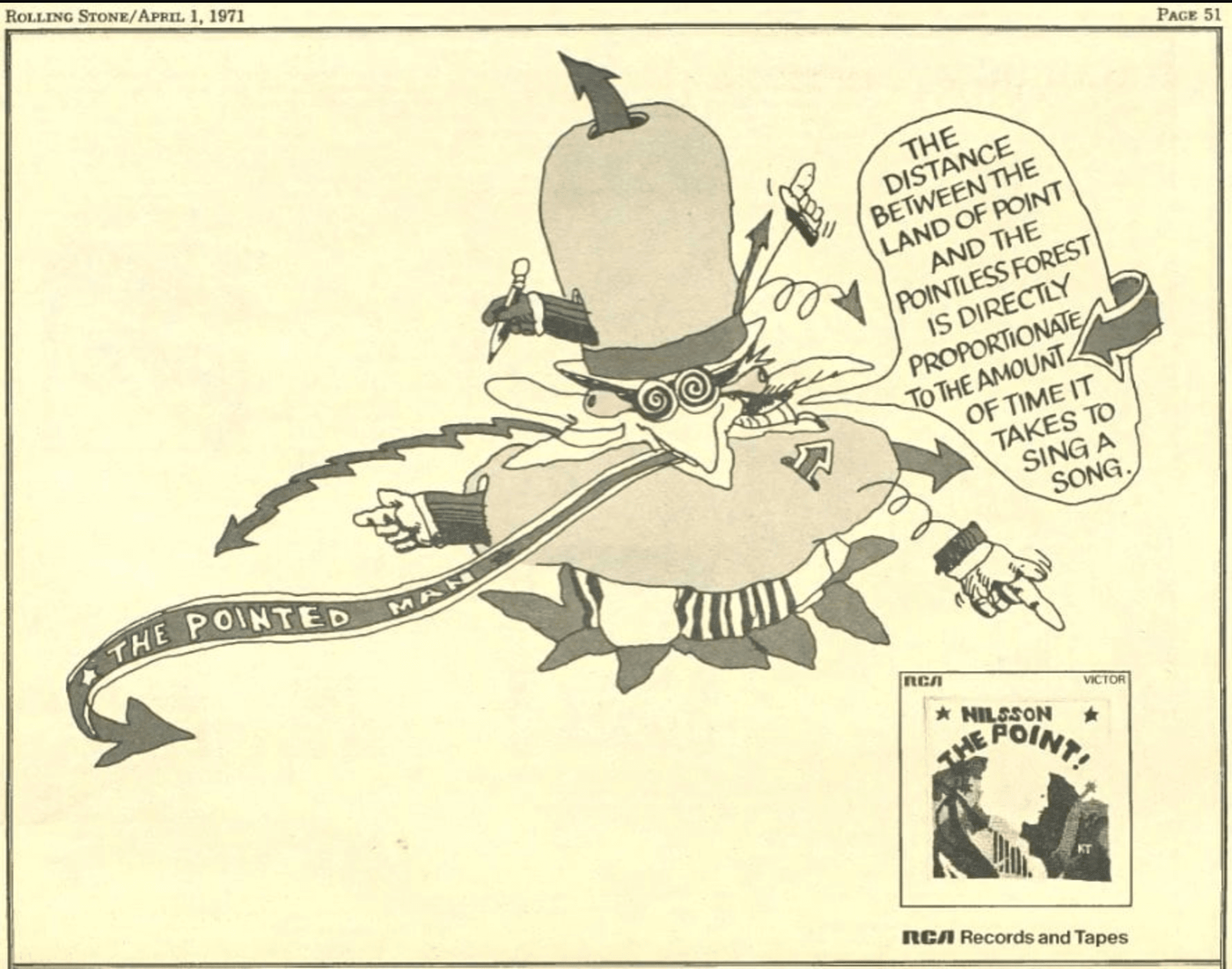
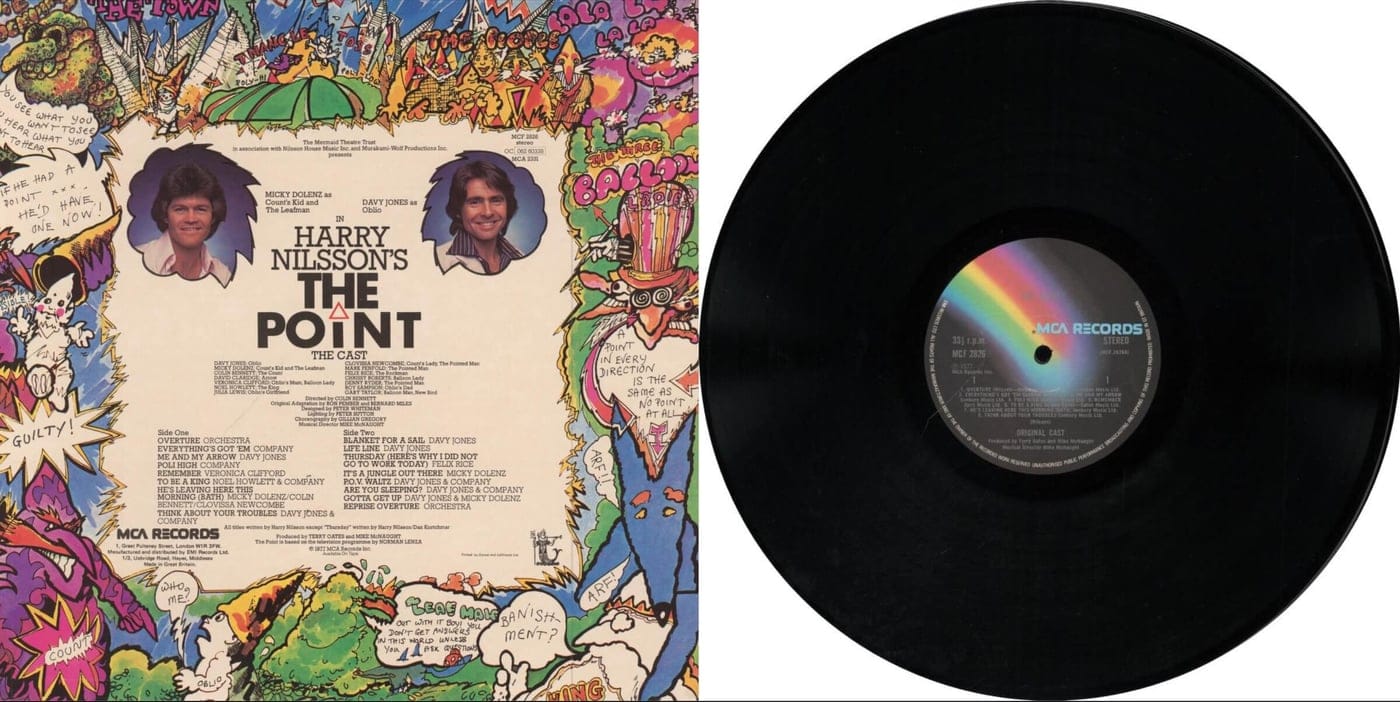

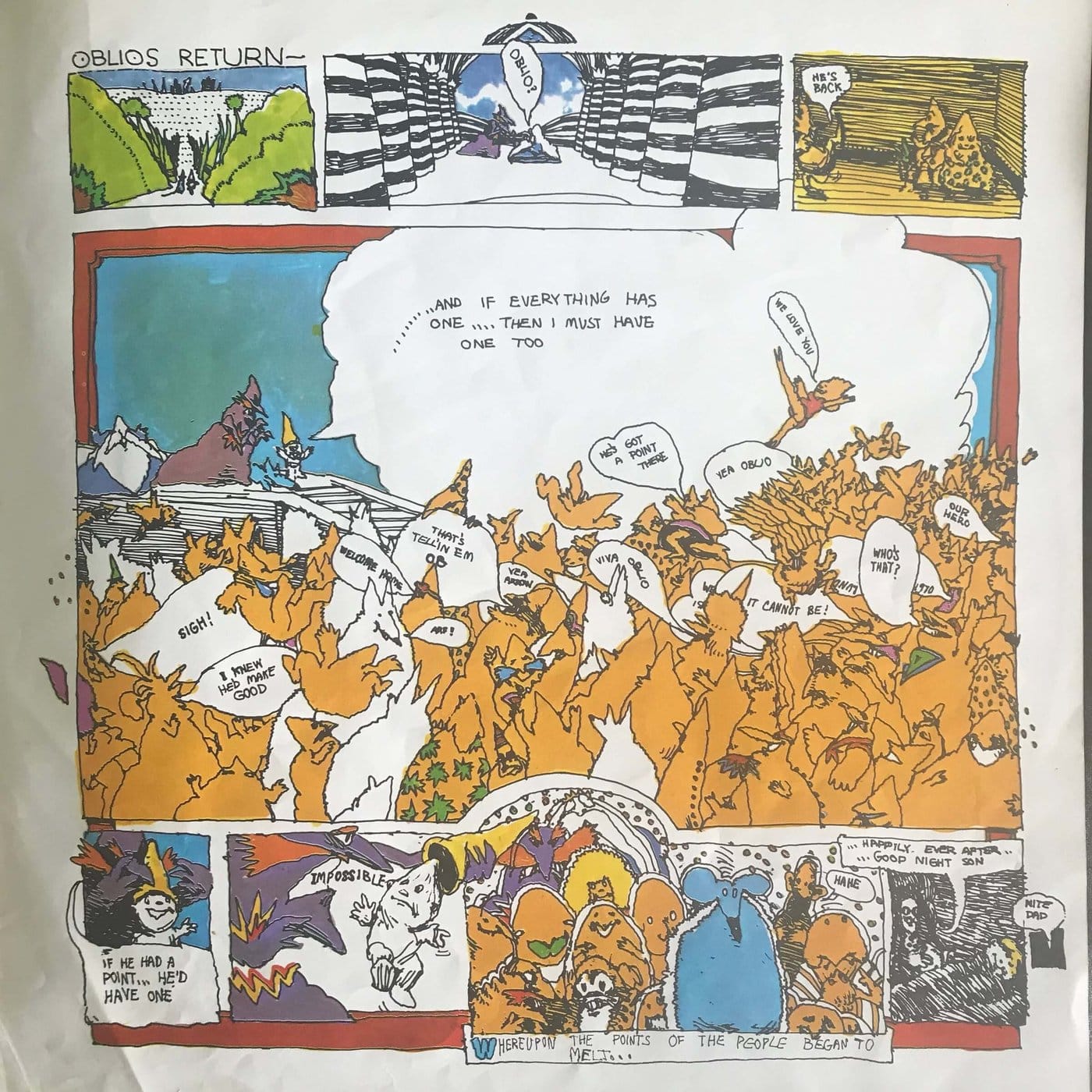
Nilsson’s personal touch extended to every part of the film, including production and design. He insisted on using underground-comic styles, and the LP was packaged with a comic illustrated by Gary Lund.
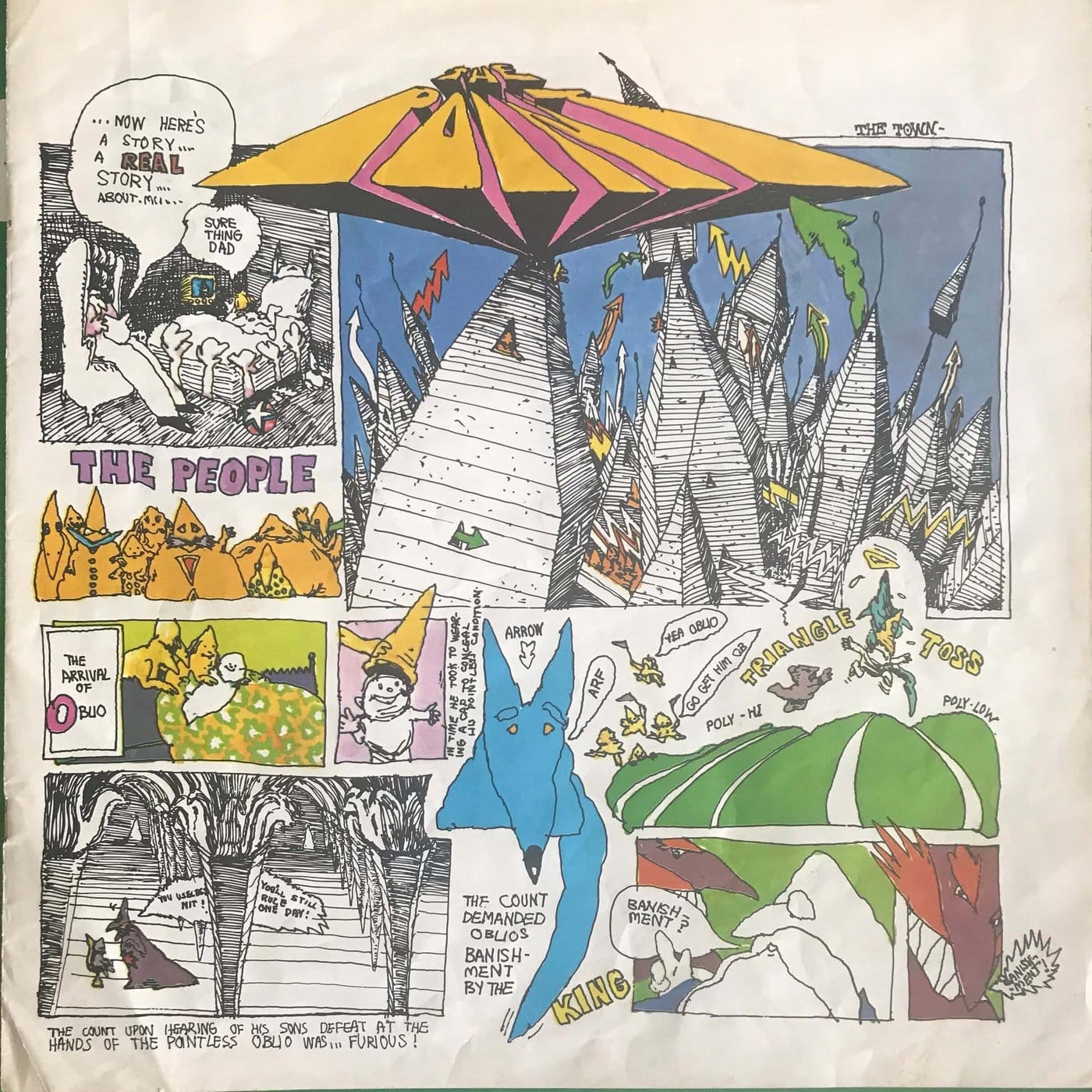
The comic style was a scratchy, free-form illustration style even more visually relaxed than the movie. Some graphic titles and scenes in the comic echo the soundtrack: (The Town, The People, Poly-Hi, Poly—Low), where other portions: (Banish-ment? Banish-ment!) reflect the dialogue. The comic becomes its own experience, not just a trivial inclusion but another enchanted object in Nilsson's universe.

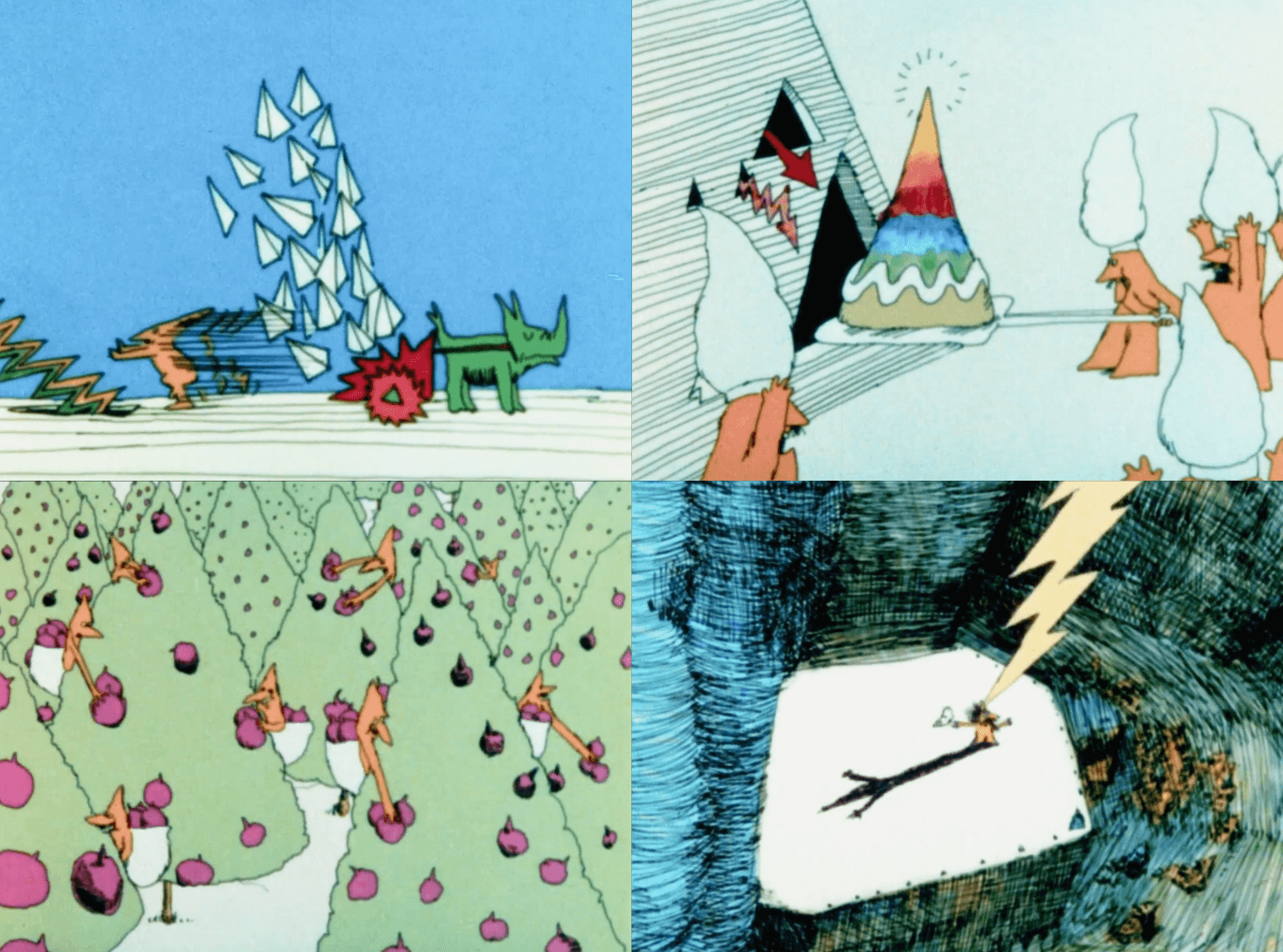
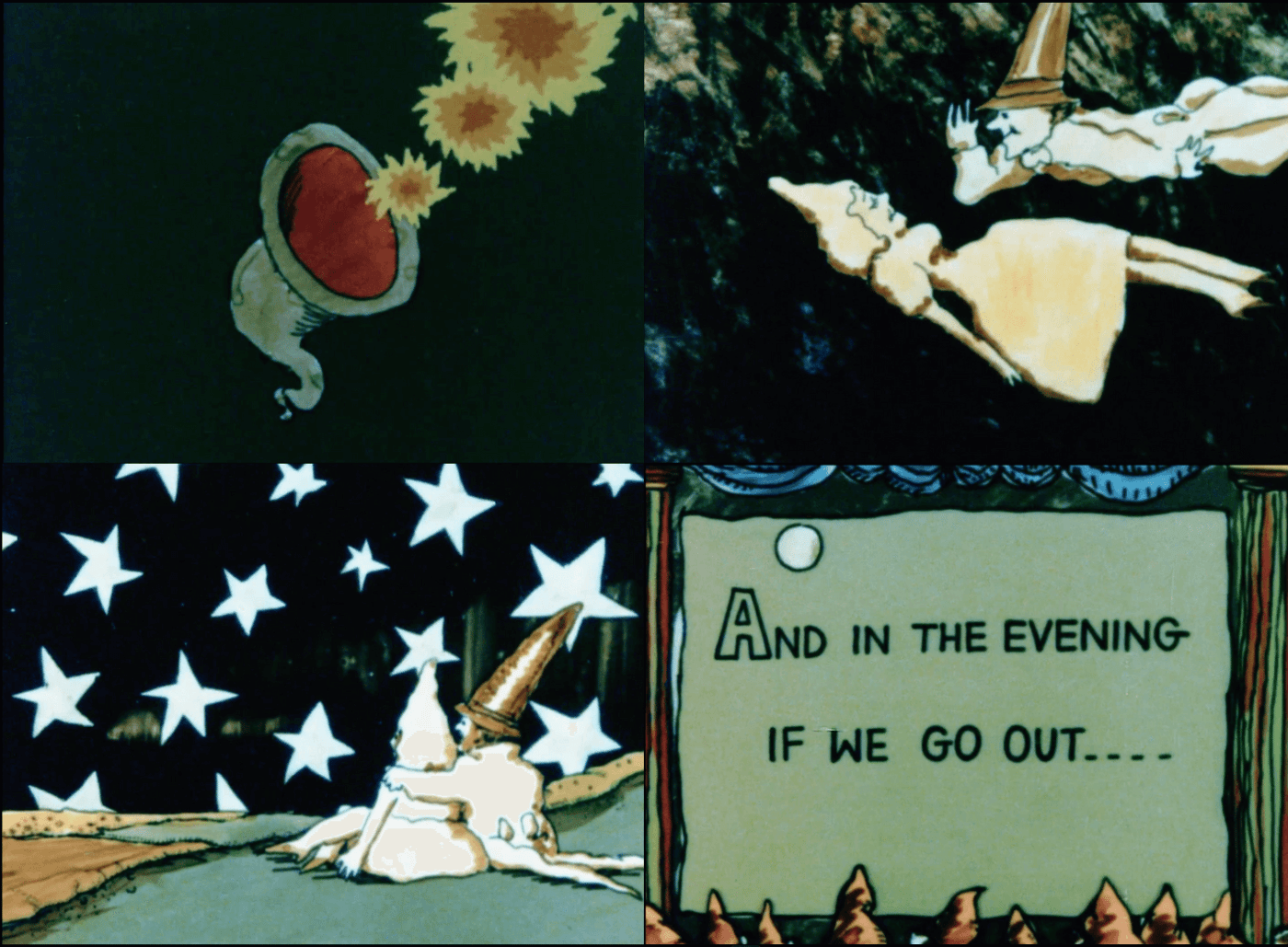
Lund and Nilsson worked together on the cartoon illustrations, and the animation was later taken up by Fred Wolf. Wolf's style (as most of us do) evolved considerably over the years, but in the 70's, the animation often had a "sketchy" and unrefined line quality. The best examples of this are his 1968 short The Box, which won the academy award for best animated short film, The Point!, and the animated segments in Free to Be... You and Me (1974).
The Box (1968)


On Nilsson's own website, a small update was made for him on the thirtieth anniversary of his passing, which we'll leave here as a small tribute:
Shortly before Harry Nilsson died, thirty years ago today, he told an interviewer that he wanted to be remembered for his best lyrics. Like these, from The Flying Saucer Song: “Late last night, in search of light, I watched a ball of fire streak across the midnight sky. I watched it glow, then grow, then shrink, then sink into the silhouette of morning. As I watched it die, I said, ‘Hey, I’ve got a lot in common with that light.’ That’s right. I’m alive with the fire of my life, which streaks across my span of time and is seen by those who lift their eyes in search of light to help them through the long, dark night.”