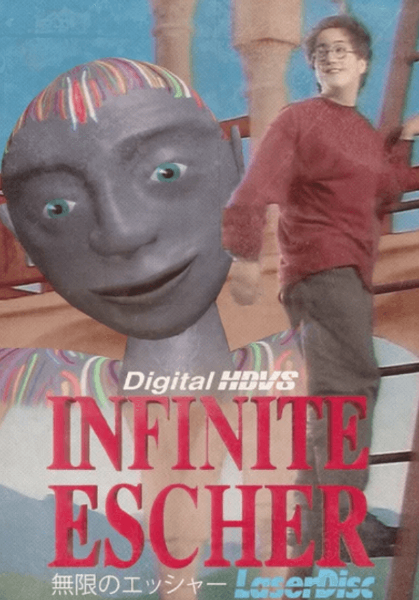
Directed by John Sanborn, Mary Perillo, and Dean Winkler (1990)
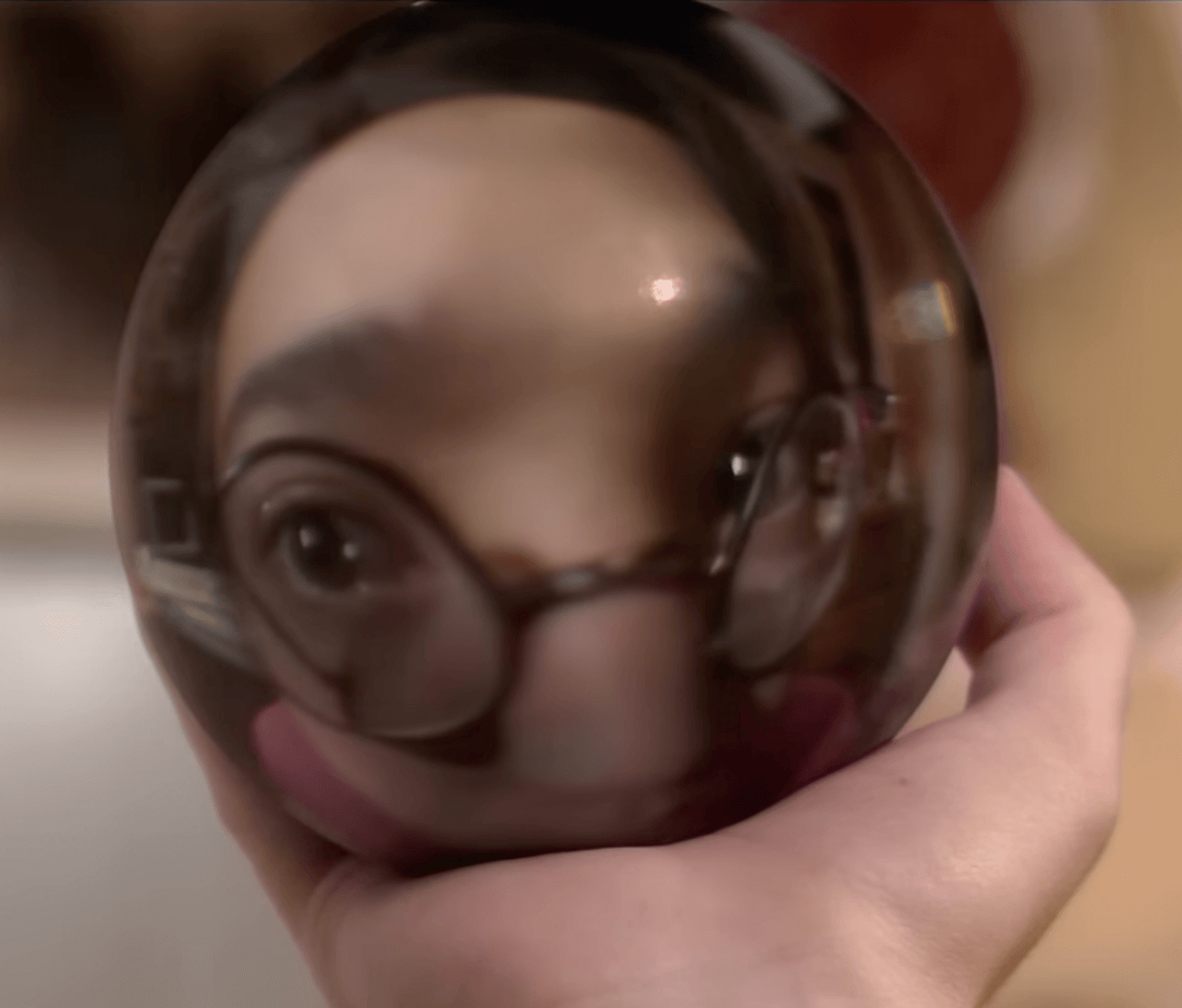
Part new media showcase, part modern art fantasy, Infinite Escher unfolds like a technologized Through the Looking-Glass: an unnamed boy (Sean Ono-Lennon) sketches quietly, disconnected from the world. He looks into a crystal ball, and the boundaries between reason and imagination dissolve.
We recently spoke with John Sanborn, who co-directed the film with Dean Winkler and Mary Perillo. John discussed the creative process, artistic influences, getting Sean Ono-Lennon involved, and working with legends Ryuichi Sakamoto and Nam June Paik.
Eternal Family: So, how did the concept for Infinite Escher come together?
JS: There was a great celebration in the 80’s that everything was possible. Sony was developing their own HD systems, so they wanted demos to show off the look, and what could be done with their graphics. At the time, it was only 780p, nothing like the HD we have today.
I can’t remember if the call came from Sony themselves or [Nam June] Paik, but they wanted to use CGI as a way of visualizing the impact Escher had on the world, bringing the fantasia of that style into video art.
Strange Loops & Tangled Hierarchies
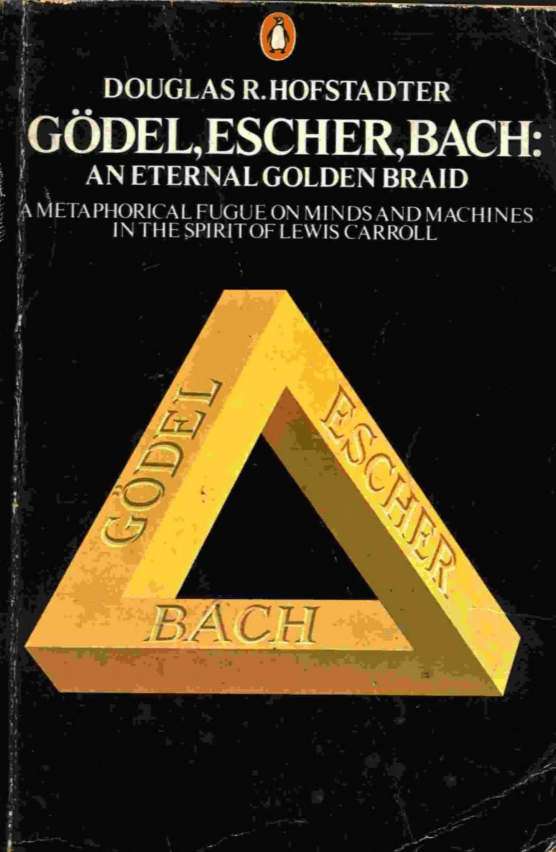
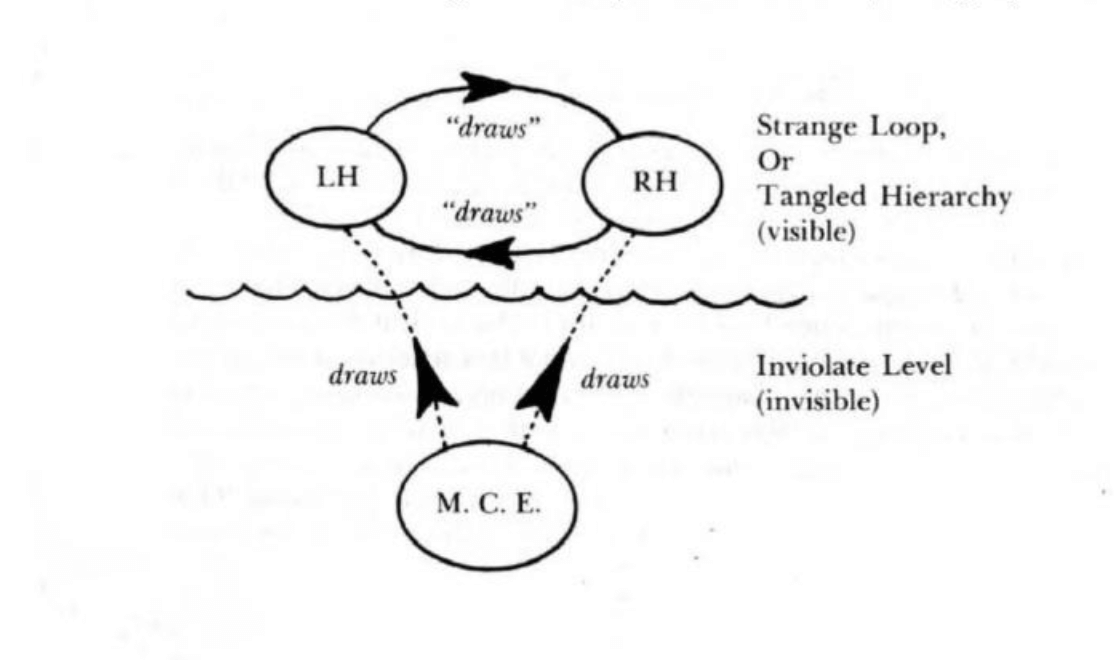
In Gödel, Escher, Bach: An Eternal Golden Braid, Douglas Hofstadter uses “strange loop” to describe situations in which, by moving through levels of abstraction, one returns to the starting point.
Travellers through such loops are changed yet unchanged. Traversed yet stagnant. This is the heart of Infinite Escher.
The boy explores a world of contradictions, only to return to his seemingly unchanged bedroom, glowing with residual meaning. Escher’s work thrives on these paradoxes, and the film transforms them into experience.
Eternal Family: How did you decide which Escher works to include?
JS: We tried to include as many works as possible. Escher compounded and compacted the stuff of life, whether in a globe or a panoramic view. Tessellations, geometry, the idea that something can be one way at first and be very different the next time you look at it … all of these things were a big part of how the film came together.
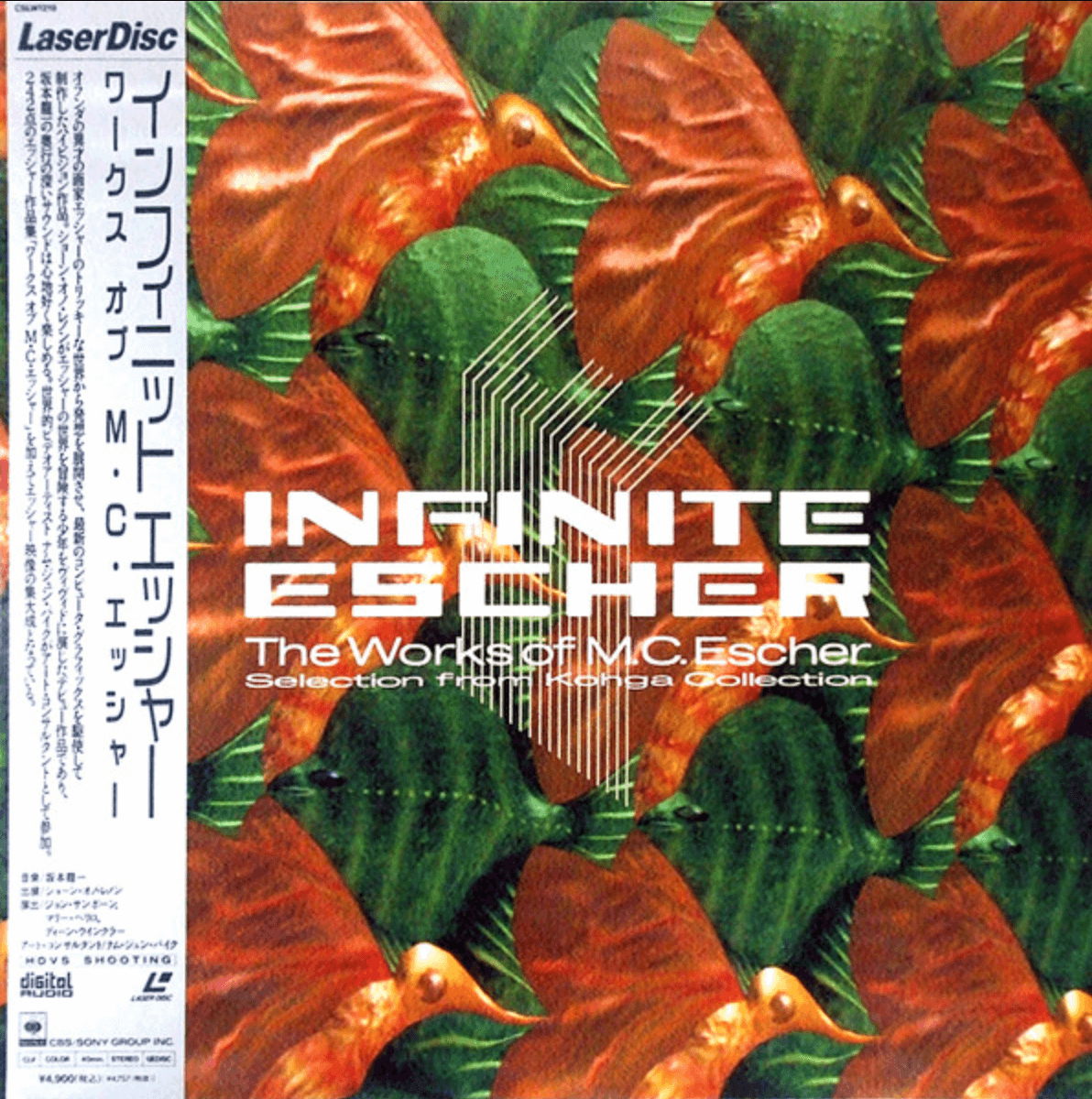
Soundtrack by Ryuichi Sakamoto
The film’s soundtrack, composed by Ryuichi Sakamoto, builds its own recursive architecture. As the visuals spiral, morph, and repeat themselves, the score does the same.
It doesn’t drive the narrative so much as mirror it, reinforcing the dual feeling of structure and fantasia that an Escher print imparts.
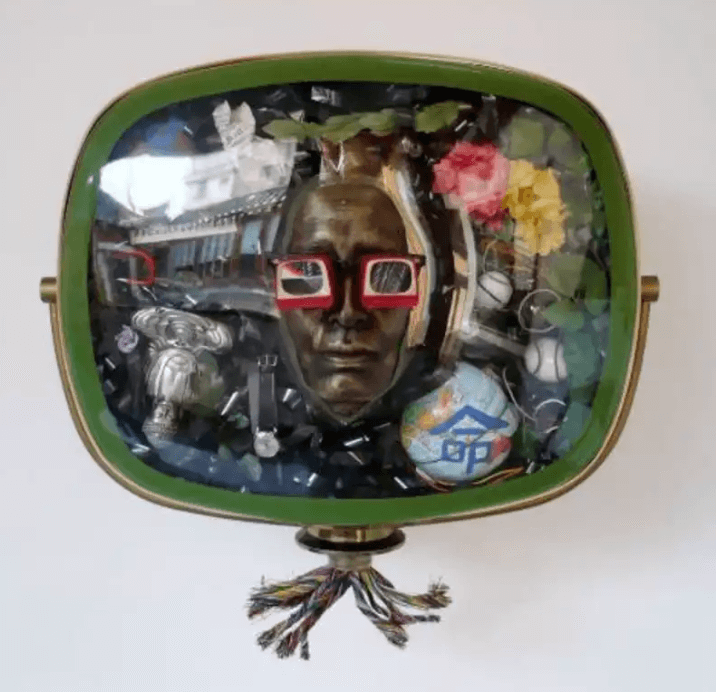
Art direction by Nam June Paik
Paik’s involvement as the film’s art director is telling: a prophet of media collage, his aesthetic fuses technology, myth, irony and transcendence.
“Paik took me under his wing when I was very young” Sanborn recalled: “I was sort of a student/informal apprentice, and he was the one who brought me onto this project.”
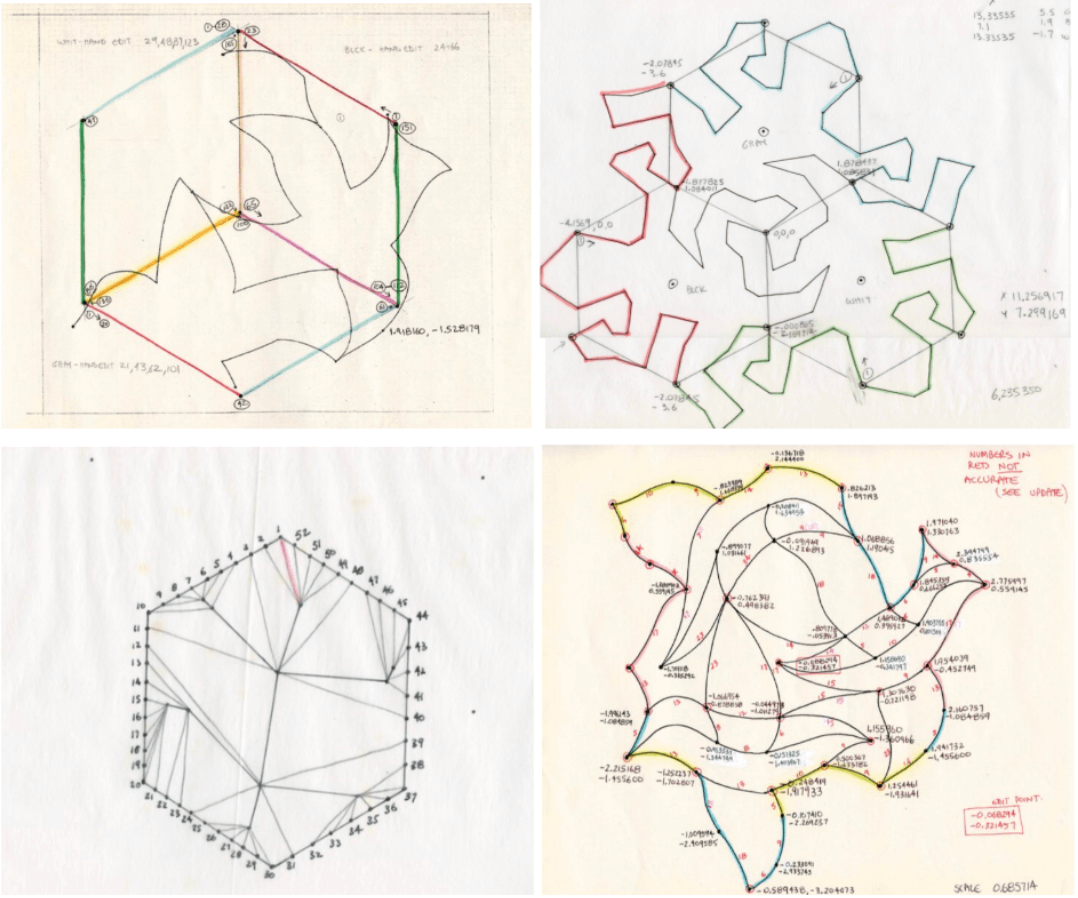
Tessellated Surfaces
“Of course, Escher's tiling and transitions are works of genius. But, after going down the "Metamorphosis II" rabbit-hole, it became clear there were some awkward sections using "cheats" you could only get away with in a flat, 2D illustration” writes Floyd Gillis, an animator on the film.
Escher’s prints often begin with something familiar, an insect, a fish, a square of sky, and tessellate outward until the repetition becomes metamorphosis.
In Metamorphosis II, ants become birds, land becomes sea, and one idea slips into the next with uncanny smoothness.
Floyd continues, “All the geometry morphing effects in ‘Metamorphosis II’ were created using custom code I wrote in ‘C’, and the texture maps were created on the Quantel Paintbox.”
The Attendant Spirit
(or, what is a Simurgh?)
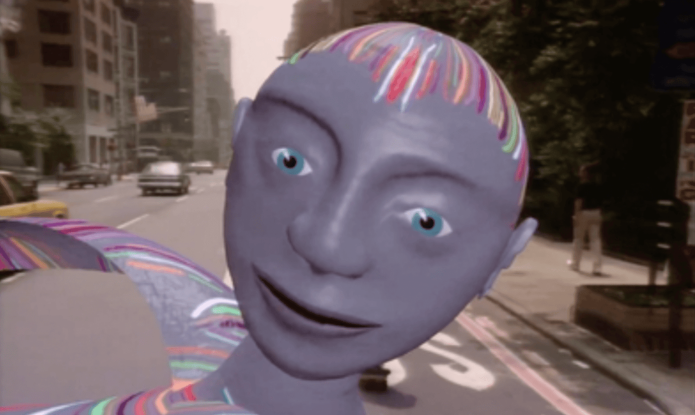
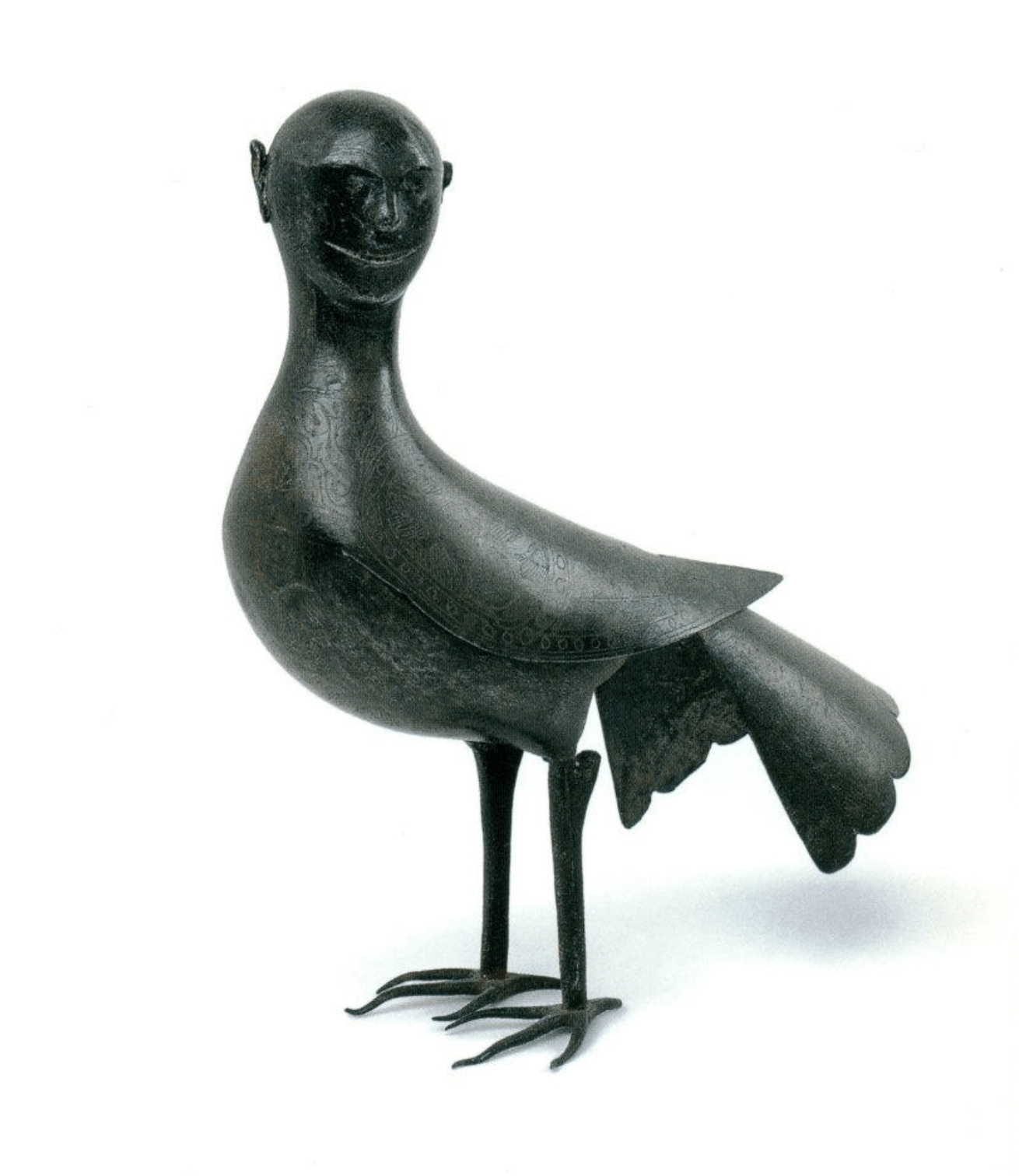
Guiding the boy on his journey is the part-human, part-bird figure known as a Simurgh: a benevolent creature from Persian mythology. The Simurgh is a symbol of renewal and revelation, and in Infinite Escher, it appears first as a distant observer, then as a kind of spiritual guide.
Escher himself was fond of the Simurgh image, inspired by a figurine given to him by his father-in-law (pictured above). Here, the Simurgh becomes the spirit of the Escherian world, a living glyph that navigates the world alongside Sean. When he returns to the “real” world of New York City, things have changed, and the Simurgh follows. The strange logic of Escher’s universe might not be so easily left behind.
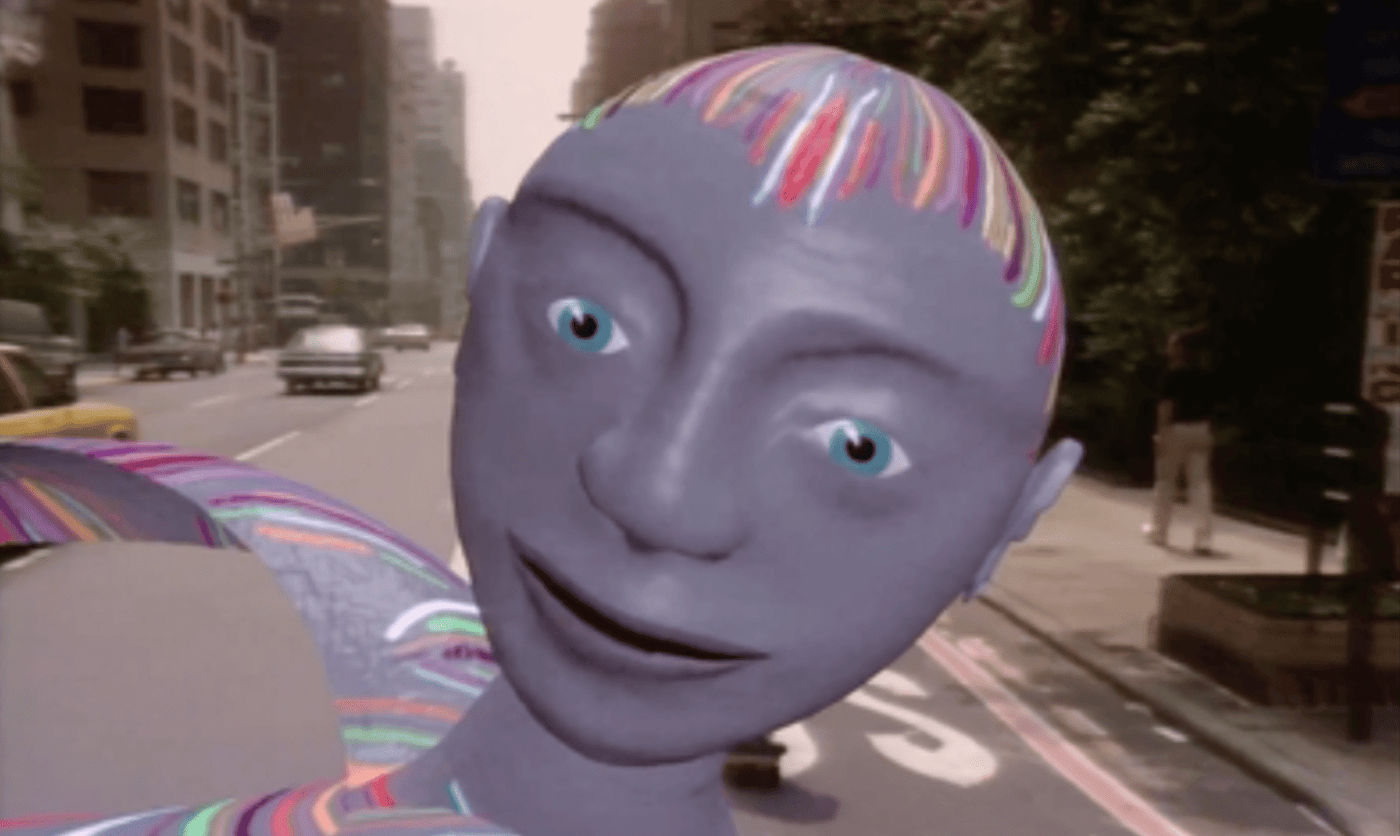
The Simurgh “was a nightmare element to create and animate” writes Gillis.
“Several facial expressions were built by, literally, pushing and pulling hundreds (thousands?) of individual points on the Simurgh’s face, using only a mouse and the viewport.”
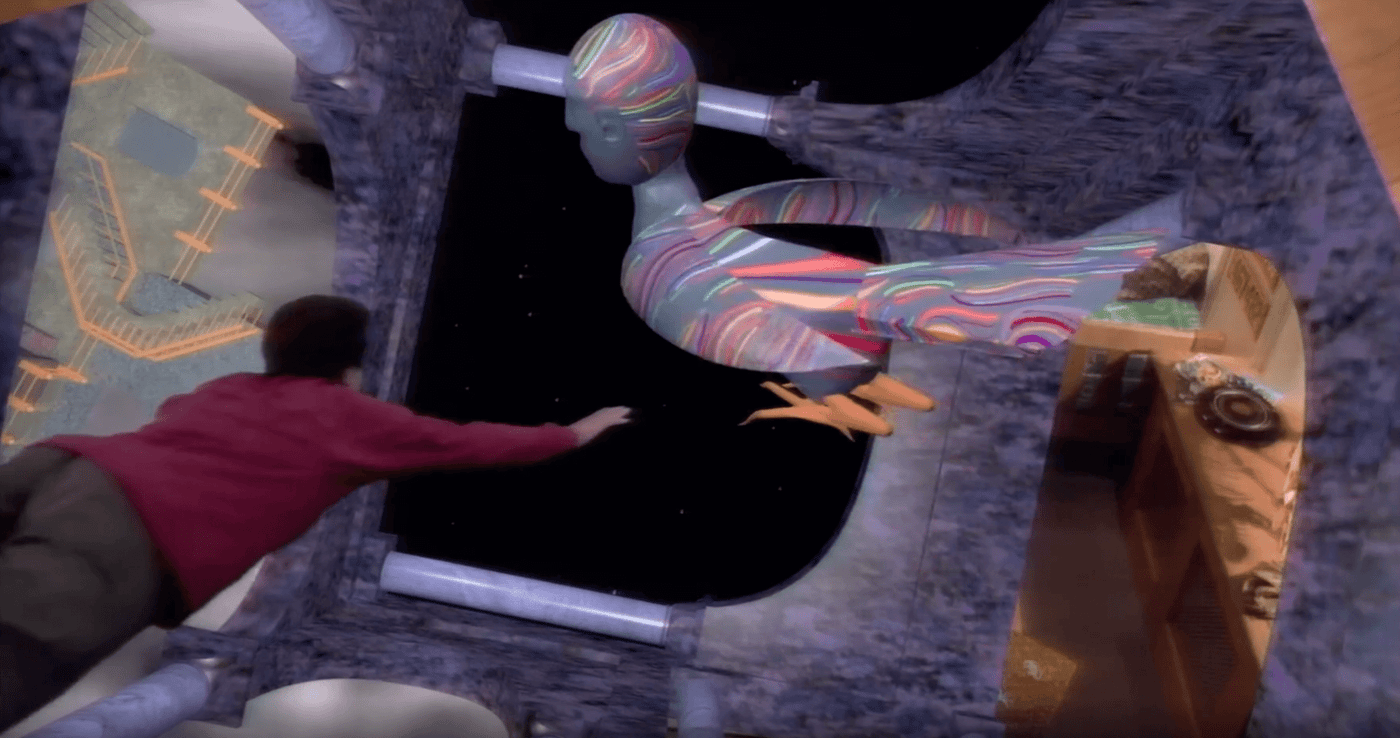
Eternal Family: what made you choose this creature for the story?
JS: “We wanted to give the boy a pet [laughs] but it was also an interesting figure to include. It’s a Sufi symbol—the Simurgh is the catalyst for bringing the birds into a flock. There’s an interesting book I have about it, 12th century Persian mythology called The Speech of the Birds.
Sanborn walks to his shelf and returns holding this edition:
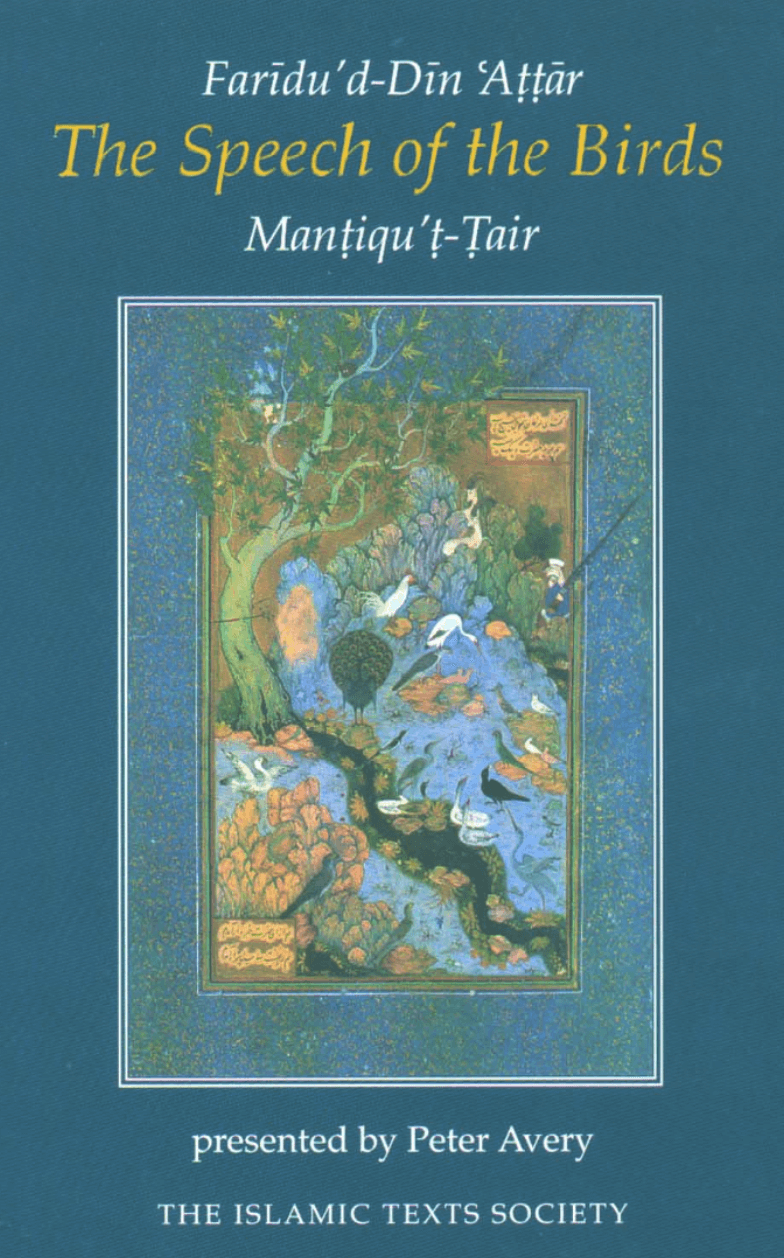
“In the poem, all the birds in the world gather together in order to find this Simurgh. They pass through seven valleys of experience, and when they cross the seventh valley they find nothing — it’s a journey that ends in mystery. Rumi talks about this as well: “out beyond good and bad there is a field, I will meet you there.” It’s an idea you see a lot of in Sufism; meaning is unobtainable, mysteries are the source of propulsion, those are the things that drive us. When you accept that, only then will you know truly who you are.”
Infinite Escher is now available for streaming on Eternal Family as part of the John Sanborn Collection, also featuring Ear to the Ground (1982), Cause and Effect (1988), and Untitled (1989).
Written by Megan Switzer, edited by Ben Gloger.