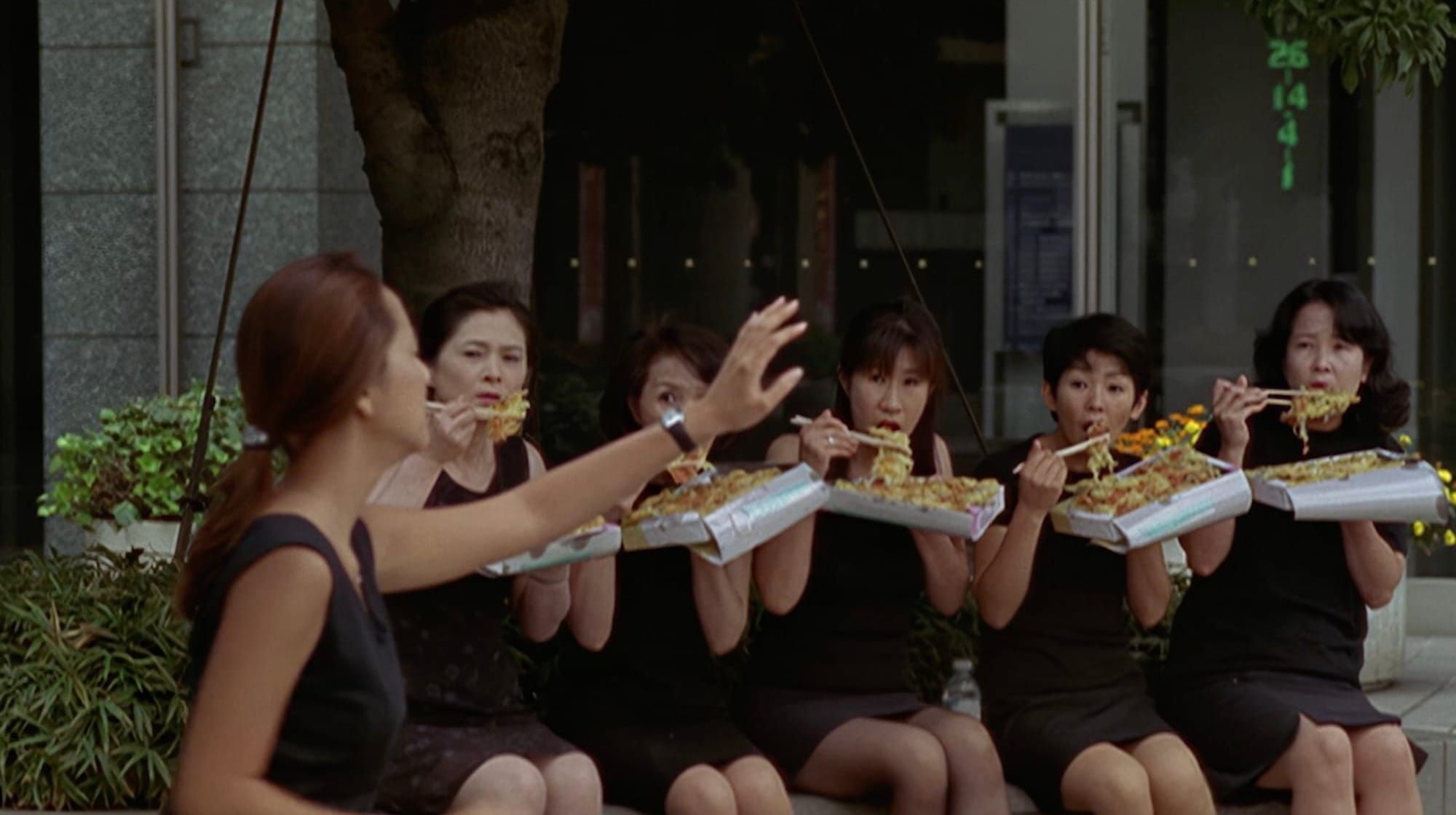
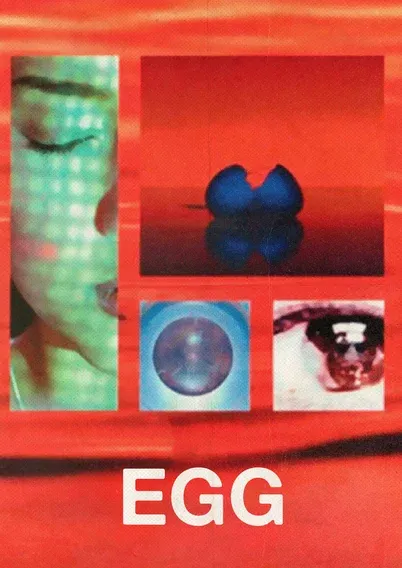
A mutant synthesis of psychological thriller, absurdist comedy, and creature feature, Yukihiko Tsutsumi’s EGG (2005) belongs to the Japanese tradition of Kaiju, or monster cinema, though its creature occupies an unusually intimate territory. Rather than terrorizing a metropolitan population, the monster lives inside the mind of a single woman (many such cases am I right ladies). Its combination of practical effects and early CGI produces an aesthetic that feels proto-vaporwave. A particular strength of the film is its tonal elasticity: the ease with which it moves between passages of ambient beauty, physical comedy, and body horror.

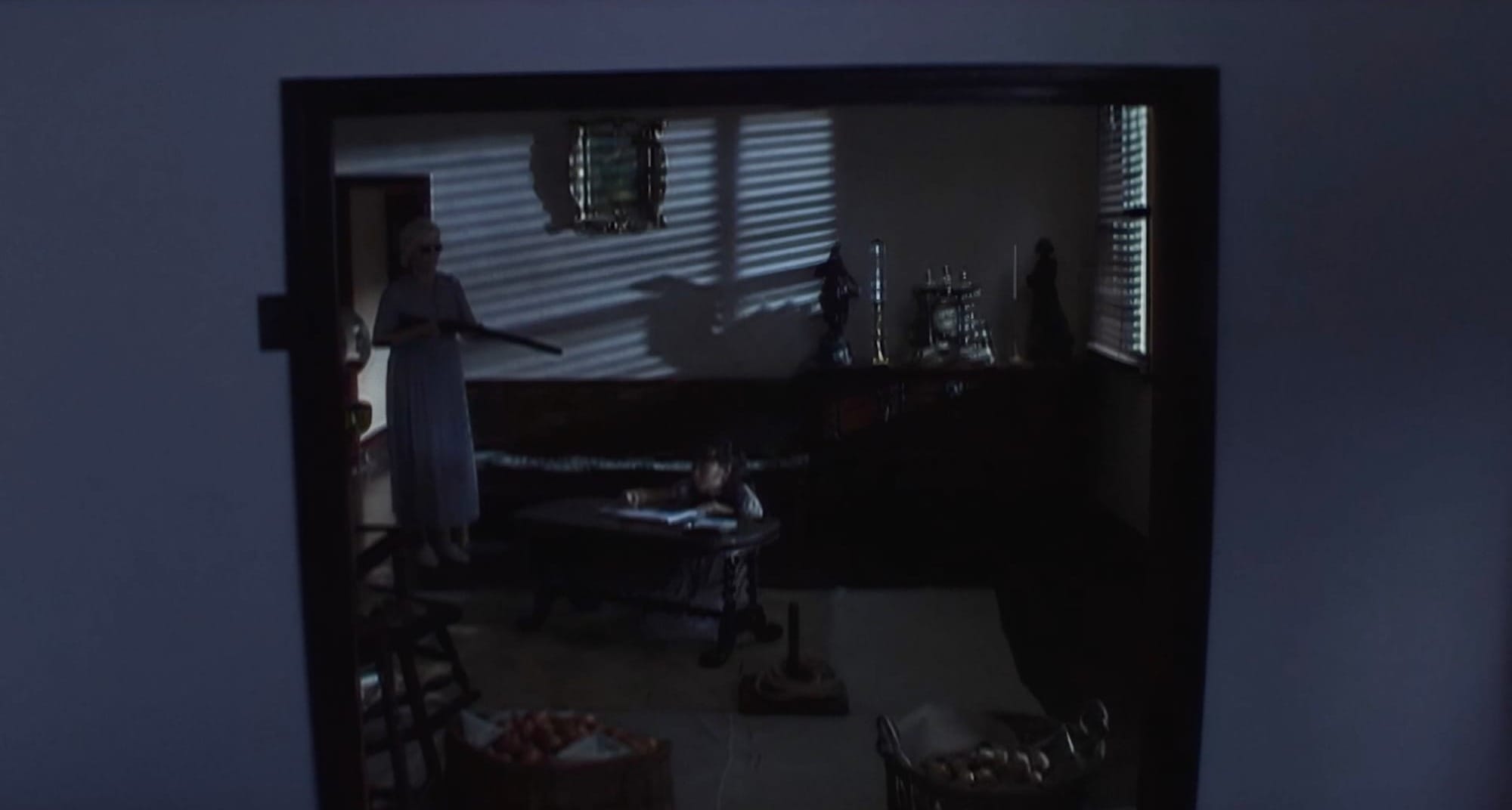
The story begins in medias res, with a particularly jarring scene of a young girl fervently drawing a picture of an egg in a darkened living room. Watching her is an old Russian woman in sunglasses--she tells the girl to stop what she's drawing but the girl silently refuses. Slowly, the old woman walks to the other room and takes a rifle in her hands, coming back to the living room. She fires the gun, and lowers it slowly. The camera cuts to a blood-splattered portrait of Joseph Stalin, and the woman sits down, removing her sunglasses to reveal deep black voids where her eyes should be. "God is dead" she murmurs in Russian, and the sequence fades out. This is the context that sets us up for the rest of the film, pieces which only come together in the final culminating scenes.
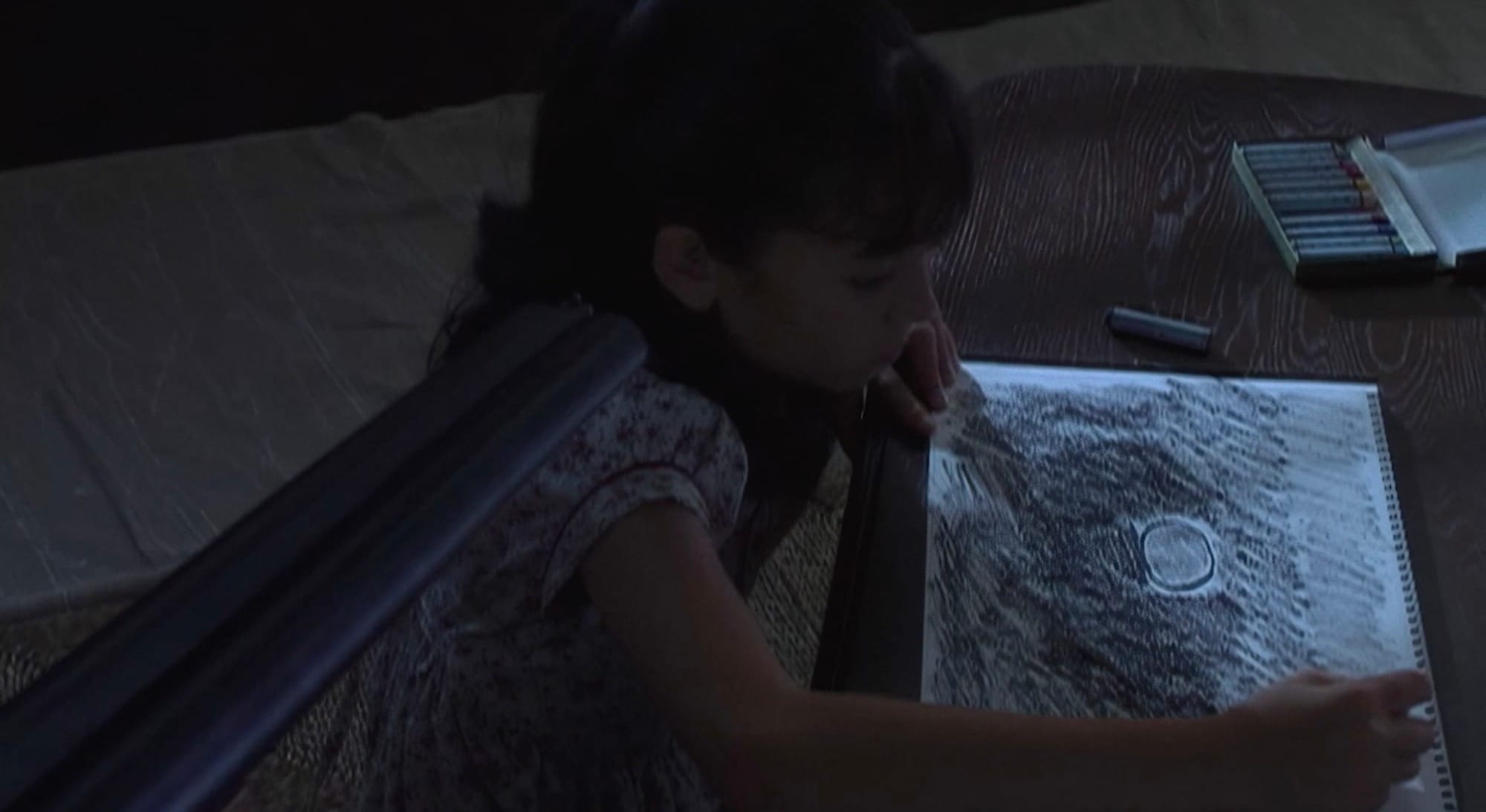



Flash forward some time to Arai Tsukiko, a young woman working as a software debugger in Japan, who has been afflicted since childhood by a peculiar phenomenon: whenever she closes her eyes, she sees an enormous egg, the same one the young girl had been drawing years before. With each successive blink, the egg inches closer to hatching, suspense building as we find out what horrors it contains.
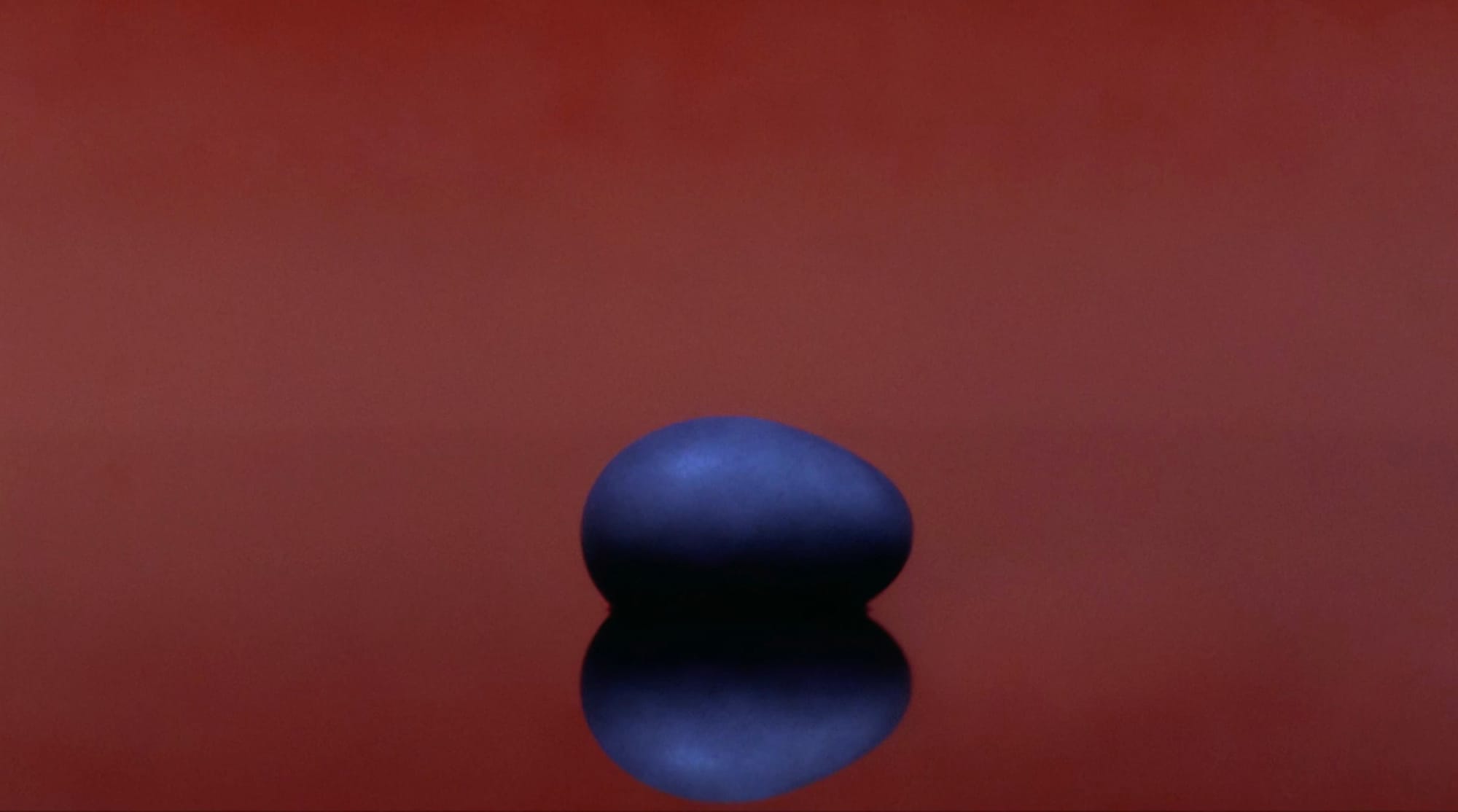
The irony of her being a professional debugger quickly becomes apparent: as she sorts through page after page of data, extracting the outliers, she's faced with the same problem in her own consciousness, and is unable to get rid of the bug within.
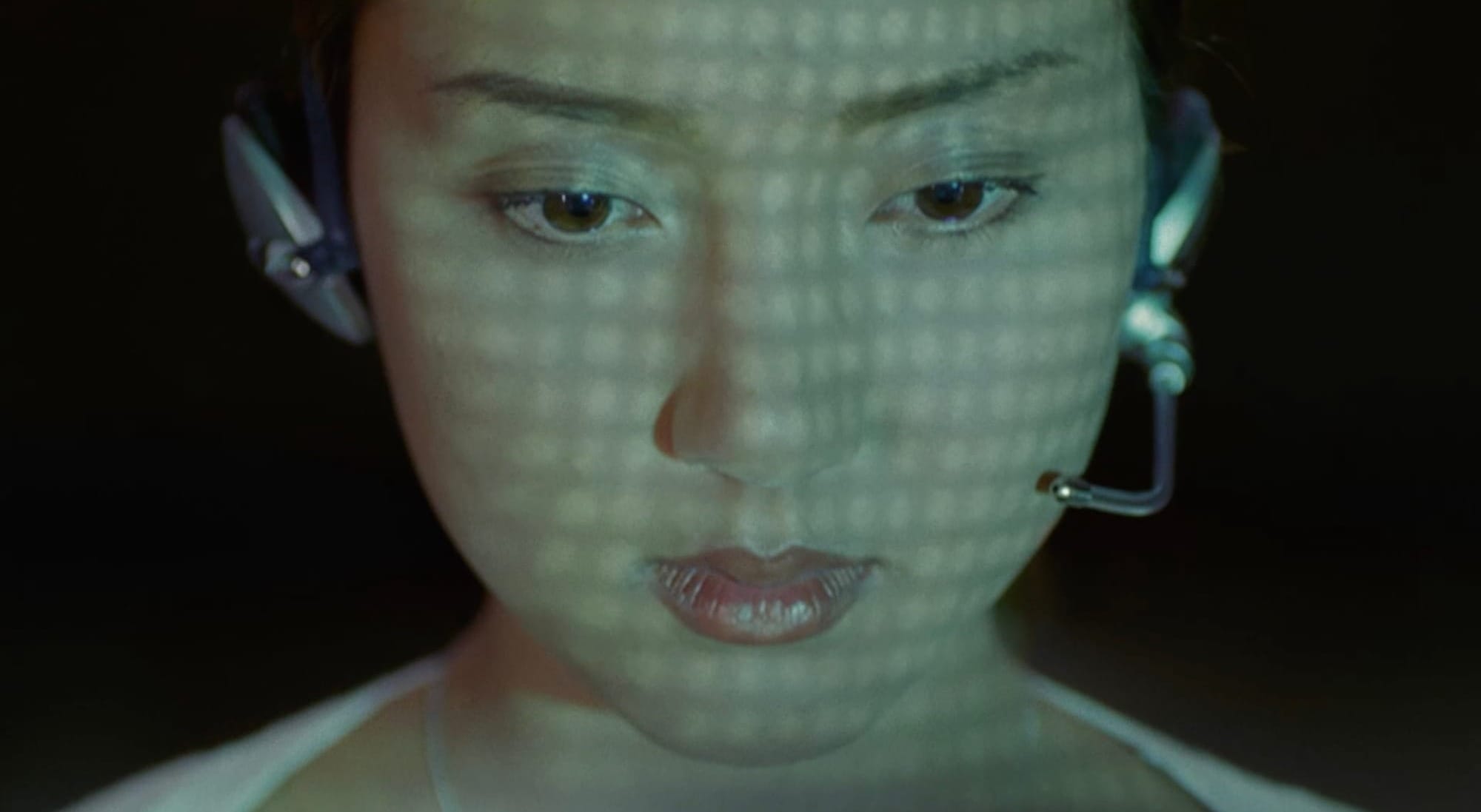
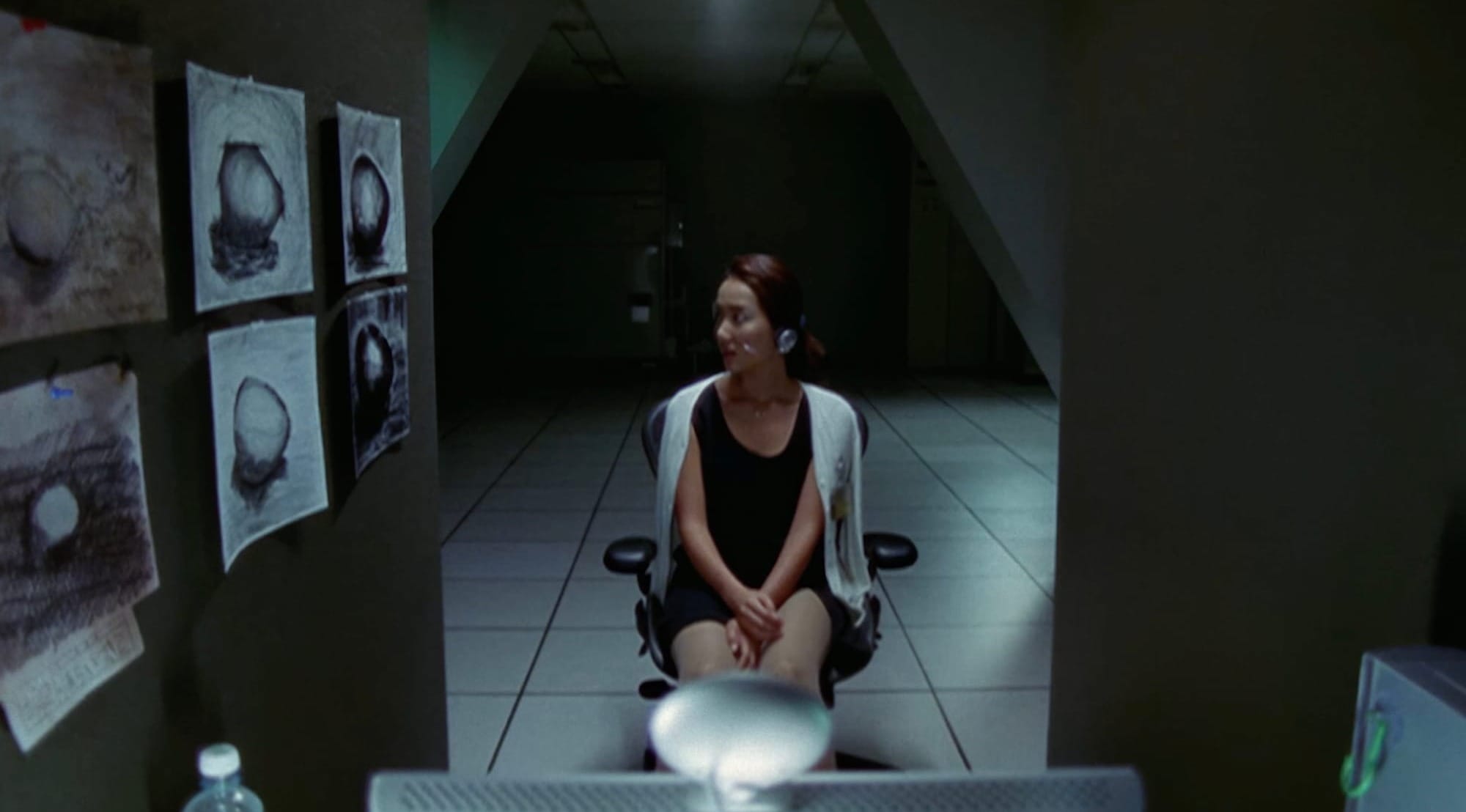
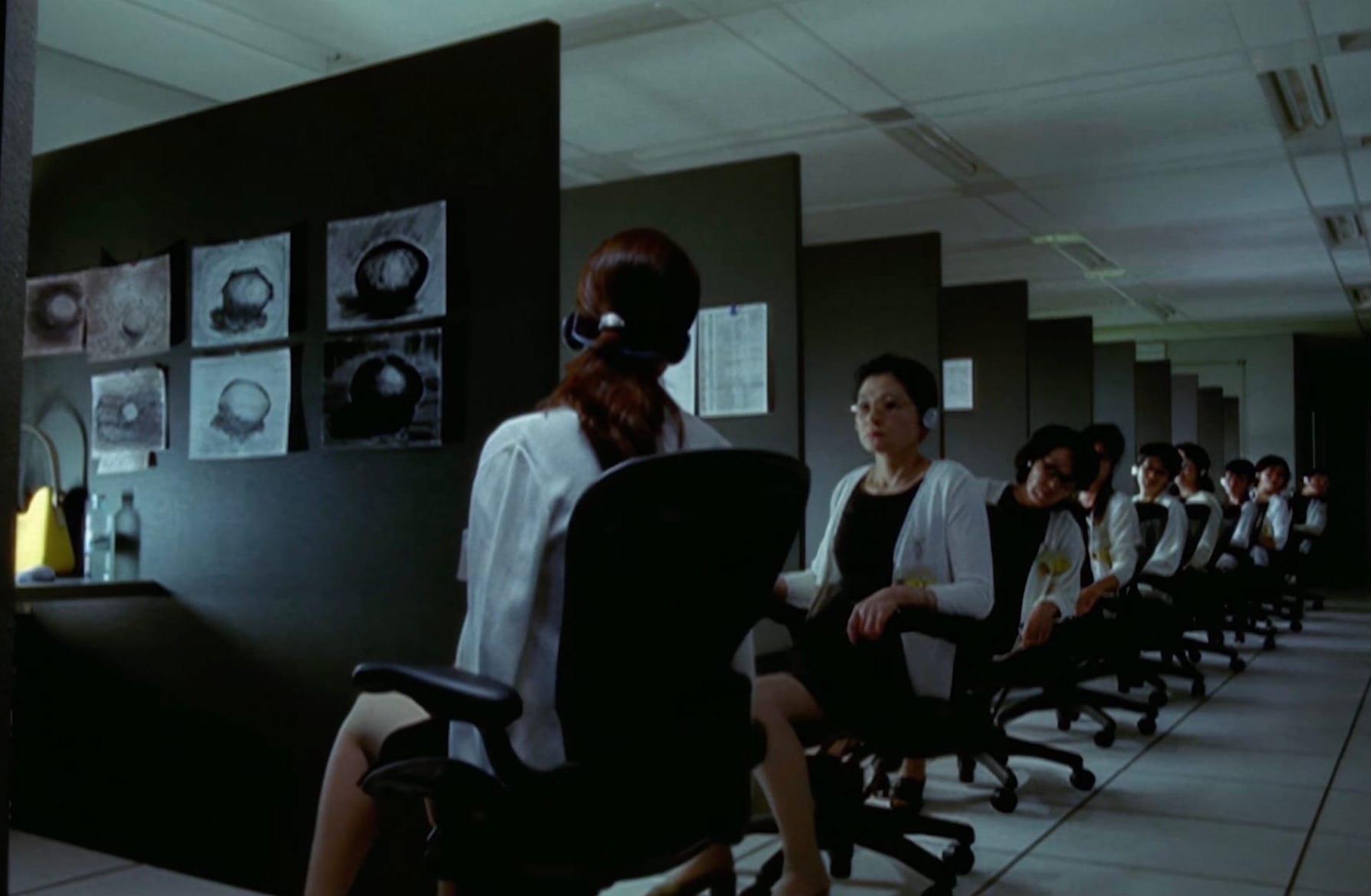
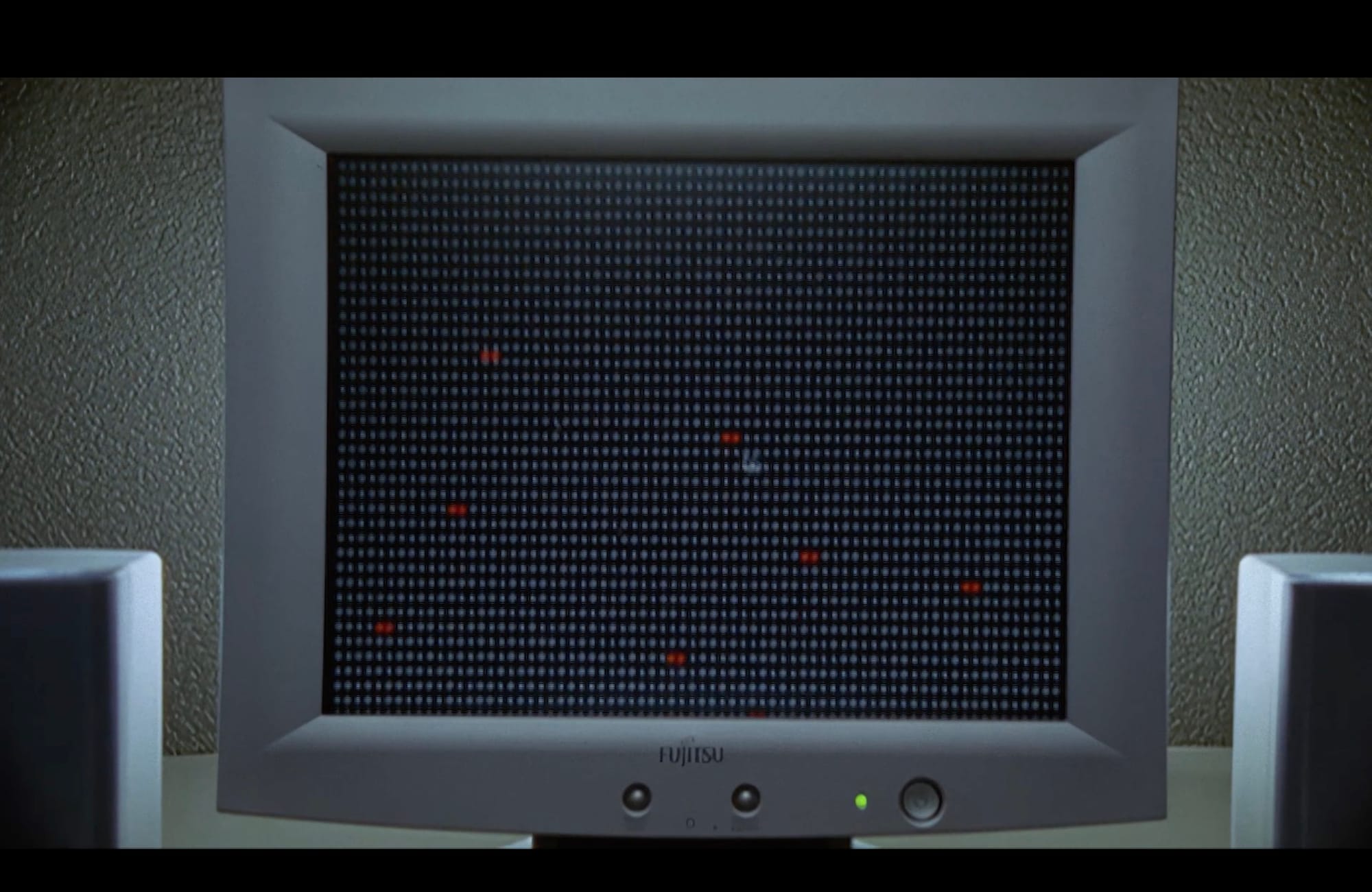
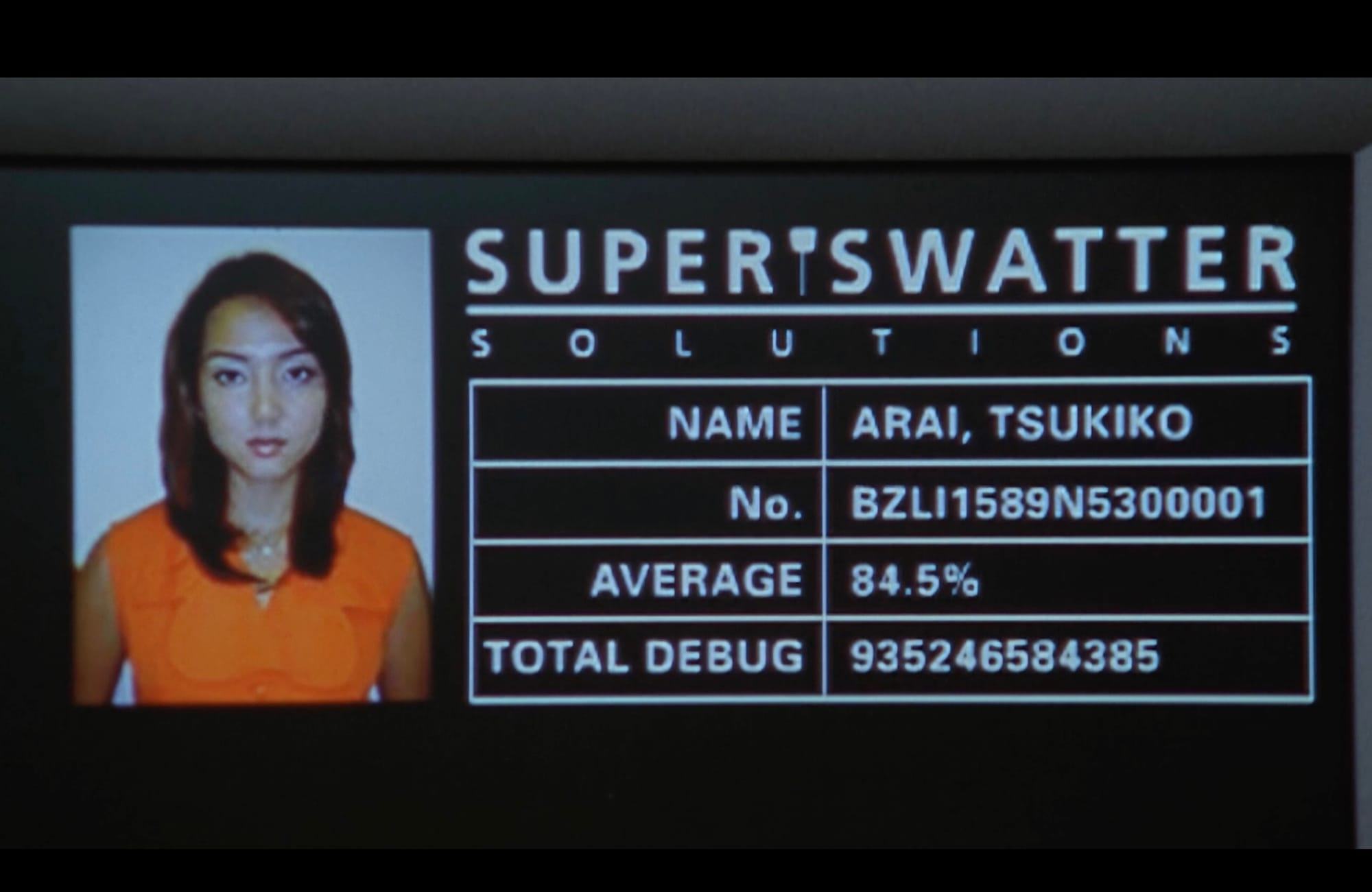
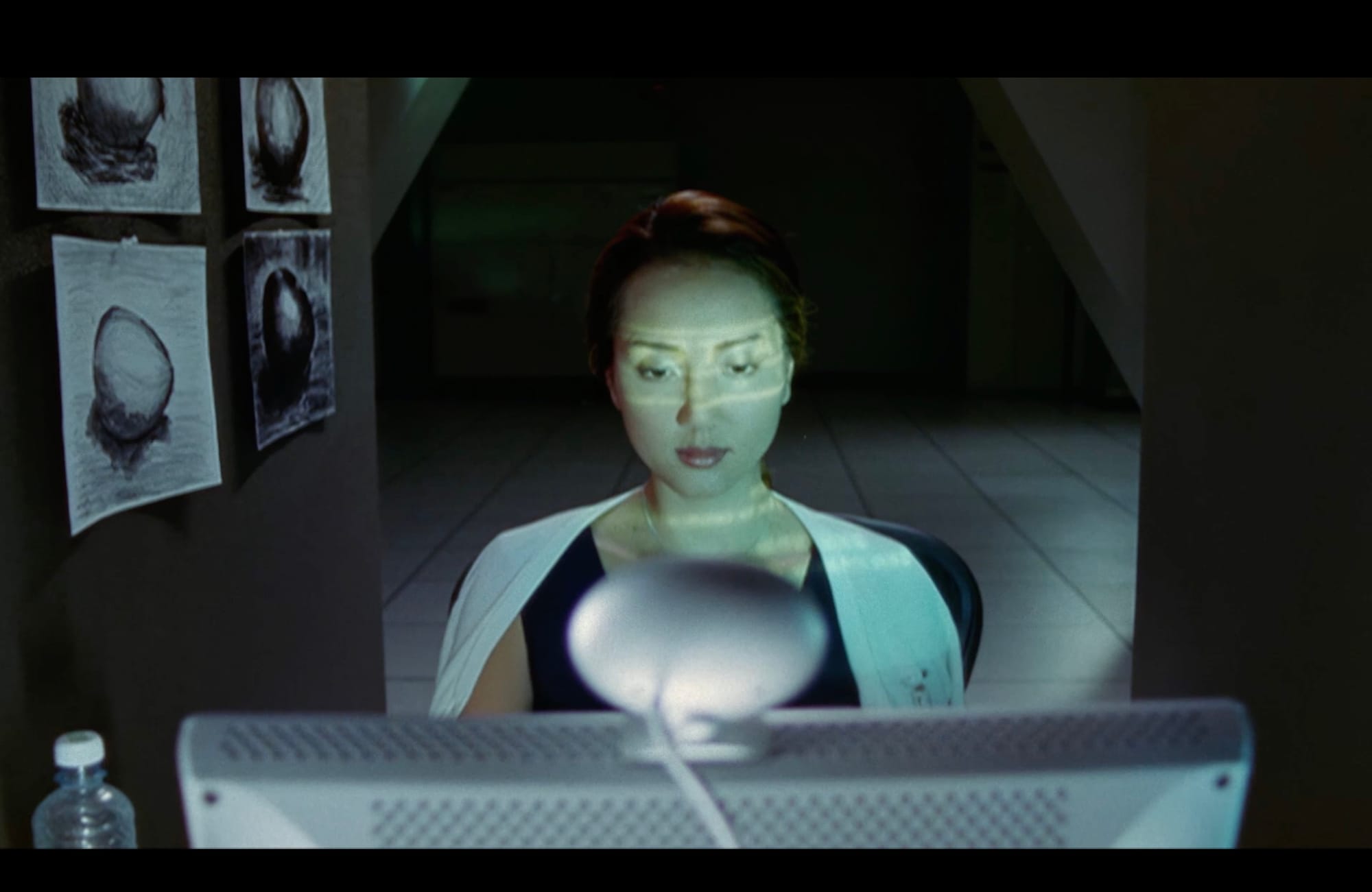
Scenes from Tsukiko's cubicle.

Shot on 35mm in 2002 but not theatrically released until 2005, EGG is a curious specimen of turn-of-the-millennium Japanese cinema. Its editing alternates between frenetic repetition and prolonged stillness, looping footage eight or nine times at critical moments while allowing other scenes to play out slowly, uninterrupted by dialogue or cuts. Under the supervision of Daizaburo Harada, who previously worked as CGI director on Shunji Iwai’s Swallowtail Butterfly (1996), the film’s digital imagery lends a serenely synthetic quality that suffuses through the tangible world.
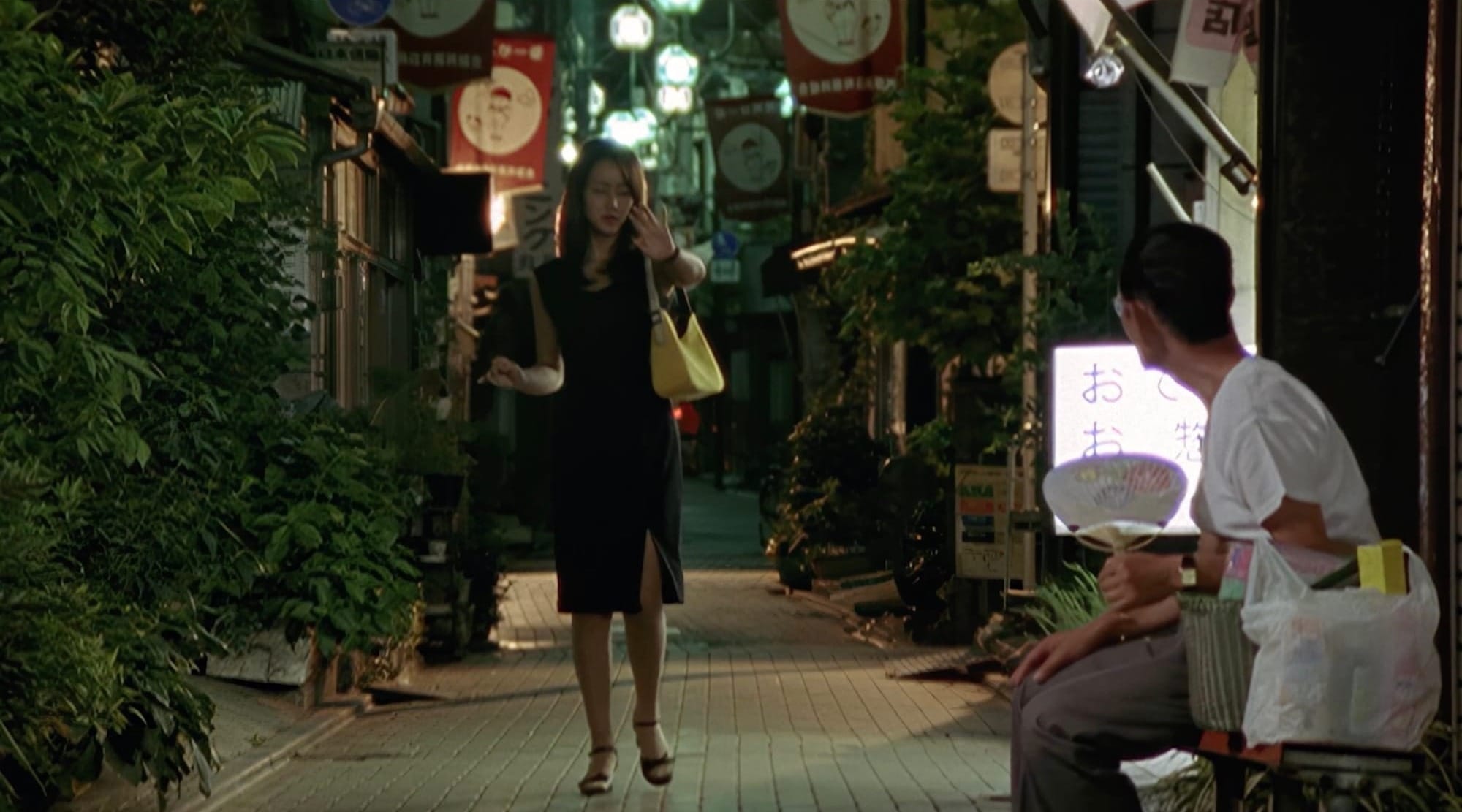
Perhaps most impressive is the brevity of its production: EGG was written in a week, prepared in ten days, and shot in just two weeks—an ambitious undertaking given the extent of its creature effects.

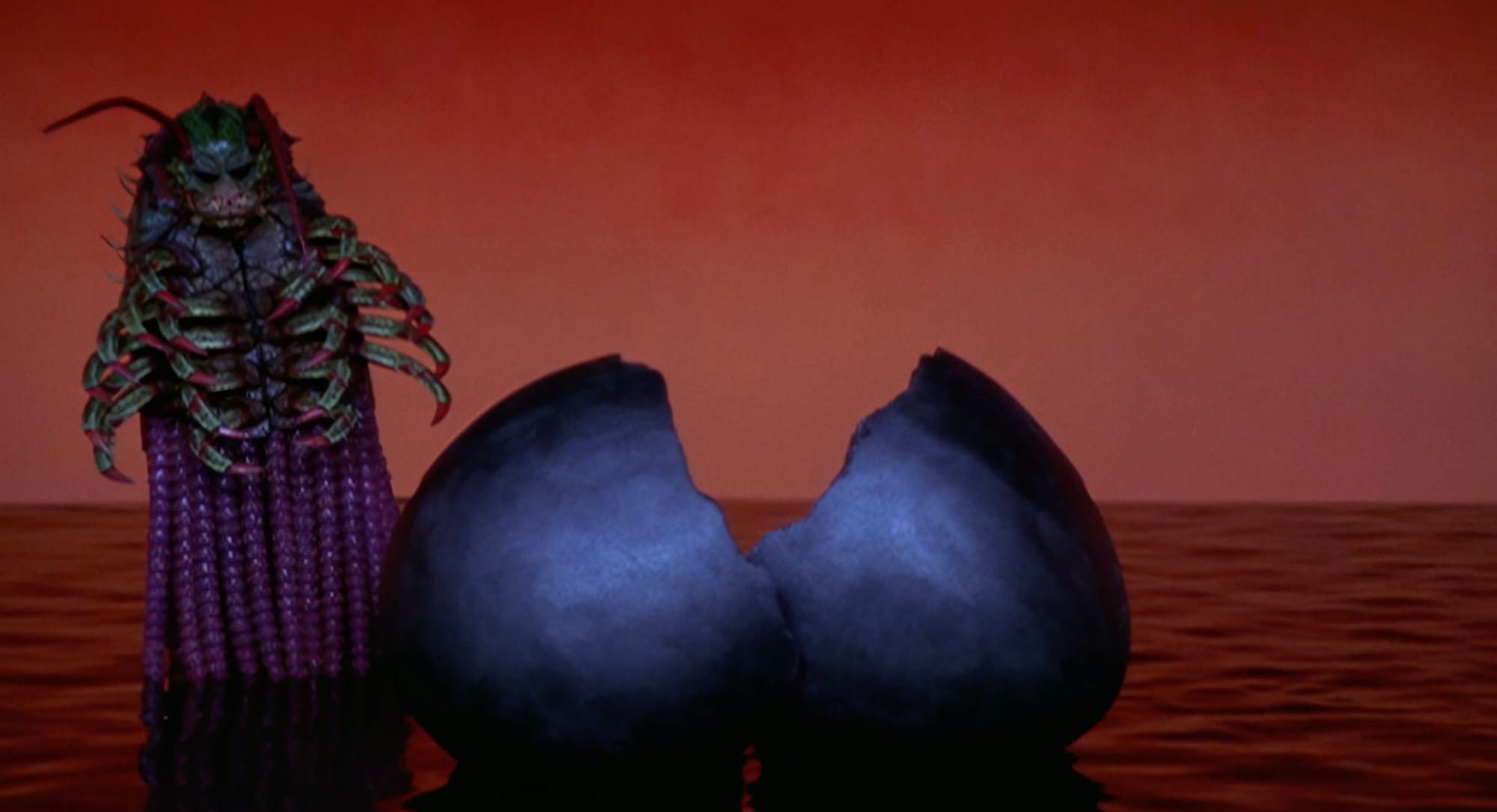
Visions of the Creature
Former Miss Korea contestant Jo Hye-yeong is particularly adept at playing Tsukiko’s psychological ordeal through gesture and movement. Hers is a drama between the body and the mind, and much of the film’s humour arises from this tension. There is an absurdity about how she's physically contending with an adversary that exists within her own consciousness, and when she reaches out for help, people don't take her seriously, assuming she's hallucinating or lying for attention. Beneath this premise lies a preoccupation with the conditions of fertility, reproductive anxiety, and the social expectations imposed upon women. The egg, ordinarily a symbol of fertility and new life, becomes an object of profound antagonism.



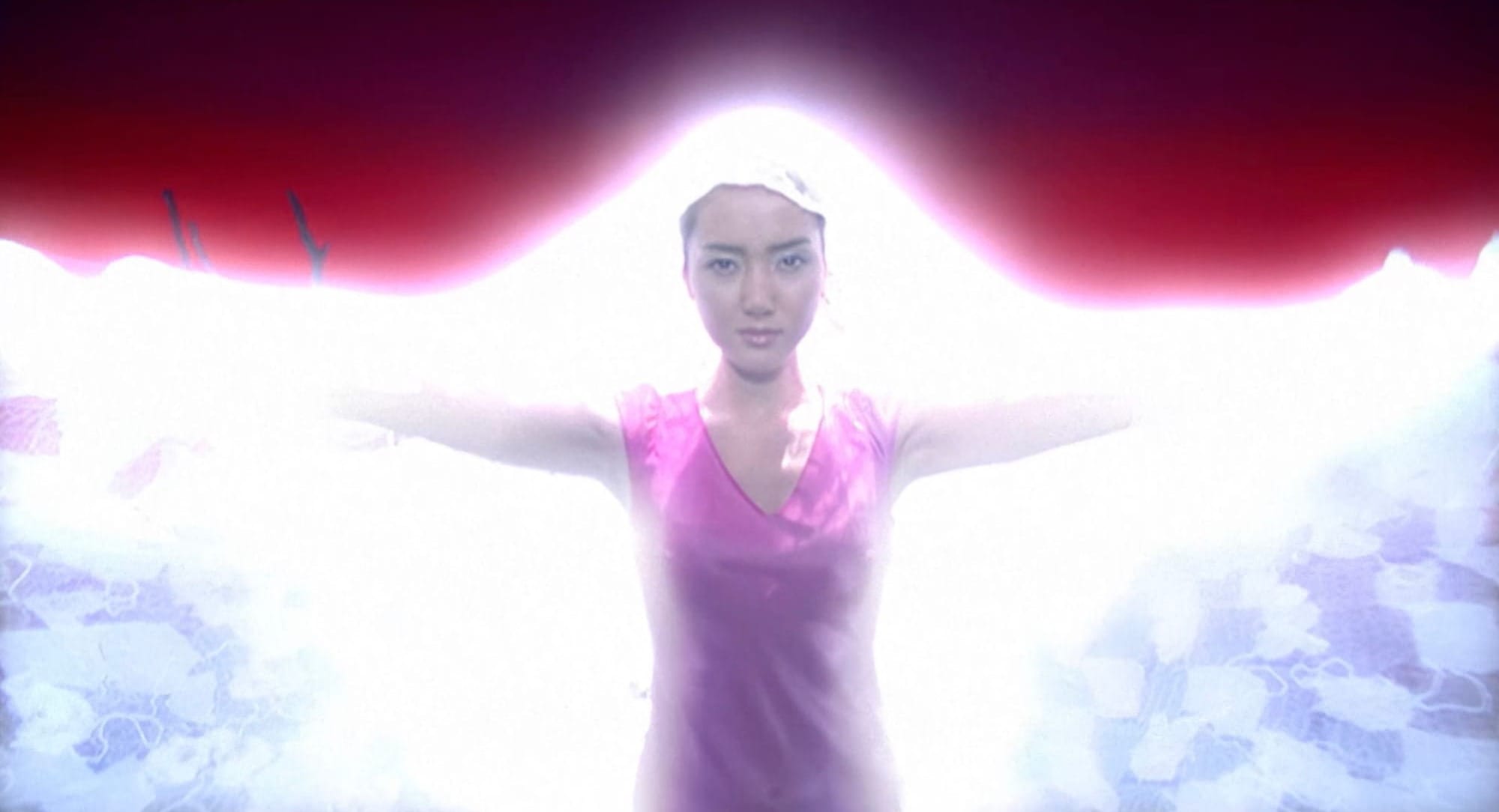
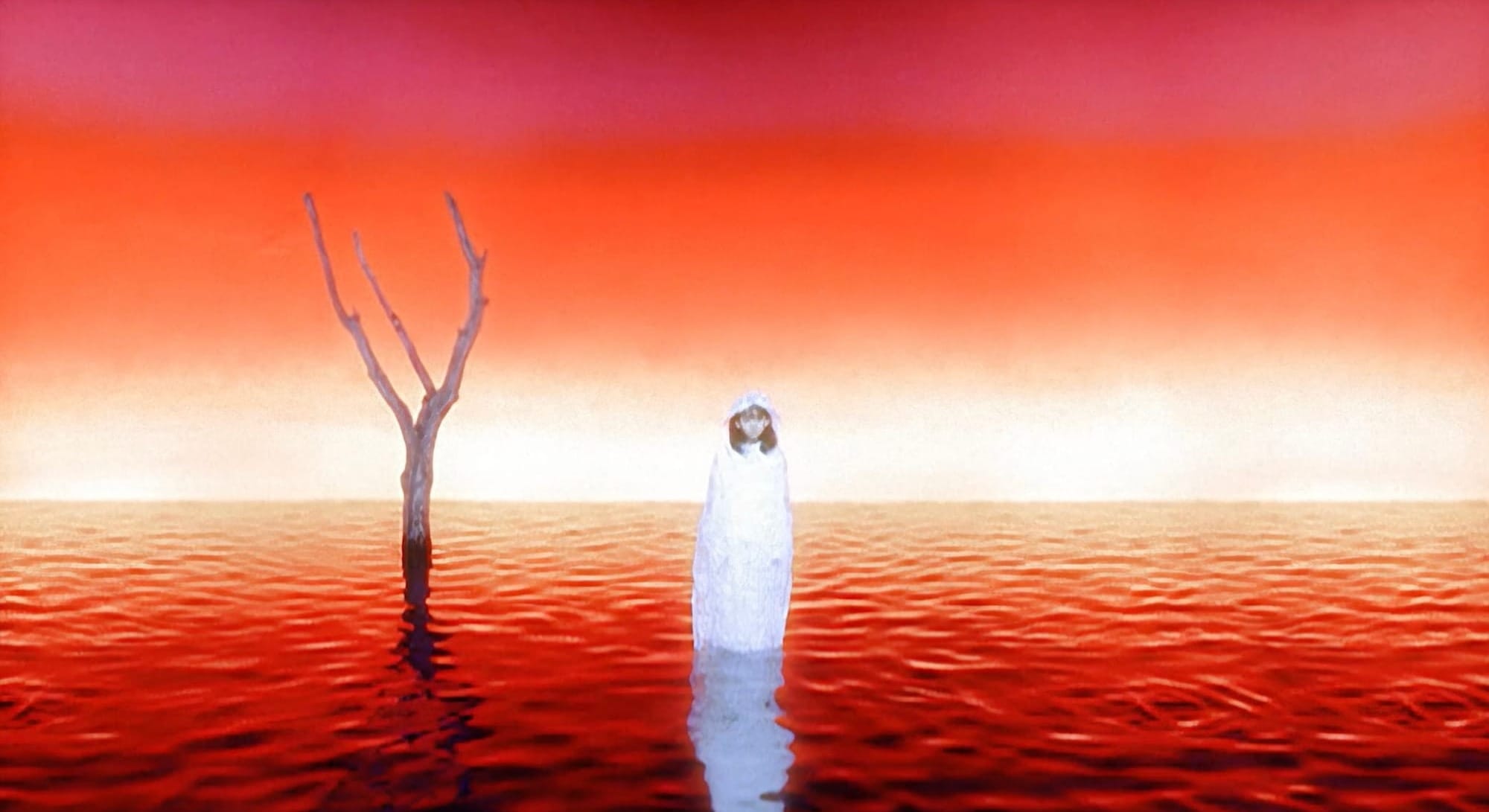

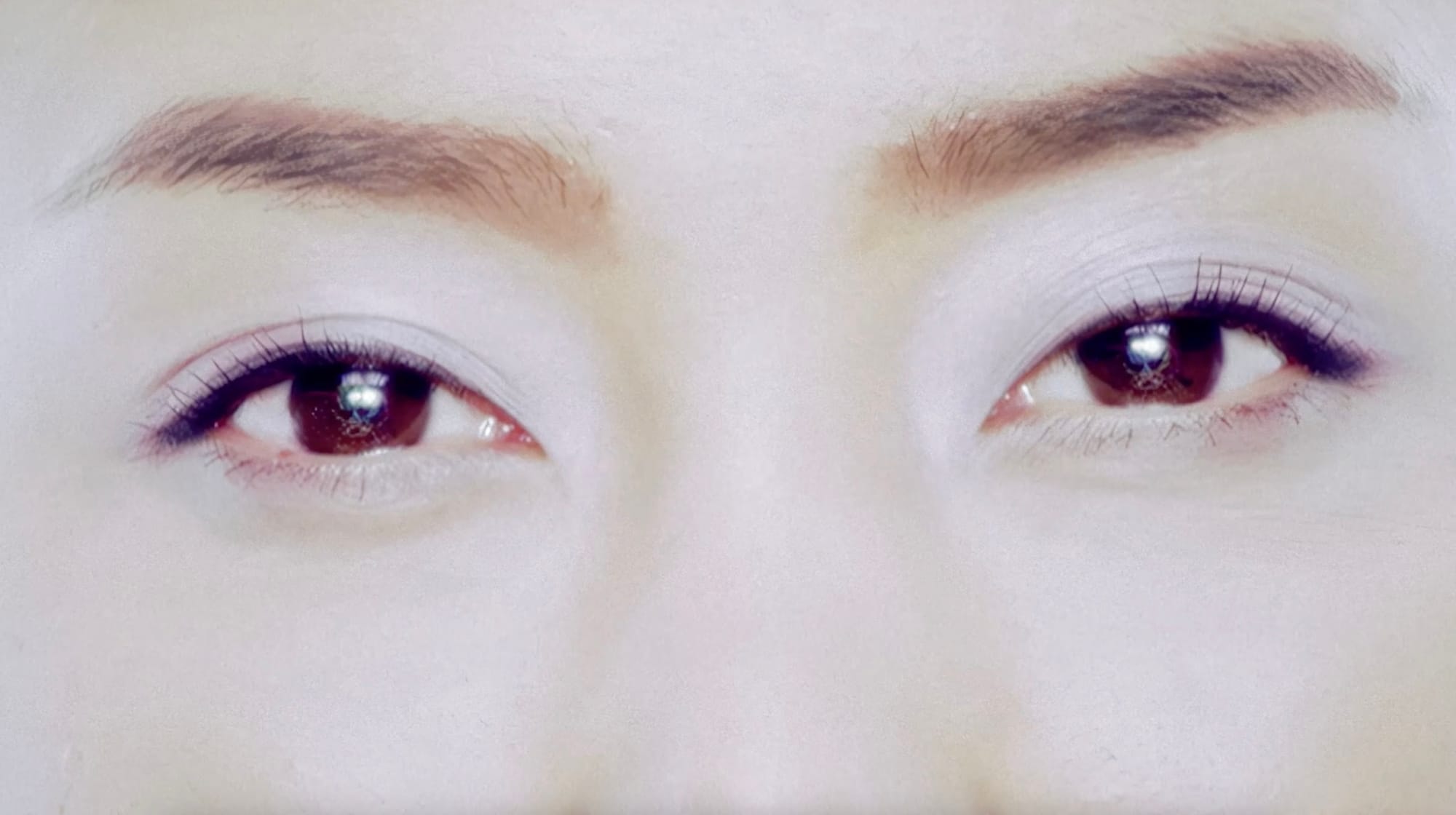
The latter half of the film amounts to one extended revelation, occasionally exhausting in its repetition but punctuated by beautiful scenery and strange visual excursions. Made shortly before his more definitive transition into blockbuster filmmaking, EGG epitomizes the arthouse sensibilities of Tsutsumi’s work. The culminating scene is incredibly memorable and unique, as the film's three main characters come together in a kind of trinity.

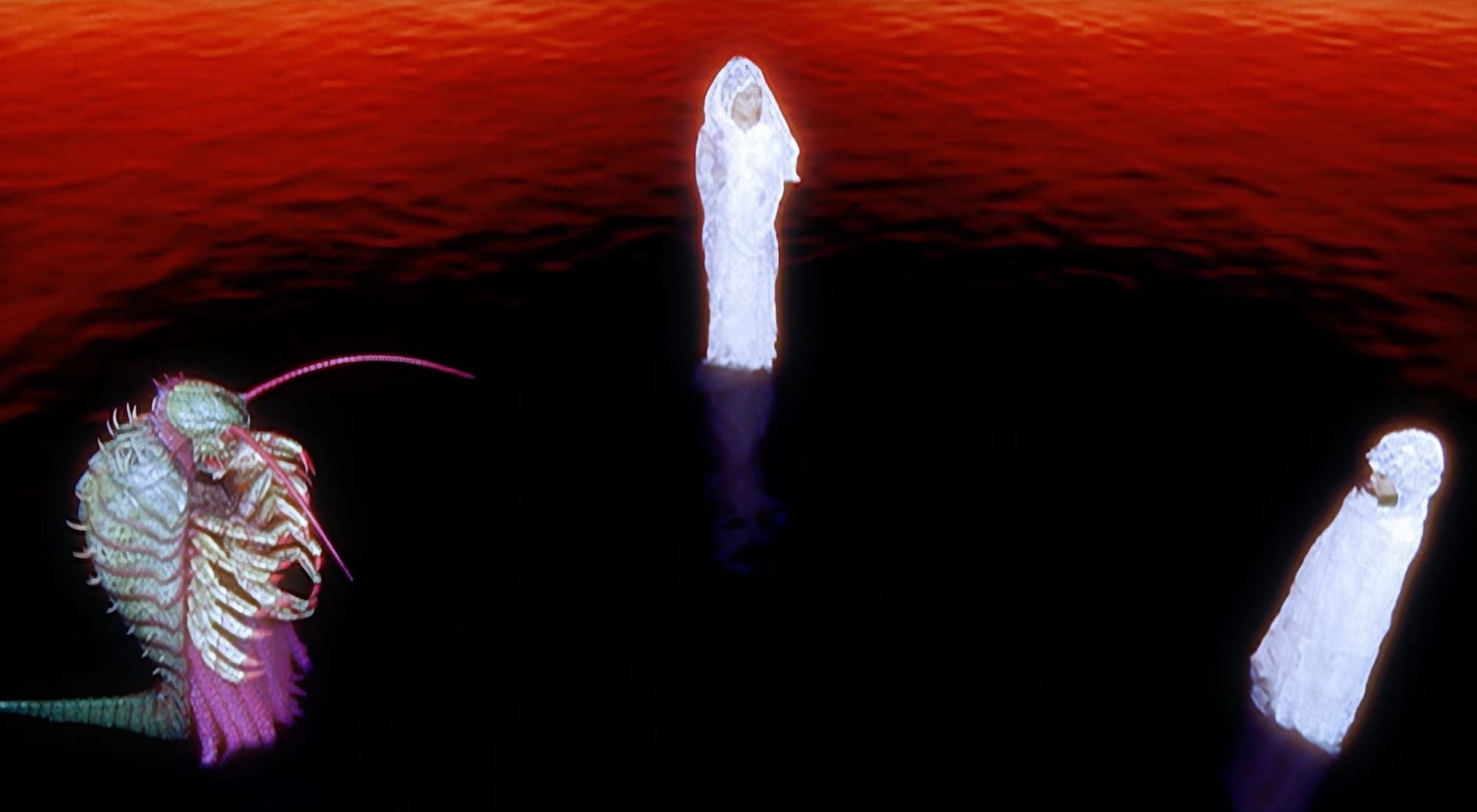
Ripe with spiritual and psychoanalytic significance, the three could represent a Freudian trine of id, ego, and superego, or even more provocatively, a female version of the father, son, and holy spirit. In this moment, it felt like the film had purified its protagonists of horror, transforming the egg and its contents to something more like a spiritual mystery. Combine that with the murderous, void-eyed woman pronouncing 'God is Dead' and you've got yourself a wild retelling of the holy trinity. Because what is that creature in the egg if not a biblically accurate angel? This, of course, is just one of many interpretations, so if you have a different take, let us know your thoughts.
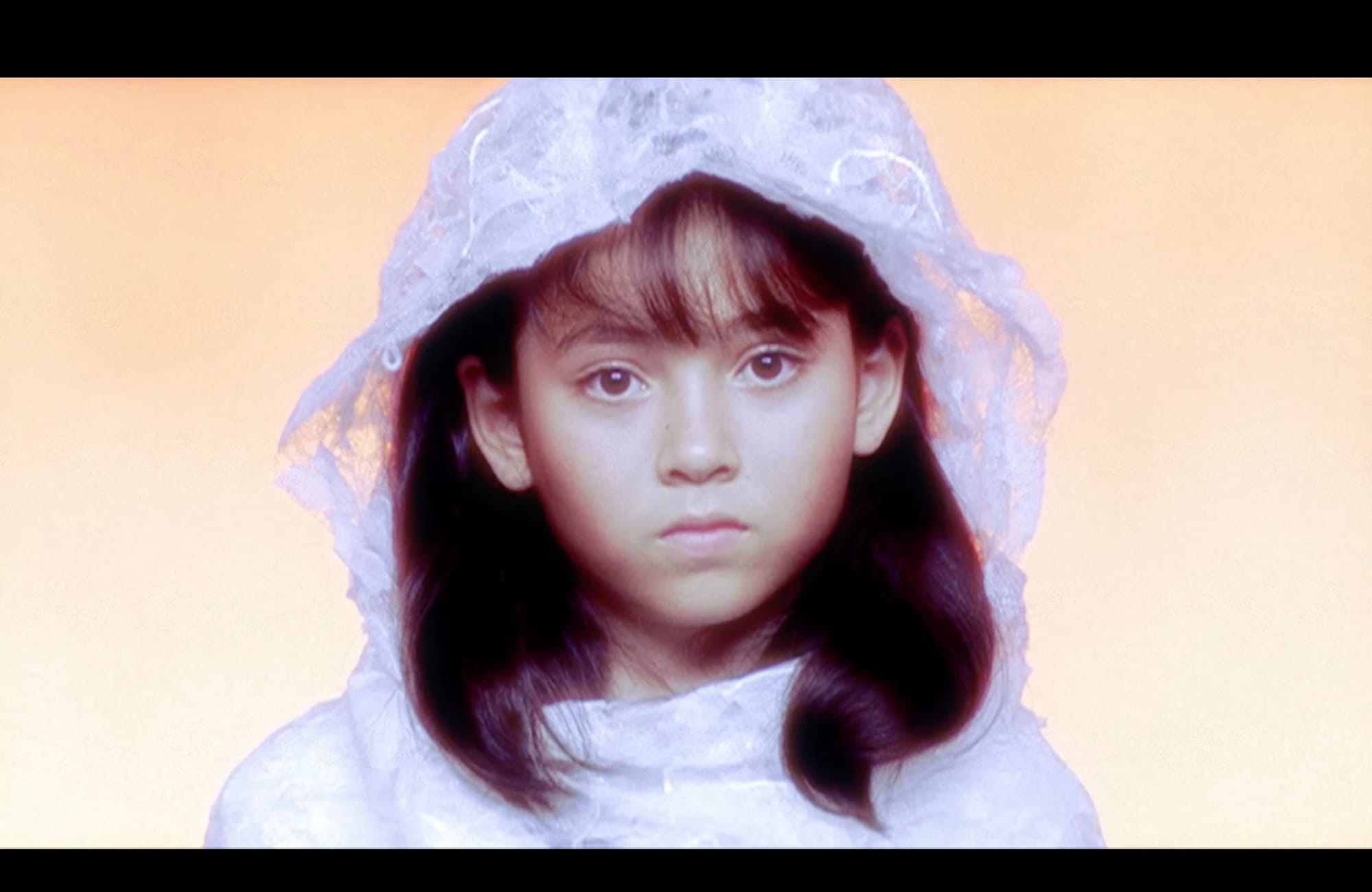

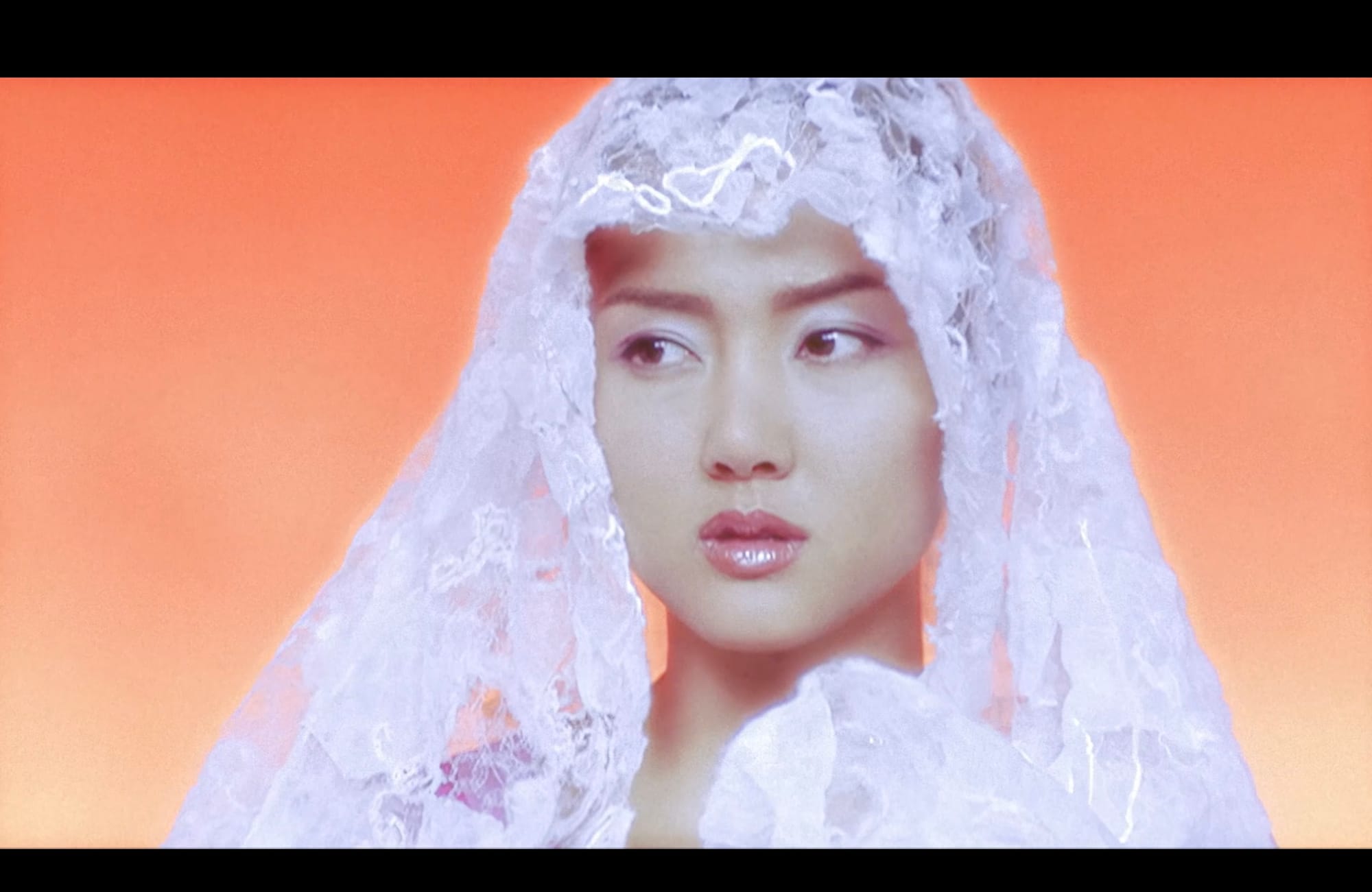
For enthusiasts of early digital aesthetics, eccentric Japanese genre cinema, eggs, and the more improbable manifestations of body horror, EGG is a fascinating encounter with a moment in cinema when the expressive possibilities of CGI were still relatively uncharted. This film is a particular fave at Eternal, and we've also included it on the 'Unconventional Horror' starter pack on our platform, which we invite you to peruse!