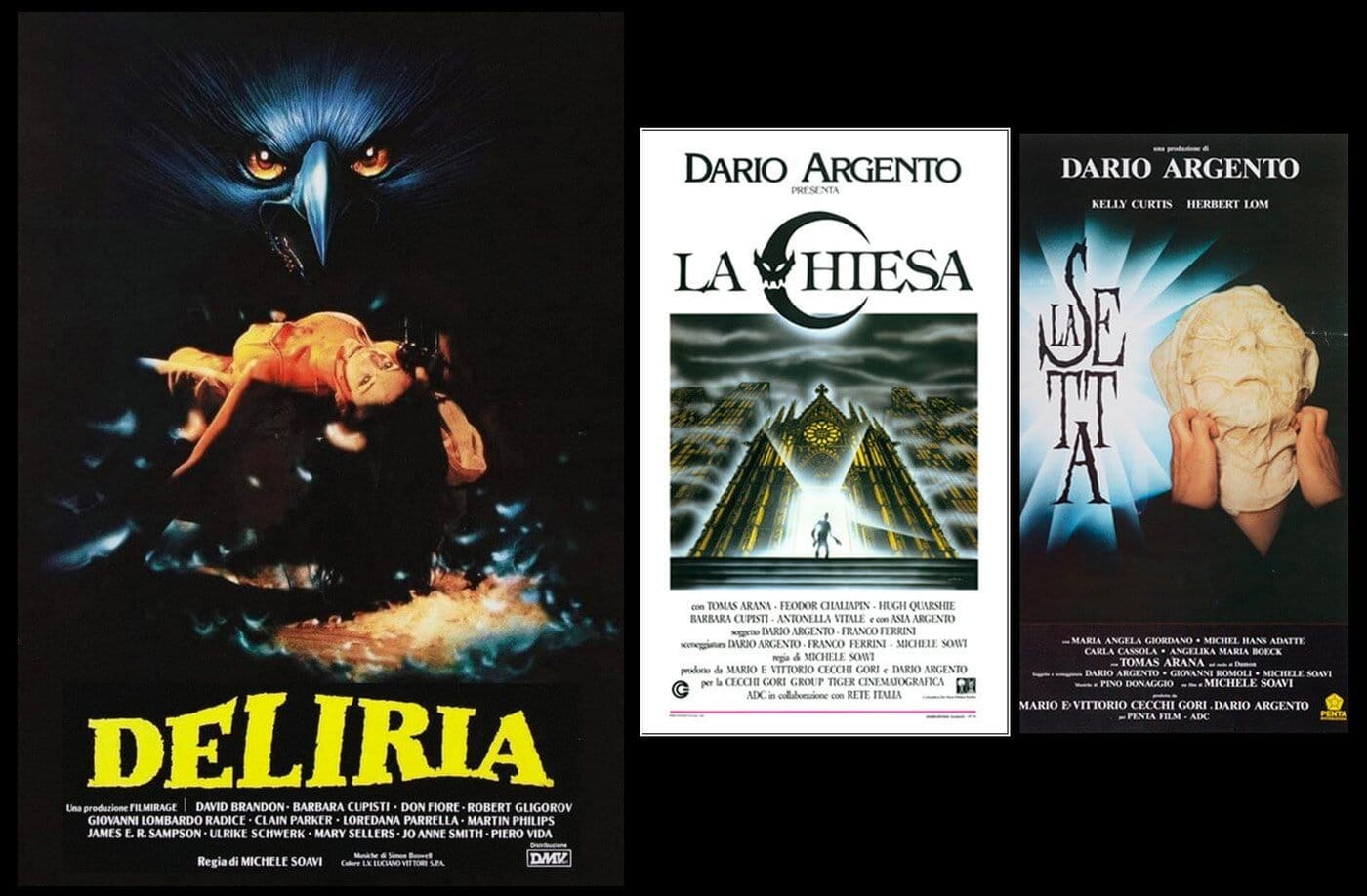
Before director of Cemetary Man - Michele Soavi - became a distinctive voice in Italian horror, he spent much of the 80’s working as an assistant director to two giants of the genre: Dario Argento and Lamberto Bava. He was on the set of (to mention a few biggies) Tenebrae, Phenomena, Demons, and Opera — even appearing onscreen in the latter as a character named Daniele Soavi. In 1988, he worked as assistant director to Terry Gilliam on The Adventures of Baron Munchausen, after which Soavi committed himself fully to directing, carrying with him a style rooted in dream logic, violence, and dark romanticism. (See also, Stagefright, the Church, and the Sect.)
His fourth feature, Dellamorte Dellamore (Cemetery Man), would be considered by many to be his masterpiece and marked, upon completion, a long pause in his career. After its release in 1994, Soavi stepped away from filmmaking, moving to television and to care for his ill son, until his return to cinema in 2006. "If I had to return to cinema after making Dellamorte Dellamore I would need an important story to tell. Otherwise I would rather tell a thousand stories for TV,” Soavi stated. While it released in Italy to great success, abroad it was a total flop. According to Hollywood, the film was not “understandable.” Not quite a horror, not quite a romance, nor drama, nor comedy.
Cemetery Man is a mix of many genres but much more than that it's a Soavi film. It's both the culmination of his previous efforts and an ending to an impressive run of films focusing on death and the cyclical nature of life.

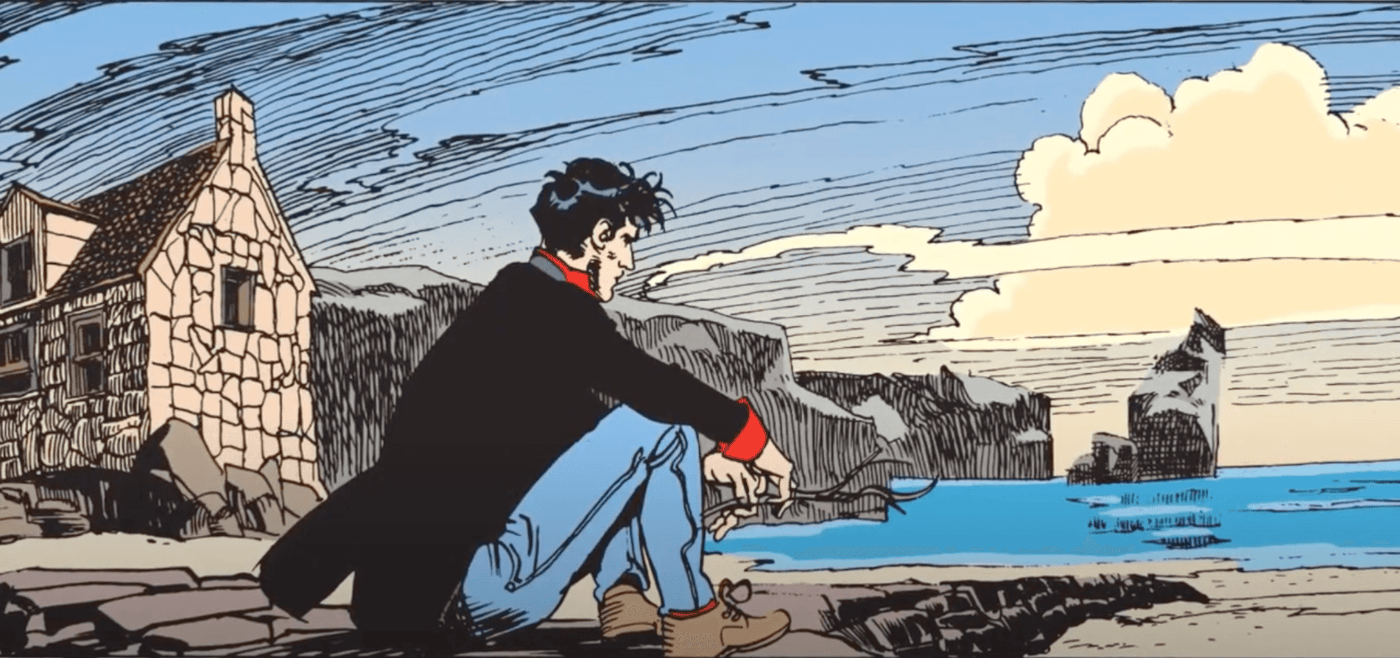
Dellamorte Dellamore began as a novel by Tiziano Sclavi — creator of one of Italy’s most beloved comic series - Dylan Dog - which has had a run of over 300 issues since its inception in 1986. The titular character’s look was designed by artist Claudio Villa, who, at Sclavi’s insistence, modeled Dylan Dog after actor Rupert Everett. Sclavi, after seeing Everett in the film Another Country told Villa to study "the sort of face Everett has."
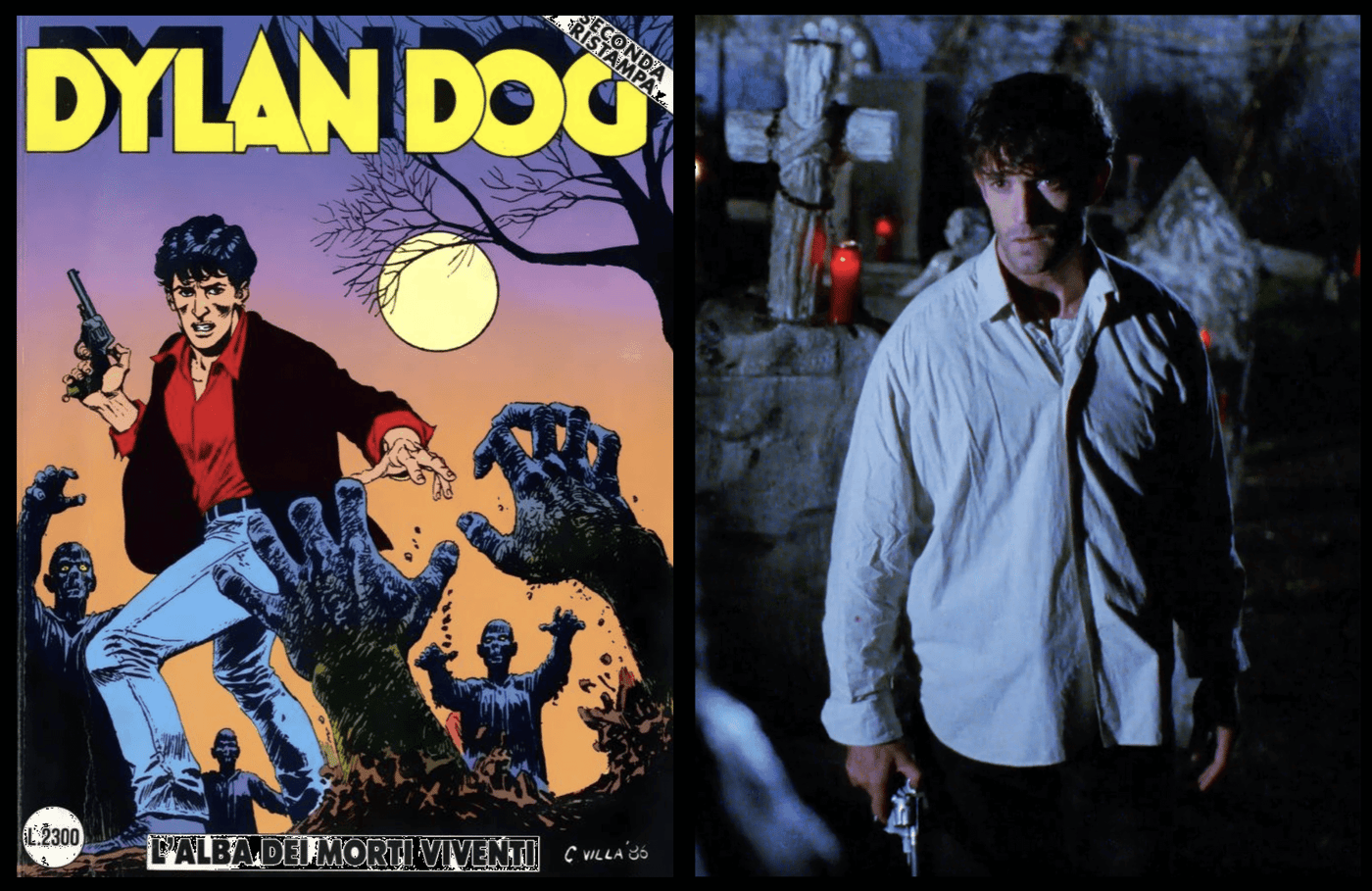
Long before Dylan Dog hit newsstands, Sclavi had written the novel Dellamorte Dellamore, which he handed to Soavi on only their second meeting. Soavi, a fan of the new edgy comic series, reached out to Sclavi to offer him congratulations, after recieving the not-yet-famous writer's phone number by dialing information. Expressing interest in working with one another, Sclavi gifted Soavi the 400 page manuscript that was Dellamorte Dellamore. Soavi admits to having quit reading it part way through. “I found it very childish - maybe because I didn’t understand its humor yet. Maybe because it was too diluted… I wanted to do Dylan Dog," Soavi admits.
The manuscript was lost for some time. Years later, it resurfaced and was finally published in 1991. In the meantime, Sclavi incorporated pieces of that “lost” novel into Dylan Dog; themes, characters, even the gravedigger Francesco Dellamorte made an appearance in the comics. So when the '91 novel was eventually adapted into the '94 film, Rupert Everett, the very actor Dylan Dog had been modeled after years earlier, was naturally cast as Dellamorte. Everett was completely unaware of the comic that featured his own face. In Italy his literal image was now widely known and hugely popular amongst a certain demographic. Having him portray Francesco was fundamental for the marketing of the film in Italy and proved to have worked.
A lost book inspires a comic. The comic borrows from the lost book. The book returns from the dead. The book becomes a movie whose lead man inspired the comic which was influenced by the book. If you can wrap your head around that loop then you’re in the Cemetery Man headspace.
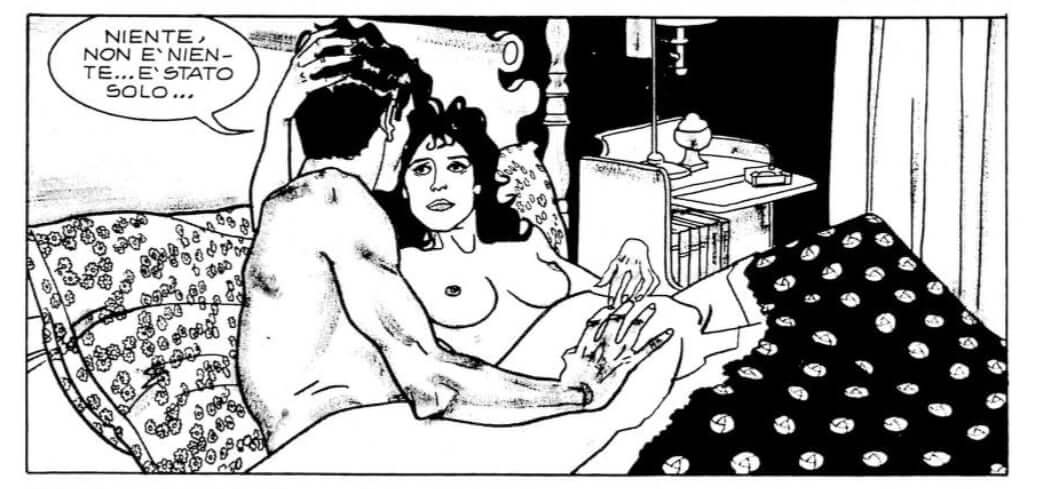

Cemetery Man suggests that many of us are spiritually dead long before death comes for us. Death, in the fictional town of Buffalora, is not unlike life in that same fictional town, or elsewhere in our own world. Characters find their way back to the surface of the living to carry-on performing their routines and indulging in their passions. Routine replaces meaning and passions decay almost as soon as they're ignited. Life for the living and the dead continues without purpose. The living and the dead share the search: for a nibble of flesh, for blood, the desire for sex or companionship. It's obtained, it falls apart, and we start again.
Francesco’s father’s name Dellamorte and his mother’s maiden name, Dellamore, means "of death" and "of love." It seems slightly curious that the juxtaposition presented here is not of death and of life. It’s love, instead, that opposes death. Death is giving up and giving in. Love, true love, brings happiness, excitement, hope, and adventure.
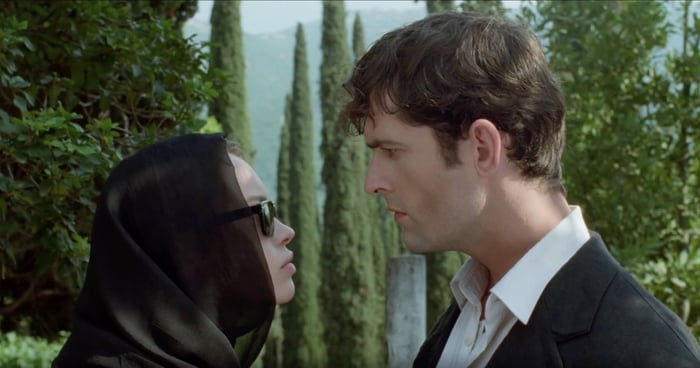
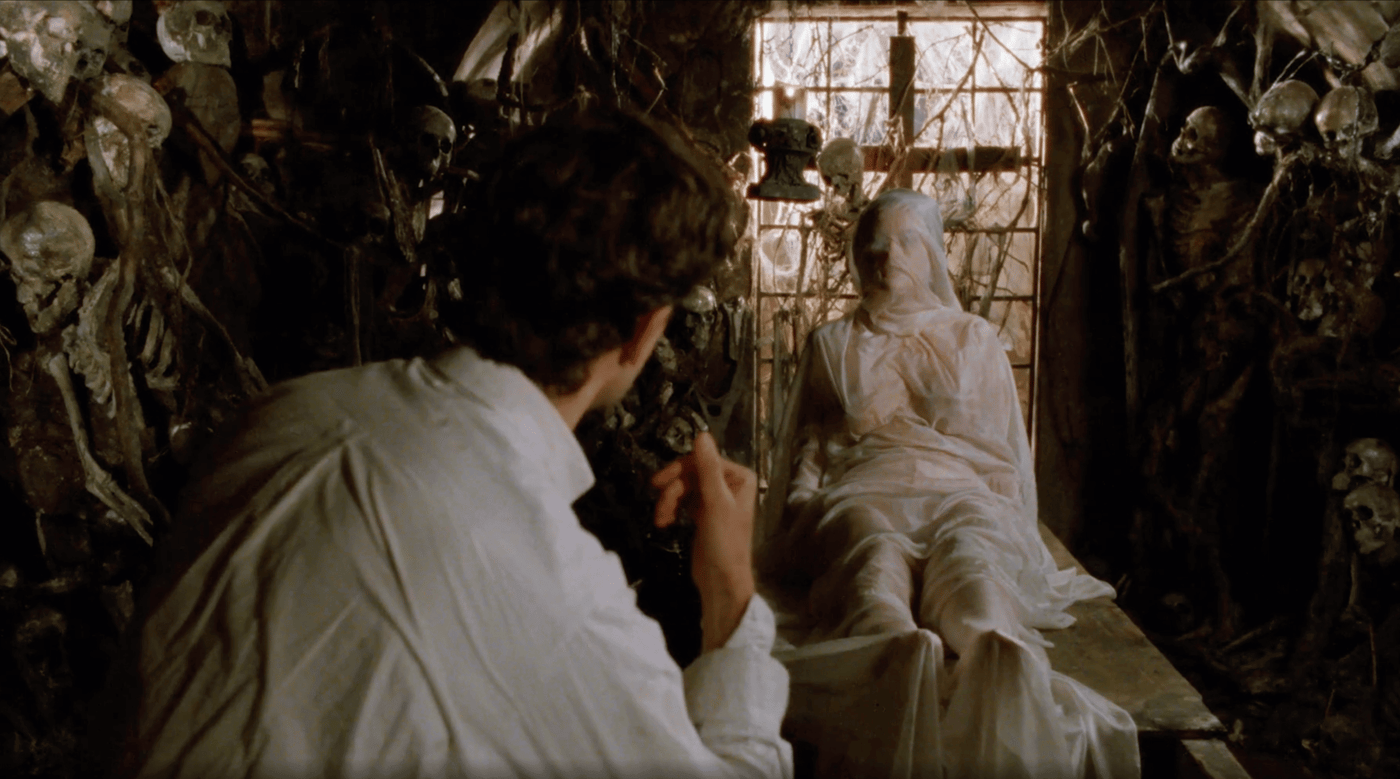
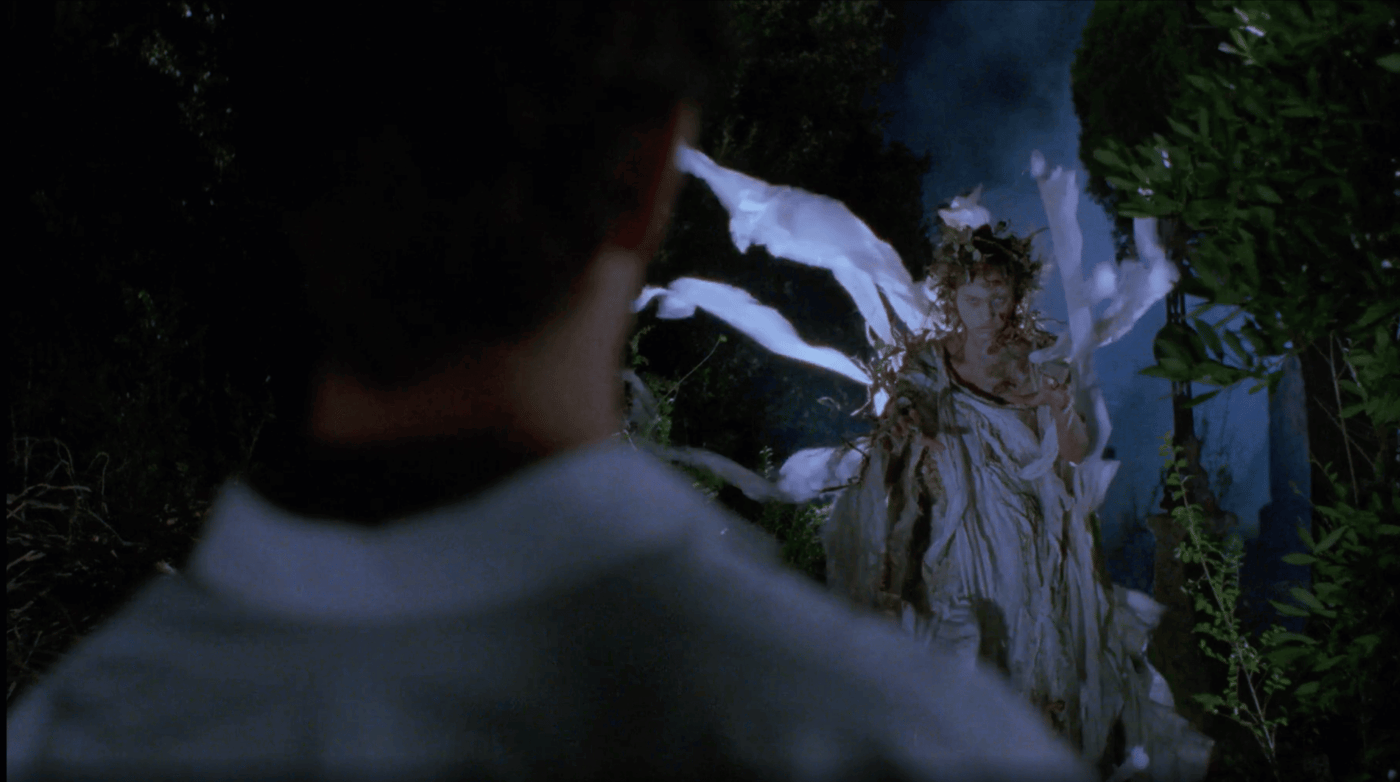
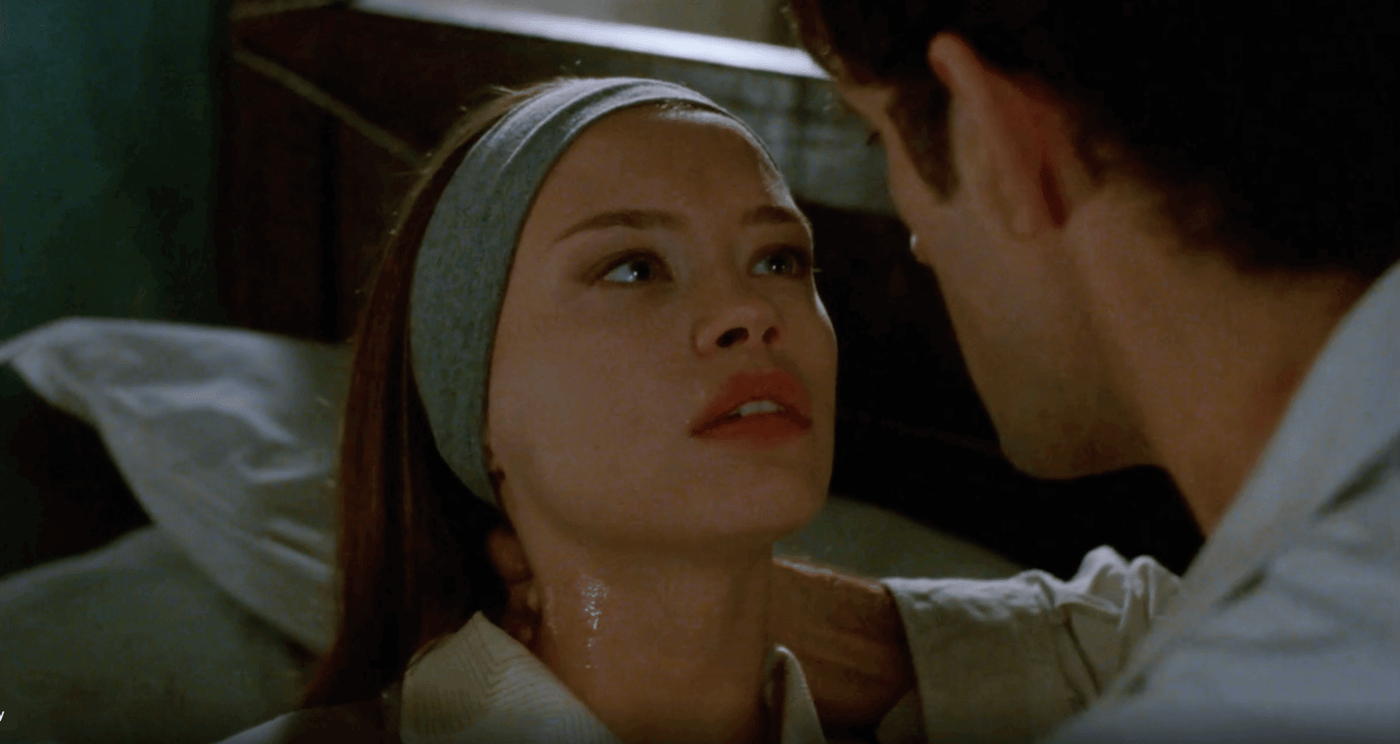
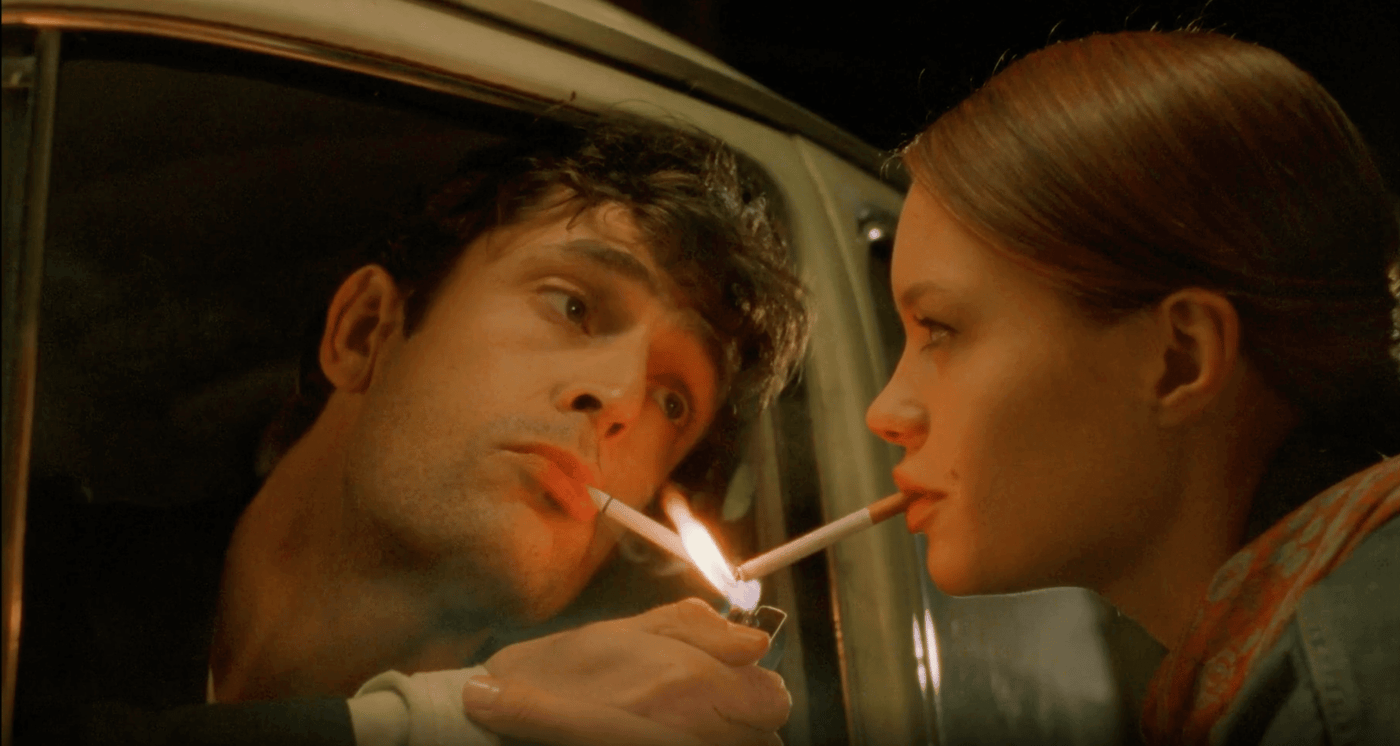

Below you will find key moments of death and of love found within Cemetery Man. (Spoilers ahead. Don't bother reading these two very long and very informative columns if you have not seen the film.)
Dellamorte (moments of death)
Our protagonist, Francesco, is a cigarette smoker. Cigarette smoking, some would say, not great for living. Pretty good for dying.
A man, nice curly hair, comes out from under a pile of dirt, blue face, again, indicates death and then a shovel splits his head open, indicating death a little bit more.
Brown leaves used to be living but now they blow out the wheelbarrow, light as air. Brown and light material is typically dead I guess look at paper bags.
Franco, a supposed friend to Francesco, works in a small room with many, many, many paper folders and M3 forms. Forms are incredibly boring. Bored to death is a thing.
Wet ossuary got so many dead people bones on the wall. Seems she's happy about it. She likes to smell the dead people rags left around, not exactly sure why. It's maybe because she gets a little horny from the stinky death smell?
Um like ghost flames seem to fly around graveyards. Seems they're maybe a marker of dead stuff.
Dead husband to She is back from out of the ground with lots of roots coming out the head. He dies one more time by getting a large cement cross smashed into his brain.
“Nothing will separate us,” Francesco and She both say it. That's something you say right before you die. And then She dies.
Sheer plastic sheet on top of the face and body - it means you’re dead. But when you blow the sheet off your face a little with breath... maybe you're alive? Doesn't matter. Francesco shoots the lady he loves in the brain.
Motorcycles and getting your head run over by a bus are notoriously deadly. Also flying off a cliff while you're on a bus is notoriously deadly.
“Never should’ve gone out on the Boy Scout picnic, Never should have gone, Now I’ll never go again.” If you're at a funeral for dead Boy Scouts, it's a classic song selection for the service.
Watching “War Blob” on the tv while eating a plate of brown sauce seems like giving up on living.
When blue-faced Boy Scouts clack their teeth together just shoot them in the head. Wrecks the brain but helps their teeth last a little longer.
Smashing a zombified man-nun in the head with a large metallic item until his man-nun brains spill out is an effective, not overly flashy way to kill a man-nun.
“The living dead and dying are all the same. Cut from the same cloth. But disposing of dead people is a public service. Whereas you’re in all sorts of trouble if you kill someone while they’re still alive,” Francesco says after he shoots a motorcycle zombie in the head not being too careful of the alive girl behind him. However, doesn't seem to get into any trouble as a result.
A giant grim reaper type of skull man doesn’t like that Francesco is killing the dead. He finds it a better idea to kill the living. Seems like bad advice after what Francesco just said about getting in trouble for doing exactly that.
An angel sculpture is seen without its head attached. This seems like a bad omen. Francesco shoots its left wing off. That can’t be good either. Meanwhile, lots and lots of dead guys walking around the cemetery. This all seems like death kind of stuff.
Francesco does go to do some shooting of living people in the head. 7 guys that made fun of his penis once. Bang Bang Bang Bang Bang Bang Bang. Death from the living is new to our eyes. It's red and messy. Death from the dead has, so far, been a little more subtle and dry.
The mayor would like to use the death of his daughter, the mourning he’s faced, to sell himself for re-election. “Vote for a man who has lost all other happiness.” “If you’ve had a death in the family, vote for someone who suffers like you.” Capitalizing on death and suffering is likely to shorten your own life expectancy, especially in movies.
Valentina, the mayor's daughter, chooses the pure love of Gnaghi over the cloying love of her father. Gives his neck a nice big flesh rip and sends him to hell. Francesco, however, has to destroy Valentina. And then Francesco has to destroy zombie Mayor.
The death of an appendage, like losing a loved one, can be traumatic. And what’s worse, you feel the physical pain of that death on top of the emotional pain of losing that friend re: penis destroyer injection.
Pia, the nicest old lady client, is buried. “The best always die first,” Francesco says. Which doesn't make sense since she's pretty old. We often say kind words about the deceased and not to the living who are much more likely to enjoy a compliment.
Sometimes your beloved must talk to you truthfully and it might kill you to hear what they have to say. Most especially after you’ve destroyed the functionality of your sex organ. “I don’t know how to say this but the mayor raped me… I liked it. Not the violence, no. But after that, we did it again, nicely. So that I’d forgive him... it was wonderful. This means I’m cured. I don’t have a phobia anymore. I can’t marry you now. I’m going to marry him.” All the words bypass the penis. They're daggers directed to the heart. “I can’t marry you now. I’m going to marry him.” The death of hope and trust.
Francesco has decided he is okay with killing the woman he loves. His heart has had enough. Now the time has come, now that his heart has hardened, to be bitter and angry and even more selfish. He burns her alive. “This time I’m really through with love.” Pffffft. Come on, Franky. Get real.
Francesco shoots a lady-nun through the glasses.
In what may be the most upsetting moment, on a hospital bed, after murdering his wife and child, (perhaps because Francesco suggested it would lead to freedom) Franco declares he does not know who Francesco is. And demands that he goes away. That he goes “awwwwaaaaaaaaaay.” The death of a friendship. (And wife and child, no disrespect to them of course.)
Francesco shoots the wings off an angel, it now resembles death. He says to it, “You and I are the same. We kill out of indifference. Out of love sometimes. But never out of hate. Now I don’t know who’s dead or alive. I’m sick of killing. So I’m leaving the game, brother.” Death responds, “Where do you think you’re going if you don’t know the difference between life and me?” Death is trying to tell Francesco something that won't make sense to him until the end of the movie. And even then it's totally open to interpretation.
“At a certain point in life you realize you know more dead people than living,” Francesco wisely pontificates. As you age, you move to the other side of the scale. Things become imbalanced. Actually, Death Scale is a pretty good band name.
"Death, death, death comes sweeping down.
Filthy Death, the leering clown.
Death on wings, Death by surprise.
Veiling evil from worldly eyes.
Death that’s born as life succumbs,
While Death and Love, two kindred drums,
Beat the time till Judgement day,
An actor in a passion play
Without beginning, without end
Evermore, amen." - Francesco Dellamorte (Dellamore)
Dellamore (moments of love)
Francesco Dellamorte, we are introduced to him and the first thing we see is that he has a really nice wet chest and he's been spending lots of time in a hot shower. Exercise and cleanliness means he is taking care of himself. This is a sign of self-love.
We see Francesco and his companion Gnaghi, are presented as small plastic figurines in a snow globe together. This was either a gift of love and admiration from a third party or a loving tribute from one of the aforementioned friends to the other. Gift giving - total love language.
Francesco taps the back of Gnaghi’s head and says, “There you go,” indicating a close fraternal relationship. My brother does that to me too and I always appreciate his affection.
An old woman (Pia) gifts Gnaghi a bag of what might be cookies and pinches his cheek, calling him “cutie.” In this moment Francesco announces that Gnagi is happy, that he likes the warm sunshine. This scene is brimming with love.
She brings flowers to her dead husband’s grave and says out loud, “He was wonderful. He was a wonderful lover. Tireless. He was fantastic.” And seems like she means it. Nice loving words to announce to the world.
Francesco lies in bed, wide awake, talking out loud to himself about the most beautiful living person he's ever seen. A very exciting feeling of what might be lust though he keeps using the word love. (Slow down, my boy.)
Francesco pours water into the vase sitting on top of a dead man’s grave. This is a nice thing to do for the flowers and allows him to make small talk with the woman he has a crush on. Those are her flowers he's helping to keep alive. That was her husband, the one she brought the nice flowers for. A very exciting feeling of - I’m closing in on making this work; one gesture is doing so much heavy lifting.
Francesco brings up his degree in biology and that he is a homeowner. These are words of desperation, hoping to impress. Desperation is a big part of love.
Nice deep kiss with a red towel on top of the face and a black veil on top of the other face. Seems like a moment of love. Backing away from the cloth kiss shows signs of remembrance and respect for the dead husband who I think he just died yesterday - another scene brimming with moments of love.
Sniffing a lady’s blouse that was ripped off by a skeleton hand, that’s probably a moment of love? At least it smells nice, doesn’t it?
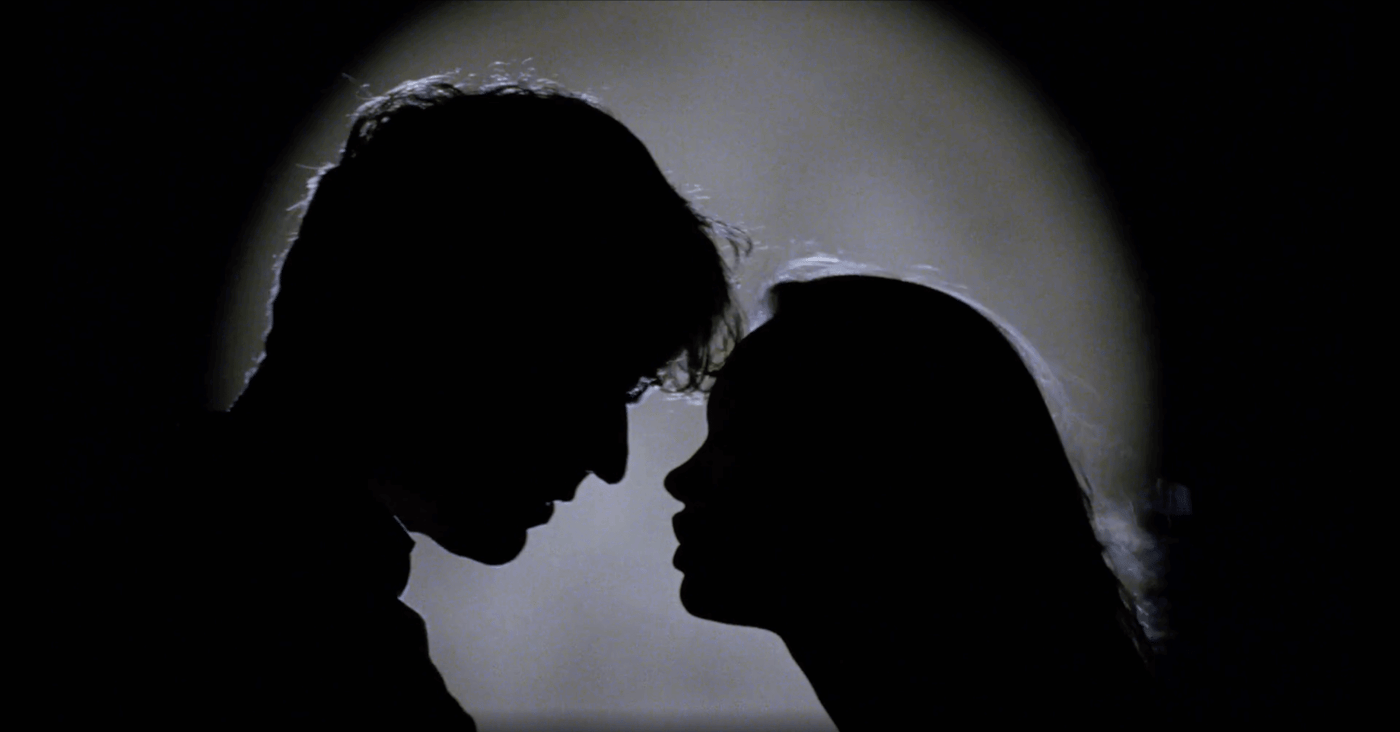
Nice deep kiss in front of a big round moon. That’s a really nice moment of romance. Romantic love is a classic type of love. Probably one of the world's most popular love types.
Nice deep kiss on top of the grave of the dead husband. Romantic um like ghost flames floating around Francesco and She. It’s romantic and the lady (She) says it’s okay to do this on the dead husband grave because they never kept secrets. Seems a little disrespectful but if that's their dynamic who am I to judge. So then, she’s very thoughtful and loving to the dead husband. This is the super love filled moment.
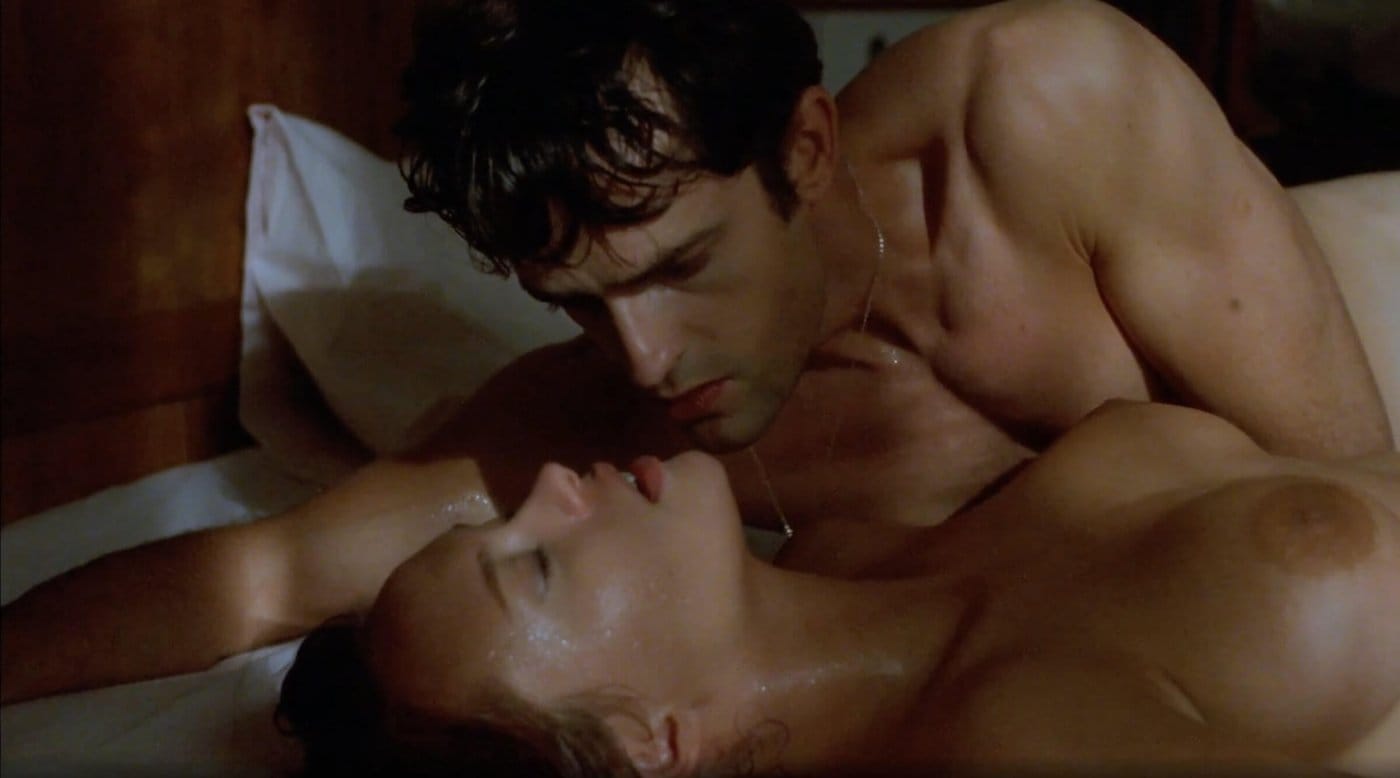
Kissing naked bodies and having sex feels so nice and lots of love being passed between two or more individuals. (Two in the case of the scene being described here between Francesco and She.)
“Nothing will separate us.” A loving thing for a zombie, or anybody really, to say.
Shooting the one you love in the brain so they don’t know the pain of being a monster - selfless love on Francesco's part or maybe a little too trigger happy?
Gnaghi crying at the sight of a young girl (Valentina) holding a paper flower. It's clear to see that he loves her and it’s puke that shows us so. Puke is the most time-honoured sign of unbridled, nerve-racking, puppy love.
Old lady (Pia) upon visiting the grave of her former partner verbalizes her love for "the admiral" who in turn likely loved her. He apparently always gifted her with “a touch of sambuca.” Sambuca is another major love language.
An instance of tough love: shoot the tv screen while your friend is watching their favourite trash programming. You won't let your friend waste their life with that drivel.
The young lover to Claudio (the boy killed in the motorcycle accident) cries and throws herself onto the pile of rubbish that makes up Claudio’s grave, wailing “He only loved me.” That’s totally something a love sick Italian teenager would do.
“He’s only eating me,” that’s puppy love. You’ll put up with so much shit in this stage. “I shall be eaten by whoever I please.” That's teenage defiance. So obnoxious.
Burying two people together that loved each other. That’s a nice thing to do that seems like lots of people actually do in this world. (no judgement just a statement.)
Did you notice Francesco drives a Herby the LOVE Bug?
A nice deep severed-head kiss on the lips from Gnaghi to his beloved, Valentina. This could possibly be Gnaghi’s first romantic kiss. A first kiss is a sacred moment of love. (This one is illegal in many ways, however, but so so memorable. I'm sure neither will ever forget this moment.)
Making spaghetti dinner with nice little banana slices for the girl you love. Acts of service - love language.
Nice deep kiss from the girl you killed already but she’s back now with more branches and leaves on her head. This leads to a nibble on the nipple, shows you that she really cares. Biting a huge chunk of flesh out your neck is not nice, but you’ll risk it all for the only woman you’ve ever loved.
That old lady (Pia) is so giving with her words of affirmation (love language!) While most people call Francesco micro-penis, she defers to calling him handsome young man.
Francesco tells his good friend Franco that, “One day your wife will leave you and your daughter will grow to hate you. Then you’ll be free. Free to see what the rest of the world looks like.” Loving words to gift someone who is fed up with their current existence.
Major love scene: Gnaghi wipes his darling’s lips after she spits up a bit of pus or yellow rotting head fluid. She sings sweet songs to him as he twirls a reflective makeshift disco ball in his hands. They share a kiss, Gnaghi wipes a bit of the spittle/pus away from his own lips. Valentina sings sweetly, "There comes a time when death is sad. You’re all alone, it feels so bad.” Clearly beyond the moment she’s described in her own song, she and Naghi have found one another and love is very apparent.
Francesco meets the secretary to the new Mayor. She looks exactly like the former love of his life. It's time to lay in bed at night, shirtless, hands behind the head, wide awake, recalling her face and her grey dress and grey headband. A new infatuation comes quickly. It can make you feel great also maybe a little tired.
People who look like your ex will ring your doorbell. Upon opening the door they will admit to loving you like your ex did. That does happen. And usually you have to admit that you do love them back, like you did your ex, and follow that all up with some very nice deep neck kissing.
A secretary is often scared of copulation. When you are reunited with a love and are scared of losing them again, you should say, (if this one is a secretary) anything she wants to hear, even that you do not have the means necessary to copulate, just to keep her. Then later, in good faith and out of respect to the one you love, make your sex organ inoperable.
When you lose the function of your penis, a loving friend would make you soup.
Gnaghi’s constant response of, “Nyah,” transcends language. Francesco always understands what it means. When you love someone words are quite often unnecessary.
A nice deep kiss on the cheek because your love is trying to avoid your lips in an attempt to tell you that romantic love has turned to platonic love. “It doesn’t change anything. I mean, nothing’s changed between us. I still love you. You know that. I just love you in a different way. You’re important to me… Nothing’s changed. Everything is just as it was. Everything!” She says. Platonic love can still be a satisfying, though relatively painful, love.
When Francesco sees the woman he loves and has lost 3 or 4 times already, it’s time to try for a 5th. “Make a wish. I grant wishes,” she says. "I want you to fall in love with me," is the wish Francesco makes. The desire for love and to be loved doesn’t die for him, or most anyone for that matter.
Francesco is worried his penis injection will prohibit him from performing intercourse. But he is able to under the spell of "love." Sometimes love just works when you're not expecting it to. Love is full of wonderful and magical surprises.
“Do you love me?” “Yes, if you stay all night.”
Staying all night at this sex worker's home will net the sex worker an extra $50. She's undervaluing 8 hours of love. The price of love should be far, far, greater. (Some would say priceless.)
When a doctor declares Franco is in a coma, even after he's heard Franco speak, Francesco is made upset by the doctor's poor diagnosis, and in a defensive act of love (or hate for the doctor,) Francesco shoots him in the head. You see how death and love are crossing these columns together nicely?
Francesco and Gnaghi drive in the love bug, they leave the confines of the town they have never left. “Past this tunnel is the rest of the world. What do you think the rest of the world looks like, Gnaghi? Can you imagine?” the long dark tunnel represents life and death. They are one and the same. Through the tunnel we see a light, and from there a ledge peering out to a wide open realm. “I should’ve known it. The rest of the world doesn’t exist.” There is nothing for Francesco. Forever the pessimist. He has formed his own world view. He's decided this is it for him.
Francesco tells an injured Gnaghi, that he'll be okay. He refuses to let Gnaghi go and in doing so, maybe keeps him alive. “Don’t leave me alone now.” Francesco readies the gun to save Gnaghi from zombification. In this moment he calls Gnaghi his best friend, a realization for him. One we already came to. He has found true and real love here on the edges of his world. This might be enough to change everything for him.
“You look for Death in the clear night. You tell her you still love her. That you are her slave. That she’s still your queen. Death, death, death, the whore.” - Francesco Dellamorte (Dellamore)

Written by Matt Prins