
Written by Jack Guariento
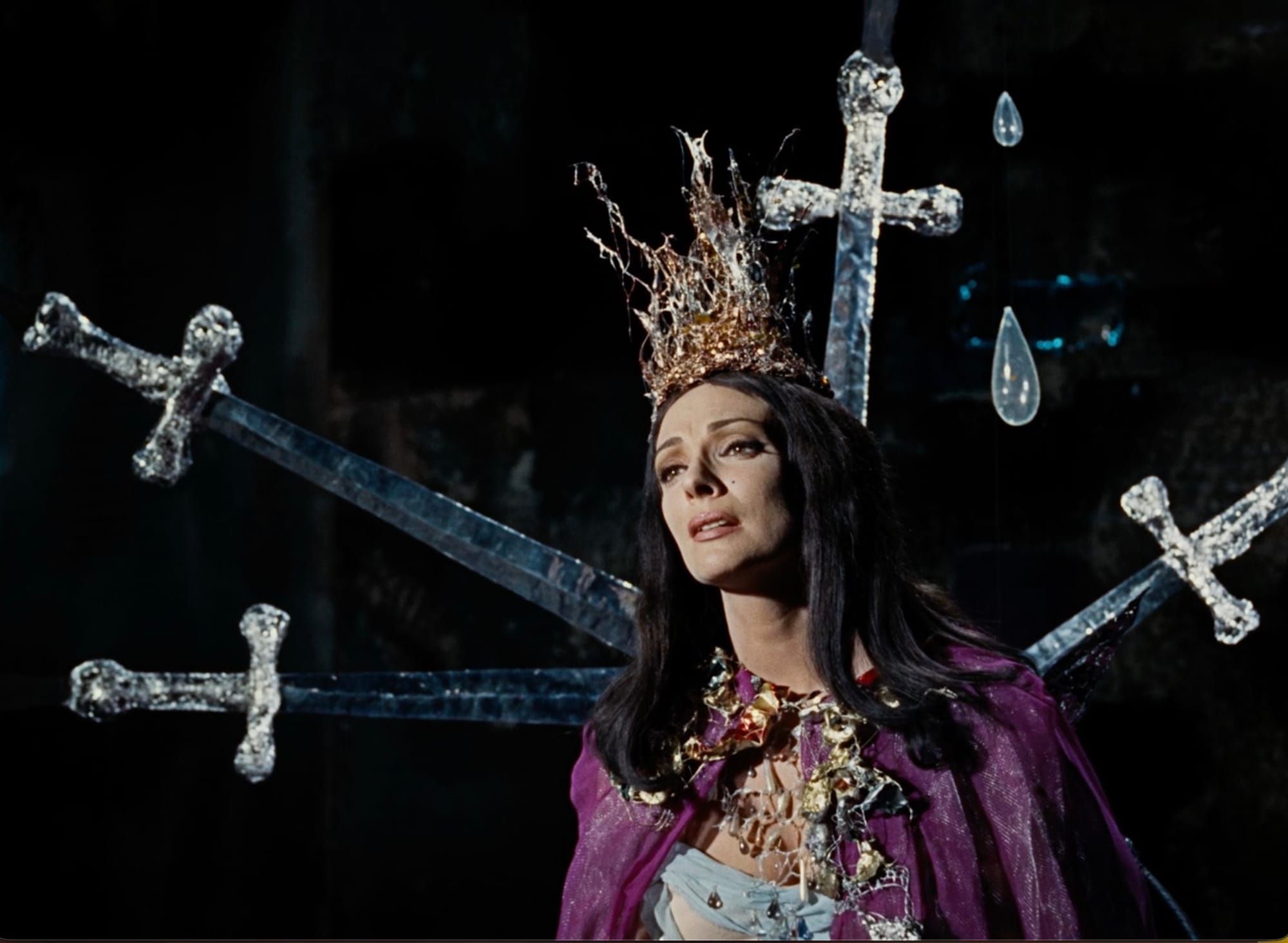
Michael Powell’s Bluebeard’s Castle is a true masterpiece of TV art. Based on the opera by Hungarian composer Béla Bartók, Powell’s version — produced for West German broadcaster Süddeutscher Rundfunk in 1963 — has Ana Raquel Satre and Norman Foster taking on the two lead roles in this two-character, one-act romantic tragedy.

|
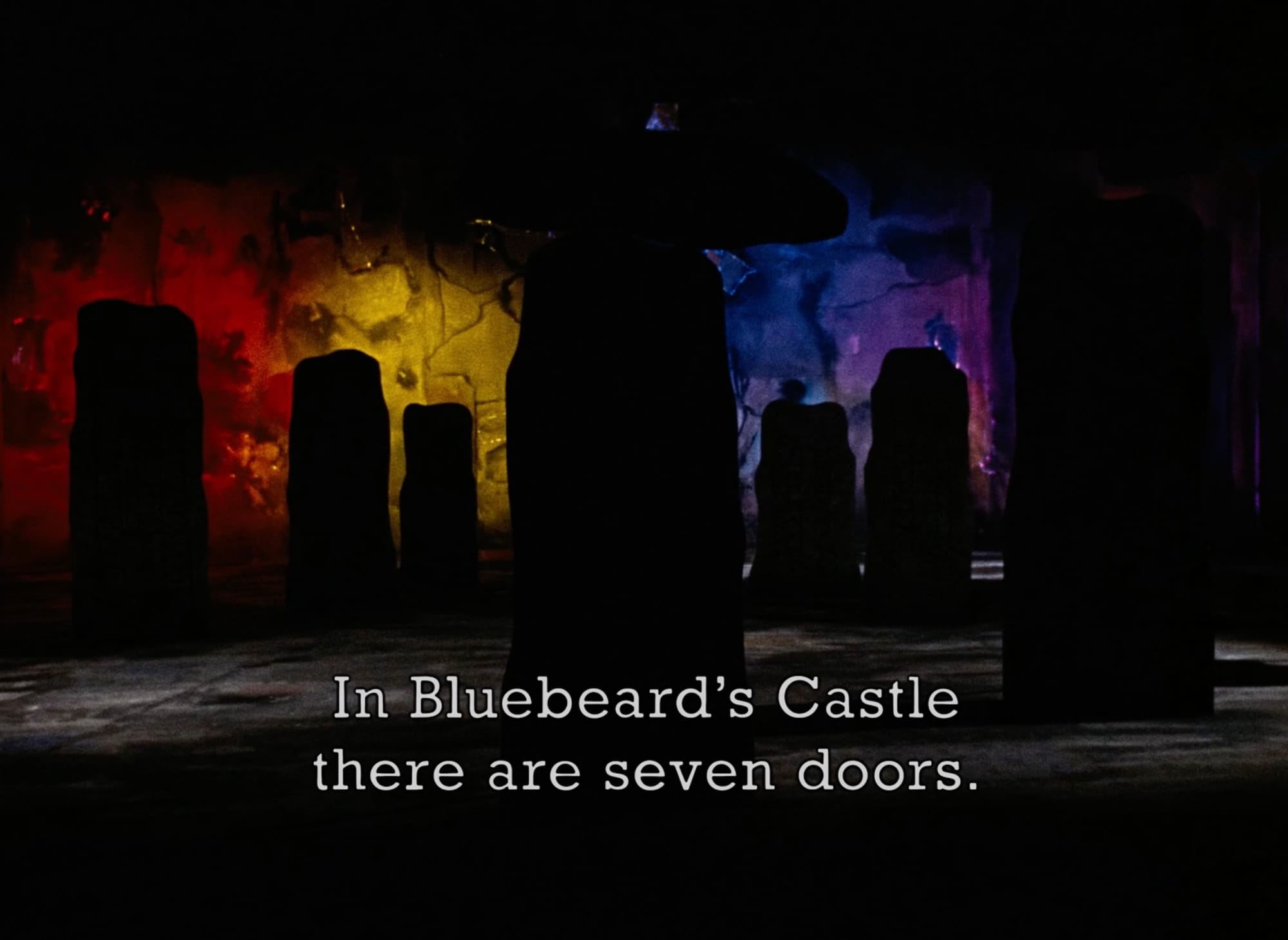
As with many operas, at its heart it's a melodramatic love story, telling the story of Judith and Bluebeard, two newlyweds who arrive at Bluebeard’s castle, where they intend to begin their married life. Judith is desperate to transform Bluebeard into a happy, jolly fellow and his castle - a dingy and depressing dungeon of a place where “light is darkened” and the walls seem to bleed constantly - into a bright and airy chateau. She has her work cut out for her: Bluebeard is cold and evasive, and it seems he is hiding something sinister behind seven dark doors that stand forebodingly in his castle like silhouetted monoliths.
The first thing to say about Bluebeard’s Castle is that it is difficult to imagine it being commissioned for TV today. It is very much a product of the open and imaginative postwar approach to public service television, an era characterized by televisionaries such as Ken Loach, Peter Greenaway, Alan Clarke, and Rainer Fassbinder who were given the means and space to test the boundaries of experimental public broadcasting. To allow these filmmakers to play with content and form was also to test audiences, who would tune in to such challenging filmic experiences as Threads (also available on Eternal Family) or Elephant - experiences which would then generate lively public discourse and debate. While more current examples of TV experimentation exist in films like Jonathan Glazer’s haunting short The Fall (screened completely unannounced on BBC Two back in 2019), the era of challenging televisual content has most certainly waned.
Another reason that it is difficult to imagine Bluebeard’s Castle being commissioned today is that it is an opera (which, as we know from Timothée Chalamet’s recent incursion into the discourse, “no one cares about anymore”). Of course, these days we do have things such as National Theatre Live (broadcast from the UK but available internationally), where viewers can watch recorded performances of both highly anticipated new stage productions and timeless classics, but these are still plays for live audiences that also happen to be filmed.
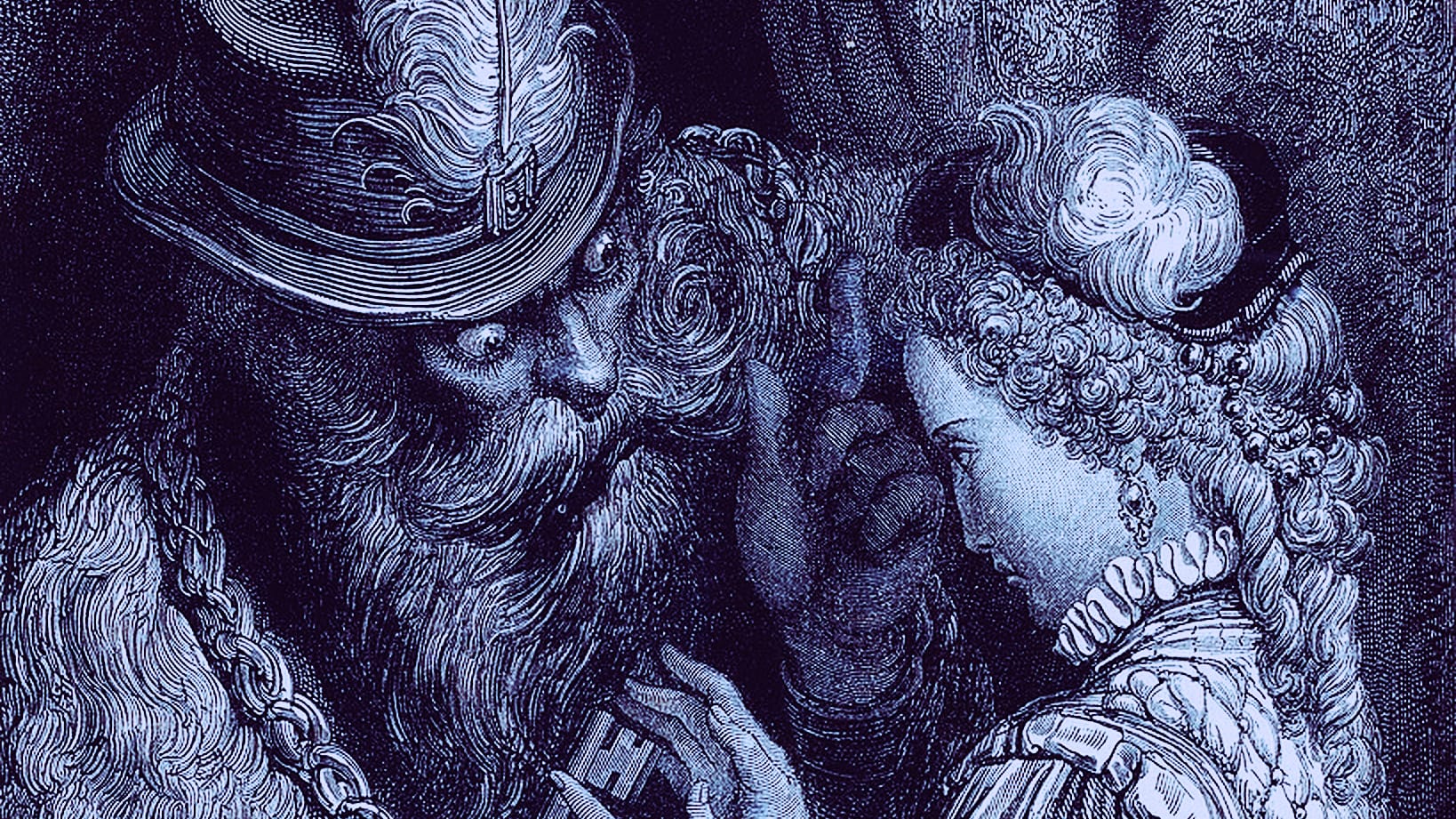
Bluebeard’s Castle, on the other hand, is a film first and foremost. It is the combination of all the defining elements of film that makes Powell’s version of Bluebeard’s Castle a different affective experience from the ephemeral one of a physical, in situ opera performance. Opera can’t do close-ups, nor can it do pans or juxtapose cuts to twist and manipulate the emotions of the viewer. The sudden cut when Judith opens the first of Bluebeard’s doors slams into your chest like a sledgehammer. The effect is an experience that is almost synaesthetic, to borrow a term from Eisenstein. This, then, is truly cinema at its finest.
|
|
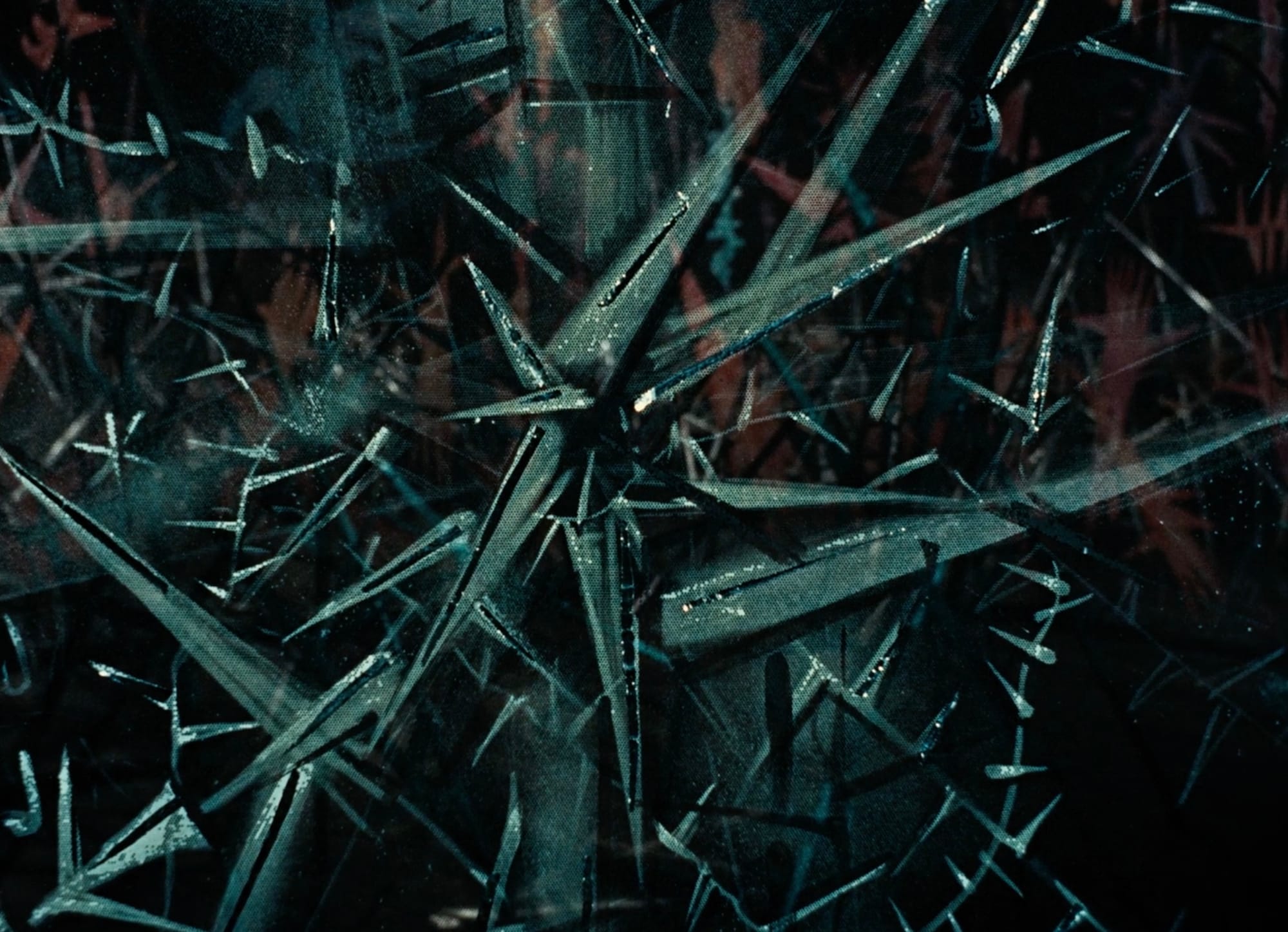
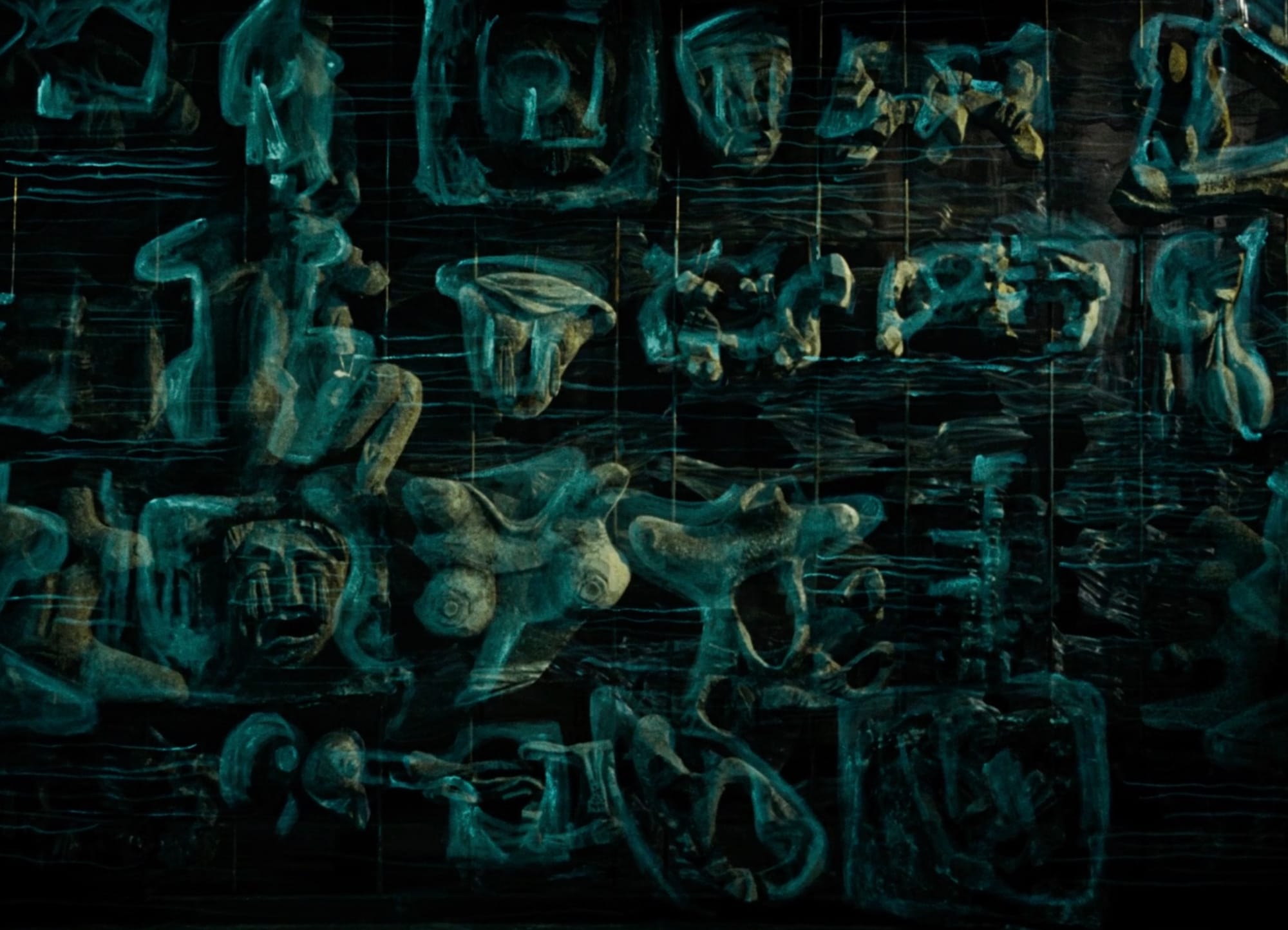
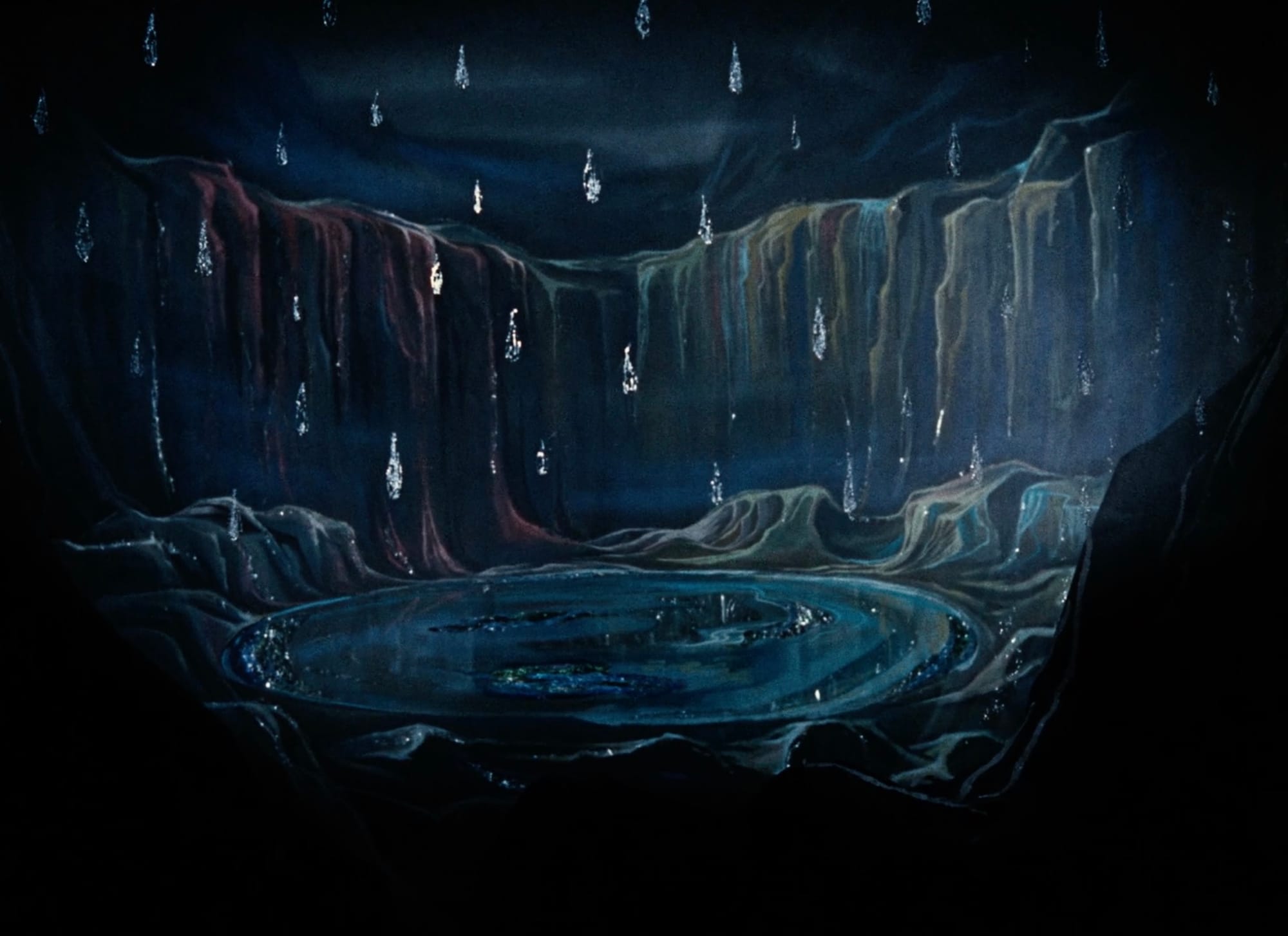
As a film, Bluebeard’s Castle is rich in formal experimentation. The set (designed by longtime Powell and Archers collaborator Hein Heckroth) is a jumble of brutalist, mid-century shapes that give the impression of a dark, evil version of an MGM musical. Some of them are organic, visceral — like chunks of meat or cross-sections of bodies (mostly female). Others are sharp and violent, spikes that protrude outward toward the characters and toward the eyes of the viewers. Powell and Heckroth make fantastic use of layering throughout, often giving us the impression of being caught in a thorny bramble bush of shapes. The influence of German silent expressionism is everywhere, making us recoil into our seats. The film’s denouement can be read entirely in the set design alone.
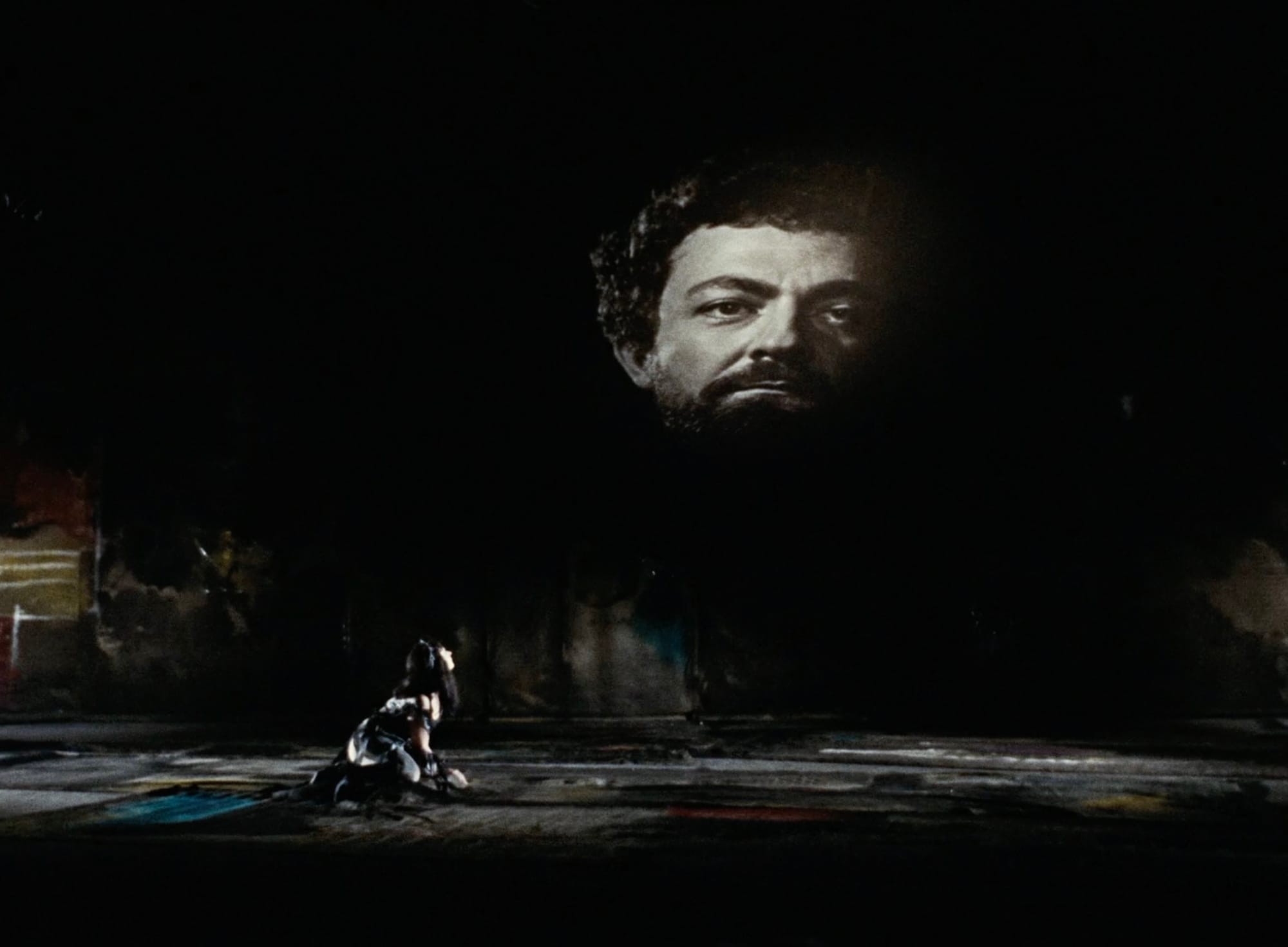
Post-production techniques such as image overlay are also put to use to express a deep, obsessive interiority in the character of Bluebeard, while other directorial devices such as frames within frames are repeatedly deployed to create a sense of detachment and separation. In a particularly affecting segment in which Bluebeard agrees to give Judith the keys to three of his seven doors, Powell has Bluebeard appear as a still image, magnified and projected up above Judith so that he towers over her, his expression impassive and neutral, his eyes averted. Such a device, while emphasizing his power over Judith, perhaps also asks us to empathize with Bluebeard. It is as if he has suddenly taken himself out of the action and retreated behind a screen; only then can he allow himself to begin becoming vulnerable (though on his terms).
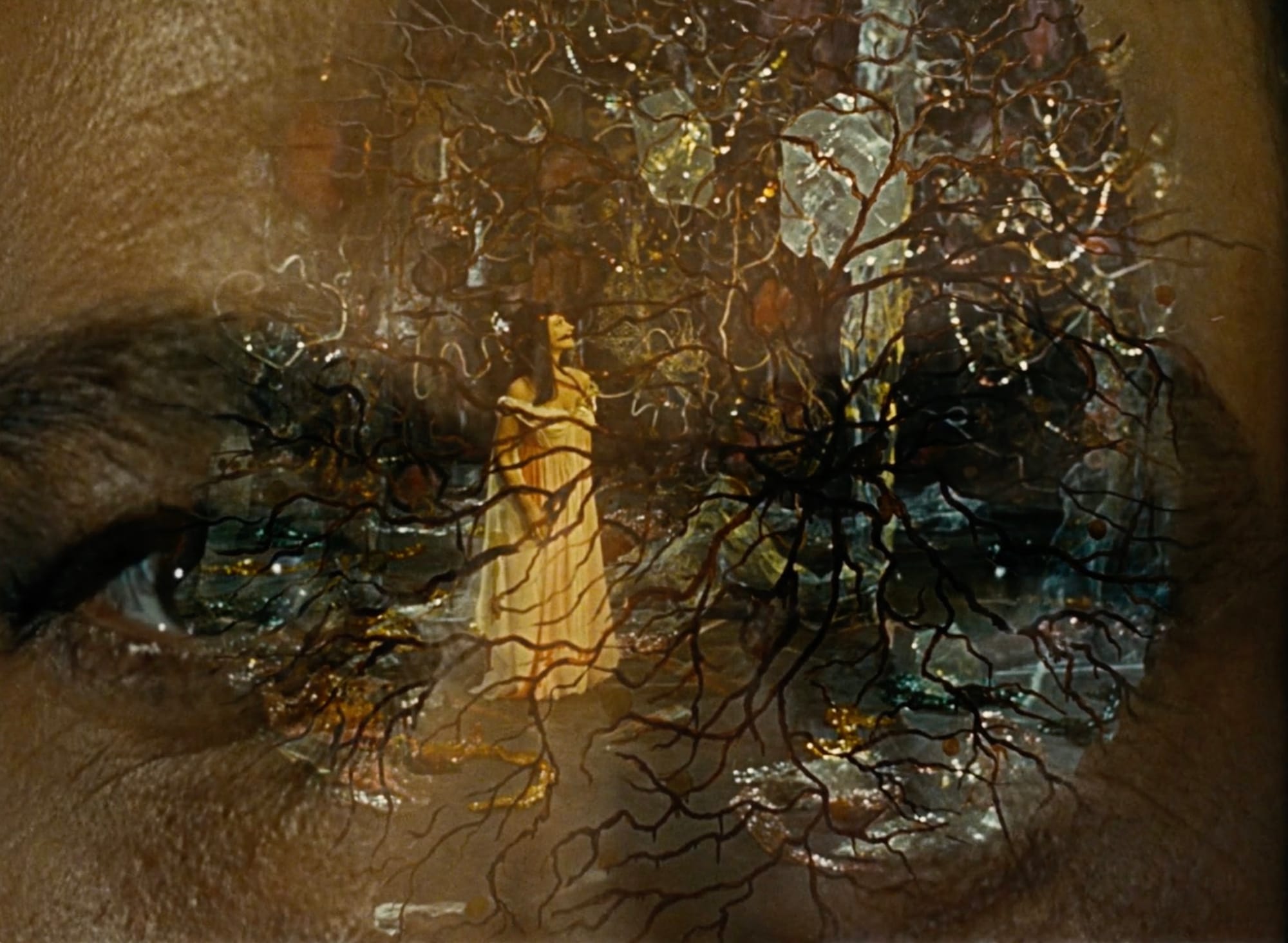
|
|
Indeed, despite the film’s ultimately horrific climax, we are asked throughout to sympathize with Bluebeard. This isn’t the first time Powell has asked his viewers to sympathize with an evil protagonist. In his 1960 cult classic Peeping Tom, Powell builds a portrait of a desperate and lonely serial killer who dispatches his victims using a movie camera. In that film, the killer is depicted as pathetic and pitiful; in Bluebeard, our eponymous antihero is rather shown as existing in a sort of existential agony, desperate to love but unable to do so due to the weight of the shame he carries. (This desperation is played brilliantly by Norman Foster, another frequent Powell collaborator and the film’s producer.)
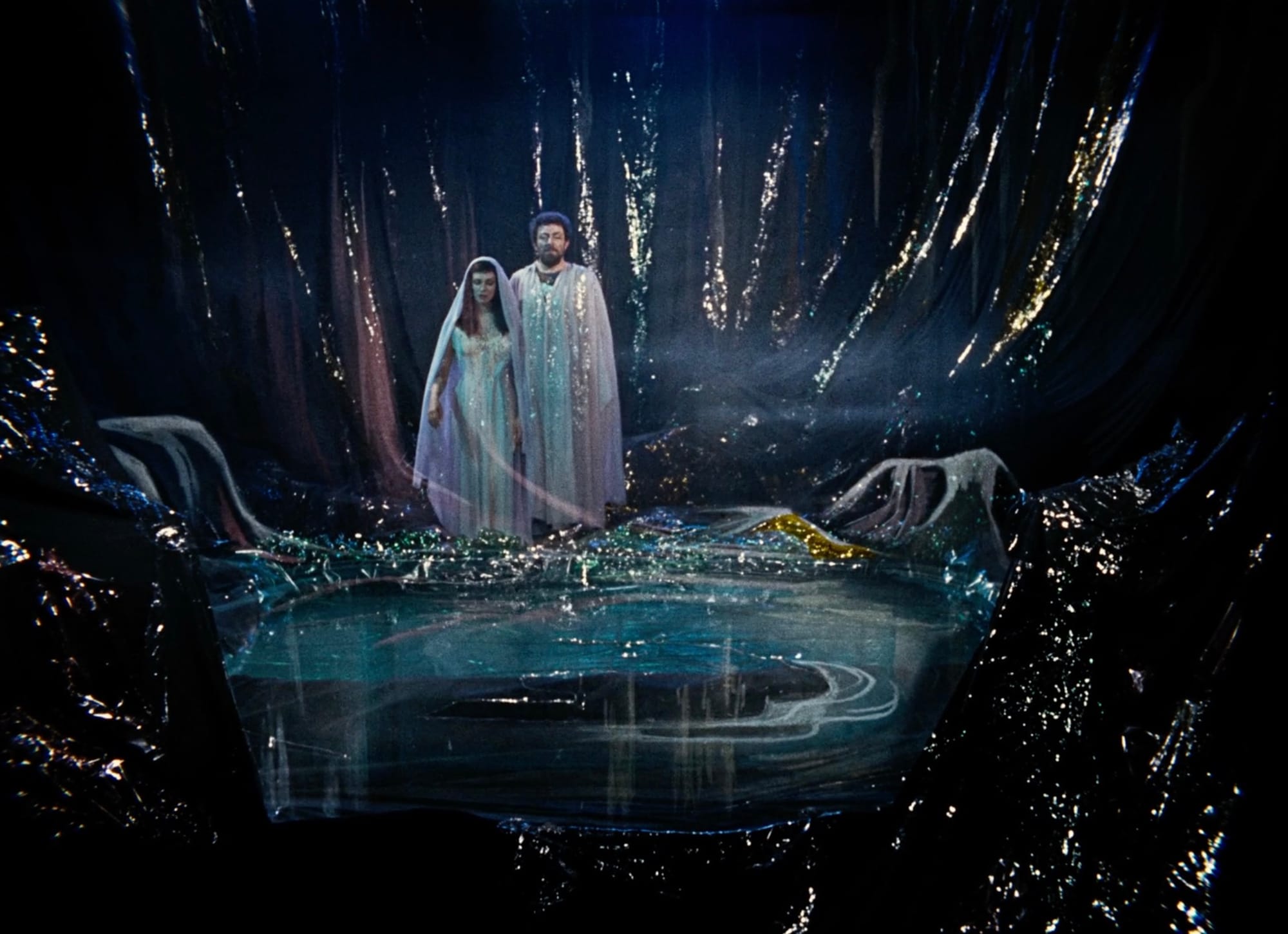
The more Bluebeard allows to be revealed, the more lighthearted he appears to become: “Look how the sunlight fills my house!” he exclaims rapturously once a few of his secret doors have been coaxed open by Judith. But his mounting secrets increasingly disturb his new wife, who grows progressively horrified despite Bluebeard’s more optimistic turn. In letting go of his darkest secrets, Bluebeard is relieved of the weight of his shame, yet this weight is taken up by Judith.
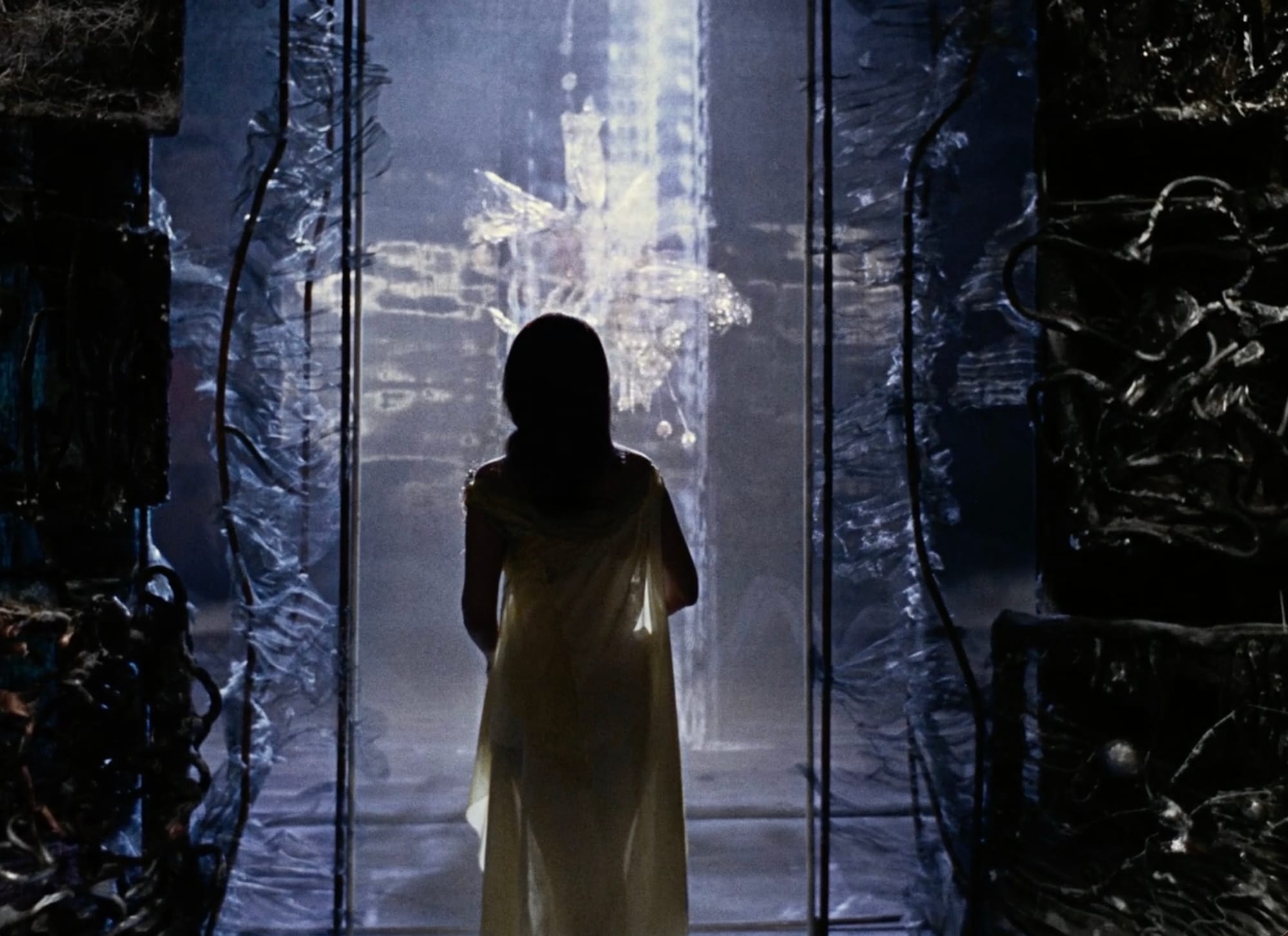
In this sense, the film delves deeply into the inner workings of shame, repression, trauma, and the weight of care, using allegory to create a rich and dense tapestry of complex emotion. In fact, allegory could almost certainly be said to be the film’s main function. Thinking in this way, the film’s final, morbid conclusion could be read as a grand metaphor: the bodies of his former lovers are not really dead in a flesh-and-blood kind of way, but rather dead in a more symbolic sense - flat and hollowed-out memories of past, failed loves that Bluebeard clings to and romanticizes, embodiments of the ideal of a perfect love that is ultimately unobtainable yet which he cannot seem to shake.
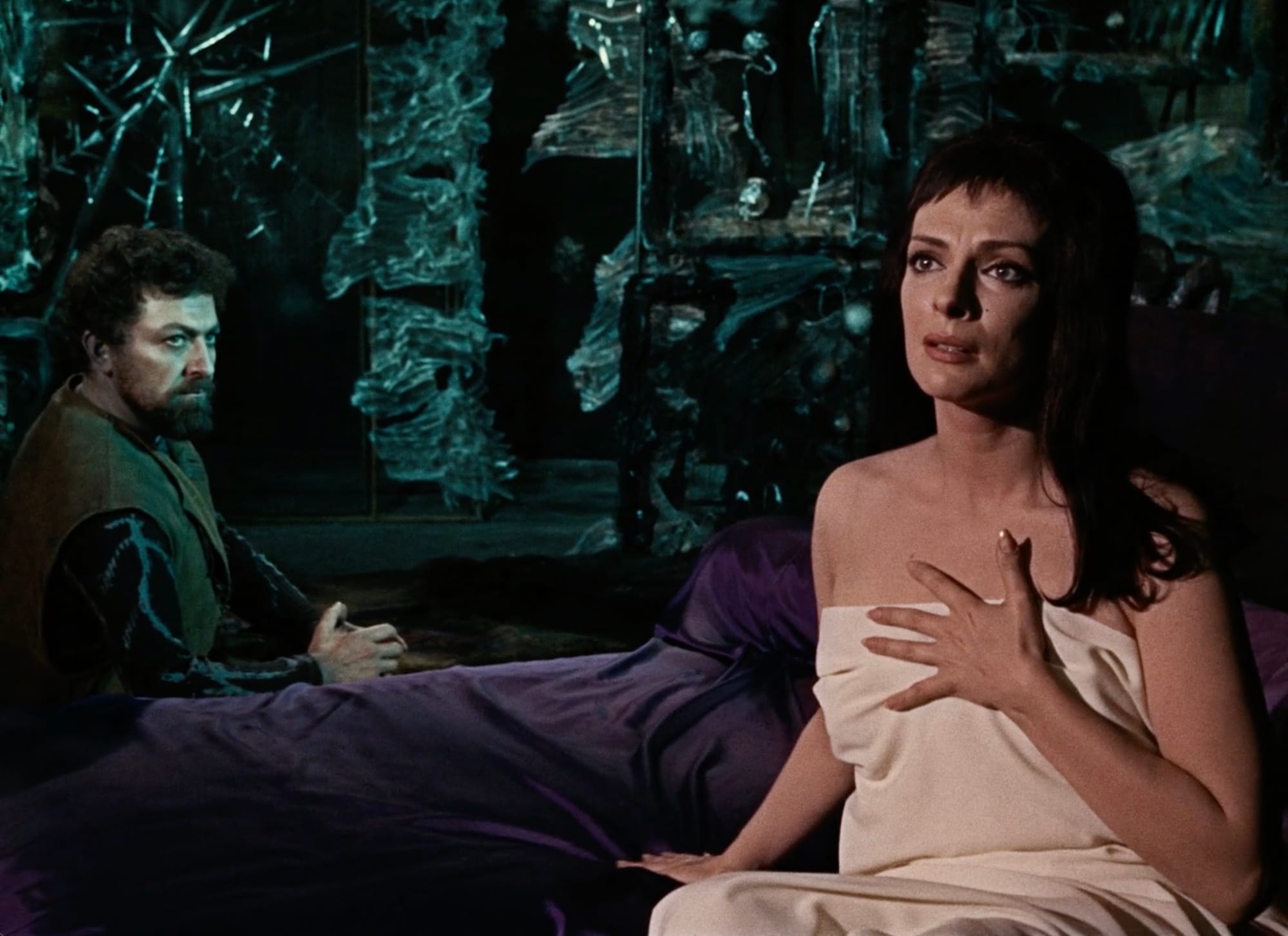
In the end Judith is doomed to a similar fate. Compressed into a singular image, she too becomes dead and inert, just another memory that Bluebeard can fantasize upon: “It was midnight when I found you. Midnight pierced by distant starlight.”
|
|
Watch Bluebeard's Castle on Eternal Family, available until September 31, 2026.